-
Review of ‘The Lie of The Land-Who Really Cares for the Countryside?’ by Guy Shrubsole

This is an engaging, detailed exposé by Guy Shrubsole of the narrative of who owns the land in England, how this ‘myth’ has become enshrined, and how we can create a new framing to appoint new stewards to change this ‘lie of the land’.
Shrubsole makes the repeated point in this book that ‘Stewardship, though a noble ideal, is too often greenwash.’ He convincingly argues that accountability and responsibility lie at the heart of ownership. ‘We have to make the self-appointed custodians of the countryside answerable to the rest of us.’ This is a repeated mantra throughout, that for too long, estate managers and landowners have escaped scrutiny for actions on their land, which has negative impacts ‘downstream’- sadly, and all too often, this can be a literal downstream, where river pollution and land degradation can be found.
Shrubsole opens his text by framing his extended argument, ‘Owning land, particularly large swathes of it, ought to come with serious responsibilities to society and to the rest of the natural world.’ He argues that, on one hand, it is patronising to assume that the public are not capable of performing such a protective role. He continues that additionally, this ideology perpetuates and reinforces the protective interests of the landed elite- and their political interests. Why are the public at large not regarded as being capable stewards of the land?
On a minor level, homeowners, especially those with gardens, are viewed as being more than capable to be stewards of their gardens- but how and why this cannot be upscaled is puzzling. ‘We ignore the fact that private homes and gardens take up just 5 per cent of the country. The reality is that we all have a legitimate interest in how the other 95% of our land is used because we all depend upon it.’
Shrubsole identifies that the framing of ‘stewardship’ is a new concept, designed to exclude and designed to defend against accusations of land harm. ‘The language of stewardship was deliberately revived in the late twentieth century by landowners and farming unions to defend themselves against accusations of environmental destruction.’ This concept that only the rich can be effective stewards of the land is revealed to a perniciously invented narrative that has become entrenched in a class struggle.
The central argument of the book is introduced early on- ‘But the greatest lie of the land is the idea that you have to own land to care for it.’ Shrubsole identifies many action groups and individuals who push for protection of the land, through campaigning, to expose the truth behind the greenwashing promises and pledges and who build legal arguments to grant nature legal personhood.
It is the ego-centric argument that land is property to be used, but that it has legal rights itself- a legal movement that, thankfully, is beginning to spread.
A clear example of this is the current formation of the criteria to apply to designate an area of land as an ‘Asset of Community Value’. ‘The official criteria under which land can be listed as an Asset of Community Value must be broadened to include environmental and economic benefits alongside social ones.’ In an application, it is advised to show that the land is ‘used’ by members of the community in a quantifiable manner- that physical actions are conducted there. Simply enjoying the land as existing in its own right and for its own sake is far too abstract an idea at present for councils. ‘Community ownership offers a strikingly different way to own and manage land more democratically than merely trusting in the benevolence of the larger private landowners.’
Land as a trophy
Shrubsole then turns his attention onto those who regard land as an indication of wealth and status, who are more interested in this element than effective land management. From grouse moors to peat bogs, he outlines actions and examples where legal loopholes have allowed destructive actions to take place in these areas and suggests that perhaps this is not accidental. ‘The extremely cosy relationship between wealthy grouse moor owners and our political class has meant the industry has avoided any serious regulation for decades.’
An idea whose time has come
Shrubsole emphasises that proactive protection for nature isn’t just desirable,but essential. ‘Today we face an even more existential threat than invasion: the climate crisis and the unravelling of the very web of life that we all depend upon.’ A declaration of a ‘Nature Emergency’ to begin to halt the horrific decline of nature in the UK needs to be a priority for this new government. Government intervention is key argues Shrubsole, and he makes the valid point that land is not bought compulsorily for nature, but is regularly done for large infrastructure projects which often harm nature. ‘But we accept the principle of the public sector being able to buy land compulsorily when it builds infrastructure; why not for nature? If the government can buy land for roads, railways and energy, why not for vital carbon sinks and the ecosystems we all depend on?’
Replacing the ‘lie of the land’
Shrubsole argues powerfully that land should be a ‘common treasury for all’ and not just the purview of and for the powerful elite. He identifies that some landowners have failed to be good stewards of the land, but have escaped accountability and censure for this. Not all have a love for the land. ‘The reality is that private property ownership doesn’t inevitably breed respect for nature.’ He states that it is past time to ‘democratise the governance of land’ in order to save nature in Britain and that this could be done through new Government policies. From the evidence gathered so far and with the rising climate and nature crises, Shrubsole insists that, ‘The fate of our land is too important to be left only to those who own it.’
He finally urges that we need to take back the narrative that has served the interests of landowners and not the interests of the land.
‘Let’s replace the lie of the land with a profound truth that anyone can develop a deep love of nature, place, and land, regardless of whether you own it.’
-
Review of ‘Treewilding’ by Jake M Robinson

How would you describe a tree? Would you talk about its trunk, its branches, its leaves, its roots, its abundant life? Would you describe it as an object or a subject?
How many species of tree can you name in 30 seconds?
Our knowledge, relationship and connection with trees, forests and woodlands, may be under threat, in a world which demands speed and consumption. And yet, to trees, our life spans of around 80 years, can be the blink of an eye to a tree which has stood proudly for centuries.
In ‘Treewilding- Our Past, Present and Future Relationship with Forests’, Jake M Robinson takes us on a journey- not of discovery, but of memory. A journey designed to rebuild and regrow this truly ancient relationship between two organic beings- humans and trees.
A nature-depleted world
Robinson begins by highlighting the extent of the problem, by emphasising that, ‘‘At a global scale, we teeter on the precipice of unrivalled biodiversity loss and climate chaos, so restoring forests (and other) ecosystems is vital.’ He points to the example of the UK as a place where the connection between nature and urban spaces has been broken- where a cultural understanding has been lost. ‘The UK was recently named one of the most nature-depleted countries in the world.’
A re-shaping and a re-framing of our positioning with the natural world is essential- Robinson argues to reform our attitude to the natural world and to shift the ideology that nature is there simply to be used by humans as a resource. Or to quote the 1986 Star Trek 4 positioning of humanity’s positioning of itself as superior to all other life forms- ‘If we were to assume that these whales are ours to do with as we please, we would be as guilty as those who caused their extinction.’
Robinson continues this argument almost 40 years later when he says, ‘It’s vital that we brush away the egocentrism that positions humans at the top of a hierarchy of life and cultivate a deeper connection with, and truly respect the complexity of, other life forms.’
In small ways, in small places, there are shoots of this shift from ego-centrism to ecocentrism. In August, 2024, Paul Powlesland became the first person in the UK to swear a legal oath on a natural entity- this time, of the River Roding. He commented, It’s another way of reintroducing the idea of nature as sacred back into our legal system, finding playful ways to demonstrate to the world that nature is alive, that nature is sacred and we have duties towards it.’
Survivors of lost worlds
Robinson charts the history of trees and praises their ability of surviving-so far- despite all odds in the historic and geological records. They emerged approximately 400 million years ago- before the Triassic and Jurassic periods- and survived the mass extinction events in Earth’s history, including the famous dinosaur-killing event around 66 million years ago.
Around the world today, there are several claims of trees which have also survived the modern world- from the Methuselah tree of almost 5,000 years old, to giant sequoias dating back 3,000 years.
Robinson outlines the significant levels of deforestation that have taken place during the agricultural period. ‘50% of global deforestation occurred between 10,000 years ago and 1900, and the other 50% occurred in the last century.’ Additionally, this rate has sadly been matched over the last century itself- ‘Yet, in the last 100 years, the world has lost as much forest as it had in the previous 9,000 years.’ Whether this has been the end result of empire building, colonialism and the resource depletion which comes with this, or an attitudinal ideology which only sees nature as a resource to be exploited, remains debatable.
As Robinson summarises, ‘Our thirst for convenience at all costs means we often fail to see the woods (the ecological and social systems) for the wood (the timber).’
Our present relationship with trees
Robinson then highlights the social and economical importance of trees and nature- describing their sacred, ceremonial, and community roles that they have played to different cultures. However, he also cleverly positions these issues of the benefits to humans with developer tree- felling plans, to emphasise what is currently being lost. Forest bathing as a medicinal prescription is booming as a practice- with the mantra of ‘Let forests be thy medicine’, but here again, lies the issue that we are potentially exploiting nature simply for the benefit which it brings humans. For the moment though, if this is an avenue which preserves and maintains forests and trees, perhaps it should be celebrated.
Forest restoration and regeneration
Robinson then outlines successful restoration practices and methods around the world, arguing that, ‘We need to take an ecological approach to tree planting.’ He praises projects in Costa Rica and at the Knepp Rewilding Project in the UK. Robinson suggests that modern technology can help hugely with restoration ecology and that the use of ecoacoustics and drone mapping and monitoring can help humans learn more about the dynamic relationships within tree communities.
The right tree, in the right place, at the right time, is a far more effective approach than huge monoculture plantations that run the risk of not achieving very much at all. He argues that we have a lot to learn from syntropic farming methods to see if they can be scaled up- these can require long term vision and management, which humans are notoriously bad at. Natural forest regeneration, such as the Miyawaki method from Japan could be transferred to other areas such as India and Europe, in order to complement and aid the regeneration that is necessary.
There are dangers to be on the lookout for though- threats to local biodiversity, finance and the skills required to help maintain the restoration methods. Planting is not the ‘golden bullet’ so sought after, but growth and management are key. Stewardship is perhaps another way of phrasing this narrative. We are simply stewards for future generations. Will they thank us when forests regrow and are restored- or will they curse us when the last tree is cut down simply to satisfy our material wants?
Greenwashing alerts
Robinson warns that we should be on the alert from political greenwashing promises- in particular promises by organisations and individuals to plant thousands, or even millions of trees. He lists 10 key pitfalls of these greenwashing promises: from failure rates, the potential reduction of water availability, and the continued colonial concern that the Global South becomes responsible for capturing emissions from the Global North.
What we can learn from trees
Above and beyond what we can learn from trees about our past, in terms of information about fires and droughts, owing to tree rings- there is a lot to be learned about how we can recreate a more symbiotic relationship with nature. Turning urban areas into urban forests, exploring ‘living architecture’ and exploring how nature can help us turn the tide on catastrophic climate change. Robinson explains that, ‘A tree is a teacher’ and so, like any good student, we need to be open and receptive to the lessons that we can learn.
We need to listen to the trees. We need to be reminded that they were here before us and will be here after us.
Whether humans like it or not, we are a part of this world- not apart from this world. There are organic bonds linking all living things- both visible and invisible.
Our ideology and narratives towards trees and nature needs to shift from seeing them as objects, to understanding their complex systems and internal communities.
We need more nature champions, unafraid to speak out that our current view of nature being a disposable and expendable resource, could see so much more being lost than we can currently imagine.
-
Review of ‘The Language of Climate Politics- Fossil-Fuel Propaganda and How to Fight It’ by Genevieve Guenther
Although Francis Bacon acknowledged that ‘Knowledge is Power’, Dr Genevieve Guenther contends in this new release that instead, ‘Language is power.’ Language is the vehicle for creating ideologies and belief systems and those who control the narrative, can usually control the level of action and response. A truism that fossil- fuel companies have followed in their efforts to protect their profits over planetary pollution. Language has always been used as a ‘call to arms’ and Dr Guenther believes that this battlefield of what is accepted as the ‘norm’ needs to be rebuilt.
Guenther challenges the repeated talking points language of climate deniers, delayers and doomers and unpacks the shallow rhetoric to expose the reasons for the manipulation of language- often for financial gain. She illustrates how the fossil-fuel propaganda machine learned long ago that repetition of a key message over and over again can become an indoctrination chant. ‘Cost’, ‘Growth’, ‘India and China’, ‘Innovation’ and ‘Resilience’ have become linguistic weapons, where the simple mention of them can be enough to quell climate discussions.
Not any more. Guenther advises on strategies to counteract this polluting propaganda- which only serves itself- to empower those who need to become free from the spell of delay.
She notes, ‘Complicit people and institutions must be called out and encouraged to change. And the fossil-fuel industry must be fought, and the governments that support that industry must be replaced. But none of us will be effective in this if we think of climate change as something “we” are doing. To think of climate change as something that “we” are doing, instead of something we are being prevented from undoing, perpetuates the very ideology of the fossil-fuel economy we’re trying to transform.’ She argues that the ‘guilty collective’ ‘we’ does not exist, but instead is a distorted and dangerous fiction to hide the real actors responsible for climate change. She asks, ‘Who is this “we”? Does it include the nearly 700 million people who live on less than $2.15 a day? Does it include the indigenous peoples who have been living in harmony with their ecosystems for generations? Does it include our children?’
Guenther points the figure at the ‘you’ and ‘they’ robustly in this text and does not shy away from ‘calling out’ the polluting companies for what they are. ‘Since at least the 1970s, coal, oil, and gas companies have known that their products would cause the planet to heat up, undermining the climate that enabled civilization to flourish over the past 10,000 years’. The acknowledgment of the reality of time was landed squarely on by Guenther. By 2100, pathway estimates suggest that globally we could be living in a 2.5-2.8 degree world (compared to the pre-industrial era).
This is the world we are leaving to our children.
A child born today would be 76 years old at the turn of the next century- a world in which living conditions could be unrecognisable for billions. ‘At 1.5°C of warming, about 14 percent of humanity will likely be exposed to life-threatening heat on a regular basis. At 2°C that number more than doubles, rising to 37 percent, or approximately three billion people.’
‘The year 2100 may seem like a long time away, but it isn’t. My own son was born in 2010. His life will play out across this century, when the world will either halt global heating at a manageable level or unravel. All this is no longer about “future generations,” but the families we have in our homes today.
As the IPCC said in its 2023 report: “Any further delay in concerted global action will miss a brief and rapidly closing window to secure a livable future.”
The world can be otherwise.’
We need to use language to create this future imagined world- language which will galvanise people into action, language which will create effective and drastic climate policy, and language which could ultimately save lives around the world.
Being alarmed is an appropriate response
Guenther acknowledges that for too long, we have allowed others to dominate the climate conversations and climate narrative, and that our collective silence has been a marker of group identity and not wanting to stand out from the group. As a result, the fossil-fuel propaganda machine has filled that silence.
‘If you’re not used to doing it, talking about climate change can be very difficult. It can feel risky or socially awkward, as if by bringing up the climate crisis you’re betraying social norms against disturbing other people. Well, you are. But that’s ok. There is a time for speaking out, and that time is now.’
Guenther warns against the fear of the label of the term ‘alarmist’ and powerfully argues that being alarmed at the impacts from human caused climate change, is a normal, appropriate and reasonable response. Taking up this label when it is hurled by propagandists and delayers is both a sane and a safe option.
‘It is perfectly appropriate to be alarmed. Given everything scientists are saying, given everything already happening at warming even below 1.5°C, it is reasonable—indeed, it is sensible—to feel frightened. Fear of what may happen if we do not force policy- and decision-makers to end their support for fossil energy is not a symptom of alarmism. On the contrary. It’s a sign that you are willing to look at the danger head-on and not look away. It is a sign of courage. You should talk about it as such.’
She chronicles how climate scientists themselves need to walk the linguistic tightrope and the dangers of scientific language deliberately being mis-used by bad actors to suggest that there is doubt. Two clear examples are the use of the ‘uncertainty’ and indeed the word ‘confident’, which in scientific evaluation carry a particular meaning different from normal discourse- a gap which fossil-fuel propagandists have driven a wedge through. Scientists, of course, are also communicators and are acutely aware that their evaluations may lead to a paralysis of action if people fall into the mis-understanding that ‘it is too late’ or ‘unsolvable’. It is not the scientific evidence that is in question, it becomes how this information is communicated and presented.
Guenther boldly states, ‘To preserve our safety, the world must stop burning fossil fuels now. Not in our grandchildren’s or even our children’s lifetimes.
Now.
One of the most powerful weapons you have is your voice. End the climate silence that gives fossil-energy interests cover. Talk about the climate crisis as much as you can.’
The chimera of Cost and Growth
Guenther forensically breaks down the twin linguistic charges of ‘cost’ and ‘growth’. She highlights that the biggest financial ‘losers’ are actually the fossil-fuel companies themselves and their profits, which they are trying desperately to defend, at all costs- even to the stage of unlivable conditions for billions- as long as it is ‘them over there’ who are impacted. ‘To meet even a 2°C target, a third of oil reserves, almost half of methane gas reserves, and over 80 percent of current coal reserves must remain in the ground. This unburnable carbon is currently valued as high as $3.3 trillion’.
Guenther then notes the dramatic drop in price of renewable technologies, ‘Onshore wind power is 40 percent cheaper than it was a decade ago. And solar is now the cheapest source of electricity in history.’
The narrative that the economic growth of fossil-fuel companies should be allowed to continue at the expense of living conditions for billions is exposed as the self- protection myth that it is. That somehow those responsible for the situation should be allowed to continue their behaviour and actions is completely unpalatable.
‘The idea that economic growth is itself a climate-change solution, a form of environmental protection that will shield the prosperous from climate devastation. This belief is so bipartisan, so ubiquitous, that it’s not quite accurate to call it propaganda. It’s best understood as a myth.’
A myth that is based on a lack of evidence and facts, but is echoed so repetitively, that it appears to be a crucial element in the lack of change.
‘By how much, and for how long, will economic growth continue if the world continues to burn fossil fuels and emit carbon dioxide into the atmosphere? There is surprisingly little research on this seemingly crucial topic.’
If anyone argues that fossil-fuel polluting companies should be allowed to continue the actions that brought us to the danger of planetary tipping points, they need to check their entitled, self-serving, perspective at the door.
Responsibility for emissions
It is impressive how Guenther unpacks the misleading narrative that has promulgated that ‘my country will only act, once we see country X acting.’ China is often the manufactured elephant in the fossil-fuel propaganda, where the fact that China is only responsible for 14% of historical emissions is stridently finger-pointed at. What the accusers chose to ignore is America’s over 25% contribution to historical emissions. For the US not to be a global leader of climate action until China/ India/ Germany acts, is the petulant argument of a child not getting their own way anymore.
‘Yet the United States has remained committed not just to sustaining, but to expanding fossil-fuel production, while blaming the world’s lack of climate progress on India’s and China’s actions.’
China’s world leading renewable programme has allowed it to dominate the market and create economic growth, demonstrating that the two can go hand in hand easily and comfortably. ‘China has become the world’s foremost producer and distributor of clean-energy technology.’
Waiting to see who will ‘take the lead’ on the necessary climate action only freezes global action and it is worth remembering that pollution knows no borders.
Global average temperatures are rising. Global readings of CO2 are rising.
Technological salvation?
Guenther then points to the next step in the polluters’ hand book- having technology as the miraculous saviour, without any behavioural change from fossil-fuel companies. Carbon capture and storage, carbon dioxide removal, direct air capture and bioenergy with carbon capture and storage have now become the new totems of propagandist worship.
‘When you talk about carbon removal, the most important thing is to guard against the false narrative that CDR is a miracle that can decarbonize fossil fuels and restore the climate, if only the world would deploy it wisely. False promises about CDR are propagandistic: they misrepresent reality to sustain an oppressive power—here the power of oil and gas companies—that is harming the world.’
It is a deliberate act to talk about these technologies and describe them as ‘proven’ in order to sustain the life span of fossil-fuel companies- as if business as normal can continue. Worth noting here, as Guenther sharply points out, ‘This technology remains at a nascent stage of development. As of 2023, only around twenty-seven DAC plants existed worldwide, and together, running for a whole year, they captured less than a minute of annual global carbon dioxide emissions.’ So when hearing claims of these technologies as saviours, it is always worth asking how scaled up they can be and what impact they demonstrably have- if those questions can’t be answered by advocates of the fossil-fuel companies, then you know something is amiss.
Transforming the world
The issue is simple. We are being polluted and the polluters want to keep doing this, so they can make more profit.
‘The world must phase out fossil fuels. Governments must wind down the fossil-energy industry, and build up a limited system of carbon removal without their influence, in order to have any chance to achieve net zero, halt global heating, and secure an ongoing future.’
Language can create. Language can empower. Language can change the world.
It is past time that the linguistic narrative is reclaimed by those who want to create a liveable world for people living now and for those still to inherit the world of our actions. ‘But always remember: this is a battle against the forces of destruction to save something of this achingly beautiful, utterly miraculous world for our children. The fossil-fuel industry and the governments that support it are literally colluding to stop you from transforming the world. They are trying to maintain the fossil-fuel economy. As for me—and as for you, here with me at the end of this journey, this book—I will say: we are against them, and we are going to fight for dear life.’
Dedicated to the future
It is no sin to have tried and failed, but it is a terrible sin to not even try- knowing what we know now. The dedication to this book could easily be missed, but for me, it contains the heart of the linguistic battle that lies in front of us. We are building a world for the future through our words, ideologies, policies and actions. What that world looks like by 2100 is up to us all.
‘The Language of Climate Politics’ is dedicated to our beautiful son, Teddy, who is the joy of my life.
With all my heart, I hope this book helps create the future that he, and every child in the world, deserves, but no matter what happens I want him to know that his mother tried.’
-
Hadrian’s Wall- Walking the Last Frontier We know walking has many benefits- rediscovering the past is just one of them. Discovering the present moment is critical.

The Wall near Housesteads Hadrian’s Wall stretches for 84 miles across the North of England, from Bowness-on-Solway to Wallsend, Newcastle, signalling one of the last frontiers of the Roman Empire.
Nowadays, the Wall remains intact only in certain sections, with the best views to be found in the isolated middle sections far from the cities and towns.
Walkers can walk from east to west, or west to east, staying at different locations along the journey, according to their chosen style of trip, following in the footsteps of Roman soldiers. I chose west to east for transport practicalities, meaning that I finished in the transport hub of Newcastle, rather than an area with sparse public transport near the Solway Firth.
For some, walking a distance of 84 miles, might not seem overwhelming- viewed perhaps the same as running a marathon. For others, walking this long distance, alone and with no support, may appear too daunting. The first rule I discovered is that you walk Hadrian’s Wall in your own time, at your own pace, and avoid comparing your experience to that of others. Your journey is your journey.
I chose to walk the wall as a personal promise to someone who is no longer able to ‘walk the Wall’, but the reality of what this meant was beginning to set in quickly.
Preparation
To begin with, I sought the advice of military friends- people for whom long marches are common. Their view of preparing for the worst, while hoping for the best, played out in many pieces of advice. From downloading location apps such as ‘what3words’- vital for peace of mind- the best foods to snack on and the benefits of dry socks, this was an early indication that if treated lightly, this walk could be dangerous. Accidents can happen to the most well prepared person, but the questions posed to me of, ‘What do you do if you break your ankle, or have a bad fall? How do you get to safety?’ echoed in the logistical emergency planning stage.
The physical preparation was significantly hampered by one of the wettest winters recorded in the UK, meaning that long walks across fields and fells couldn’t be completed. I talked to runners and running groups, to try to map out distances on dry ground, aiming to ensure that at least distance could be practised for, if not terrain. The cumulative impact of walking 16- 20 miles every day, for several consecutive days was not something that could be known in advance.
Baggage transport was next on the list. I did not relish the idea of carrying a full bag for 84 miles, so I opted for a daily transfer of my bag from one accommodation spot to the next, while I carried a much lighter day bag. This made my journey slightly more comfortable and enjoyable. I chose to walk in late April, but the trail was still saturated throughout from the incessant rain, so the option to camp was quickly discarded.
The most important part of preparation was ensuring I had the right boots. This was the part where I opted to pay more, mindful that getting this wrong could bring an early end to the walk.
Highs and Lows
One of the early positive discoveries was the realisation of the not-so-secret public footpaths which connected towns and villages. Footpaths which reminded me of bygone days where journeys were about the journey and not just about the rush to get to the destination.
The next ‘high’ was also in itself an absence of sorts. When our jobs demand that we make multiple decisions big and small and are constantly ‘engaged’, the mindfulness that came from having to make very few decisions was the recharge that I needed. It seems odd to say that walking 84 miles was a method of recharging, but when all you have to do during a day is ensure your footing is sound and that you get to the next stop, there does come an emptying of the mind which is welcome.
Another welcome discovery was that I was physically capable of walking several 16-miles-days with no real discomfort and the physical challenge was met head on.
Finally, when the half point was hit and the counter flipped to a countdown rather than a count up, that was a significant point, as focusing on how much I had done, rather than what was left for me to do, became a strong motivator. As a life lesson, this was an important one.
Finishing the entire walk and reaching the fort of Segedunum actually became an odd low point, rather than the expected high point. The sense that the journey was over and the task had been completed and that there was no more walking to do the next day was a surprisingly powerful emotion.
I was glad to leave the muddy, saturated fields and path behind me of course, no longer worrying whether I was going to go ankle deep or knee deep in mud. I was glad to leave behind the ‘Day of Rain’, which I affectionately named it, where it rained all day, unrelenting, giving the Hard Hills section of the Wall its name perhaps.
The lowest point of the walk was the emotional impact of seeing the empty space where the tree at Sycamore Gap used to stand, now with its stem fenced off, in the hope of regrowth. The senseless vandalism of nature left me cold on an already cold day.
Lessons learned
The lessons I learned walking Hadrian’s Wall then were not the expected facts of the Roman fort constructions, communication systems, or how the wall itself was constructed.
Instead, what I took from the trail was the kindness and support of strangers and the other walkers whom I met. The understanding that physical limits can often be mental ones and that we are all capable of more than we credit ourselves capable.
Have I caught the ‘walking bug’? Undoubtedly.
What I have learned though are simple truths-look after your feet and they’ll look after you and a hot cup of tea at the right time can be all the difference.
-
Review of ‘The Invisible Doctrine- The Secret History of Neoliberalism’
By George Monbiot and Peter Hutchinson

‘Sunlight’, as US Supreme Court Justice Louis Brandeis proclaimed over a century ago, ‘is the best disinfectant.’
In this new exposé, Monbiot and Hutchison expertly shine the sunlight onto a ‘normalized ideology’, which has been lurking in the shadows. They urge that the vital first task is to finally name ‘That Which Shall Not be Named’ and empower the public to recognise the tactics used by the various anonymous dark money groups. Their aim is ‘to reveal what has been hidden. It is to speak their names.’
The authors open the book by openly acknowledging that, ‘The dominant ideology of our times- that affects nearly every aspect of our lives- for most of us has no name.’ The awareness that the public cannot readily name ‘neoliberalism’, or if they could identify this nefarious constructed ideology, they could not easily define its purpose, or divine its meaning, is core to its power and influence.
They solve this problem early in the text by clarifying exactly what this ideology is. ‘What is neoliberalism? It’s an ideology whose central belief is that competition is the defining feature of humankind. It tells us that we are greedy and selfish, but that greed and selfishness light the path to social improvement, generating the wealth that will enrich us all. It casts us as consumers rather than citizens.’ Or, in more everyday speech, ‘capitalism on steroids.’ This then creates a secondary issue, of whether the public can confidently explain the origins of capitalism- but it does allow a sense of the power of neoliberalism to emerge. It would be foolish not to recognise the power of neoliberalism and its roots which have spread across the globe. ‘Crisis after crisis unfolds, yet we fail to understand their common roots.’
Boom, Bust, Quit
Monbiot and Hutchison do not shy away from facing the past which has been ‘whitewashed’.
‘Capitalism is an economic system founded on colonial looting.’ They highlight the repeated pattern of exploitative resource extraction conducted by many imperial powers and companies and highlight that we are quickly running out of the finite resources which feed this insatiable beast. They stress the dangers of this ideology on a planetary scale, as the complex earth systems cannot sustain the exerted pressures which we are experiencing and environmental tipping points are coming closer.
‘Boom, Bust, Quit’ is what capitalism does. The ecological crises it causes, the social crises it causes, the productivity crises it causes are not perverse outcomes of the system. They are the system.’
Monbiot and Hutchison evaluate the funding and propaganda tools of the capitalist interest groups and conclude that, ‘The fairy tale that capitalism tells about itself- that you become rich through hard work and enterprise- is the greatest propaganda coup in human history.’ The ideology of named major countries in the world has been predicated on this ‘Big Myth’-that capitalism must endure at all costs. Neoliberalism is a constructed ideology, despite its efforts to appear as ‘naturalized and normalized’ foundations of a healthy society.
‘Neoliberalism has often been imposed on people during great crises: at moments when they were too distracted to resist- or even notice- the new policies that governments were slipping under their doors.’
In these moments of crises, when instability and insecurity are prevalent, the only ones who profit are oligarchs and dark money groups- whether in the guise of Russian oligarchs, the Koch brothers, or even Presidential candidates, who suddenly find their war chests soar, if they adhere to the ‘party line.’ ‘The dark money is neoliberalism’s fuel.’
It is calculated that, ‘Since 1989, America’s super-rich have grown about $21 trillion richer. The poorest 50 per cent, by contrast, have become $900 billion poorer.’ Or in easier terms, ‘The rich pay less, while the poor pay more.’
Brexit, Covid, and the NHS
We are led through multiple examples of crises, which were weaponised for some- not ‘us’- for profit reasons. Systemic failures and attitudes to neoliberalism drove the 2008 financial crash- whether lessons have been learned is certainly questionable, as it feels more like neoliberalism has retreated underground slightly rather than being overt.
This description below becomes very relevant, when we realise the pressures on NHS dentistry and the NHS more generally, with private groups staring hungrily, waiting for the opportunity to strip the asset and to extract every single pound from it that they can, before moving on to the next prey- in a shocking example of life imitating the art of ‘The Lorax.’
These sentences from ‘The Invisible Doctrine’ reveal the strategy- one which is becoming more apparent in the UK in the wake of the water companies behaviour with regards to sewage pollution.
‘Profitable components of public services are wrung dry, while essential but unprofitable aspects are dumped. People with complex health conditions are either abandoned or returned to the state for treatment, sewage treatment plants are bypassed and left to deteriorate, bus services to smaller towns and communities are slashed.’
The writers remind us that, ‘As a general rule, privatization is legalized theft from the public realm. They emphasise that the growth of private power needs to be checked and regulated and that we are still not heeding the warning from almost a century ago.
‘In April 1938, President Franklin Roosevelt sent the US Congress this warning:’ the liberty of a democracy is not safe if the people tolerate the growth of private power to a point where it becomes stronger than their democratic state itself. That, in its essence, is fascism. It is a warning we would do well to remember.’
Climate systems cannot be compromised.
The need and urgency for necessary global climate action has sadly become the latest battleground for the ideological advance of neoliberalism. Unfortunately, this is not a battle that we can lose. We can decide to choose a constructed ideology, which urges us to consume, consume, consume, or we can decide to choose the hope that comes from healthy global ecological systems.
‘Our predicament- the greatest humanity has ever faced- is often characterized as a climate crisis…
What we are witnessing is the breakdown, at astonishing speed, of our life support systems- driven by capitalism, accelerated by neoliberalism.’
Monbiot and Hutchison urge that it is past time to tell a new story, one which grants hope, rather than stifles it in order to allow a neoliberal programme to survive.
It appears that humans are the host for the pathogen of neoliberalism, but a new story could be the new vaccine. Social tipping points of community led programmes instead, could create new ‘commons’ for the 21st century, moving power away from dark money groups and moving it into the hands of an informed and engaged public.
‘Our task is to tell the story that will light the path to a better world.’
-
Review of ‘Climate Denial in American Politics- #ClimateBrawl’ by Gerald Kutney

‘Nations are concerned about themselves, not about the planet, and this kind of problem will keep coming at us as we discover more and more such potential catastrophic consequences.’
Carl Sagan 1984
The words of Carl Sagan, quoted early in Gerald Kutney’s book, encapsulates the geopolitical issues that have been identified over the last seventy years, following the end of the Second World War. Global solutions are needed for global problems and challenges. A change in mindset to a more open cooperative one, will help mitigate the worst of the impacts of the emerging climate crisis.
Kutney deftly structures his text into a clear roadmap which focuses and charts the climate action progress- often the lack of progress- in the United States of America over almost the last century. He interweaves the experiences and encounters he has had on social media over the last decade, with historical testimonies of Congress hearings and legal acts dating over the decades. He notes the changing of the Presidential guard and the hopes and dashed hopes following each appointment, as politics became the obstacle to progress.
‘Climate denier’
Kutney logically starts by defining the label of ‘climate denier’ and acknowledges that this is simply a new incarnation of an older problem. ‘Climate denialism is a modern problem, but it is rooted in science denialism which has been around for ages.’
He notes the attempts by climate deniers to position themselves as victims and ‘martyrs’ against a system. An attempt which is primarily founded on ideological terms, intended to contrast ‘belief’ and therefore religious belief, against scientific evidence and pitting these two ‘ideologies’ against each other. This positioning neglects to acknowledge that people can be persons of faith and also climate scientists at the same time. The most well known climate scientist in recent times to fall into this category must surely be Professor Katharine Hayhoe, who embraces both these foundations and uses them to complement each other. It is timely to introduce Prof Hayhoe, who has highlighted that the number of ‘Dismissives’ of human caused climate change has stayed resolutely around 10% of people polled in North America. This is perhaps an early criticism of Kutney’s text, that perhaps he allows climate deniers ‘more space at the table’ than they even warrant.
Although he does note: ‘Climate denial is increasingly being recognized as a lost cause, and climate deniers are becoming a dying breed.’
As well as religious loyalties, Kutney also emphasises that political loyalties can hold huge sway with views on scientific discovery. ‘The other major motivation behind climate denial is political ideology, namely conservatism.’ He cautions that climate deniers try to create their own narrative as ‘victims’ by suggesting that they are merely asking ‘genuine questions’ to challenge science and not denying scientific evidence. He evidences his internet interactions of those who falsely claim to be ‘skeptics’, while actually aiming to delay climate action by using a respected methodology and value of the scientific world against them.‘The time-honoured tradition of skepticism in science should not be marred by confounding it with denialism.’
Kutney begins to head towards his core argument- that business profits and ‘business as usual’ is the primary aim of ‘Big Oil’ and the shifting sands of denial positioning have only one aim – to keep their profits as high as possible for as long as possible. ‘Whenever science threatens profits, the proliferation of denial begins.
Kutney warns that awareness of the efforts and tactics of the bad actors is necessary in online spheres and in government spheres, as the stakes could not be higher.
‘Of all the various manifestations of science denialism, climate denialism will have the most catastrophic outcome.’
Climate Science in Washington
Kutney then methodically charts the early attempts to bring climate communication and climate action into the public domain and government policy. He comments on the initial plans to explore the weather as a potential weapon of war, especially against the backdrop of the Cold War, as countries jostled for global leadership. He traces the changing administrations through the decades and the positioning on human caused climate change.
He quotes the Swedish scientist Bert Bolin, who warned in 1976 that,, ‘We must accept that there are limits to the exploitation of the Earth’s resources. One such limit is set by the principle that man’s natural environment must not be changed drastically and irreversibly.’
The formation of the IPCC as a vehicle to mitigate and adapt against the impacts of the changing climate and to better understand these ‘limits’, is hailed as Kutney as ‘an historic moment’.
Climate Denialism in Washington
‘We can never say that science did not warn us.’
The wasted years of the Bush administrations are lamented by Kutney, as he lists the emergence of the new breed of “skeptics”, who constantly shifted the goalposts about the standard and level of evidence which they would accept and who deliberately used weather events as ‘evidence’ against global warming. Before the emergence of the internet as an everyday tool, used by millions and billions, these individuals were backed by right-wing think tanks supported by ‘dark money’. However, they did not yet have the army of bots that the internet could utilise, so aimed to discredit the scientists themselves on multiple occasions.
‘The greatest environmental challenge of the new century is global warming.’ With these words in his final State of the Union, President Clinton’s warning fell largely on deaf ears. When even the President could not drive through climate policy through Congress, climate deniers rejoiced. Al Gore’s 2006 documentary, ‘An Inconvenient Truth’ met fierce political resistance- another opportunity missed for emergency action. Congressional hearings began to feature more and more individuals who had no climate science training, but who could package up a narrative that could be amplified by senators and fossil fuel backed groups.
When President Obama and then later President Trump began using social media directly and unfiltered as a means of communicating with the public, the climate views of the administration were apparent. With President Trump removing America from the Paris Climate Agreement, yet more time was lost in the race to adapt and mitigate and move away from fossil fuels.
Only in recent years, with President Biden, have we more concretely returned to the climate messaging of President Clinton. ‘It’s the number one issue facing humanity. And it’s the number one issue for me…Climate change is the existential threat to humanity…’
Kutney then conducts a thorough exposé of what he terms the ‘Denial Cabal’ and ‘Denial Machine’, focusing on the actions of individuals and administrations, where he stresses that apathy was almost as dangerous as climate rejection. He details the actions of President Trump on social media and argues that ‘President Trump took climate denial to a radically dark and dangerous political level.’ Kutney warns against those who deliberately seek the limelight by promoting ‘junk science’ positions and climate denying positions, knowing that fossil fuel backers can help promote and spread their views. Kutney argues that ‘Until their [the energy-industrial complex] propaganda is muted, the necessary political negotiations will not happen on the climate crisis.’
The similarities between the ‘doubt is our product’ actions of the denial machine and the actions of ‘Big Tobacco’ are outlined by Kutney, but he points readers to ‘Merchants of Doubt’ for further information.
‘Propaganda is the voice of tyranny, not democracy.’
Although, on one level, the book feels that it is missing a conclusion, perhaps a formal conclusion is not needed. Kutney’s intention is perhaps to raise our attention to the environmental pledges and promises of presidential candidates in the upcoming election and to remind us of the need to exercise our democratic freedoms where they exist to vote for candidates who will not set us back further.
Kutney returns to the simple, yet powerful words of Carl Sagan to draw out a solution and conclusion, which could bring change to American politics, but which will also offer global momentum.
‘The solution to these problems requires a perspective that embraces the planet and the future, because we are all in this greenhouse together.’
-
Review of ‘Not the End of the World’ by Hannah Ritchie

Max Roser- ‘The world is much better; the world is still awful; the world can do much better.’
As to be expected, ‘Not the End of the World’ takes a systematic and methodical approach to the issues analysed in the text. Each chapter follows the same clear format of : ‘How have we got to now?’; ‘Where we are today?’ and finally ‘Things to stress less about’, which guide the reader through dense topics. Sustainability, air pollution, climate change, deforestation, food, biodiversity loss, ocean plastics and overfishing are the chapter headings and all of these have had countless books written about them in turn. ‘Not the End of the World’ is not there to diminish those other books, but to change the prism through which we understand the data. It uses precise, clinical language, almost too blunt at times, but it should not be criticised for this. Ritchie challenges us that the purpose of data is to be a catalyst for action. ‘‘It’s to understand what we already know. Or could know if we studied the information we have properly.’
The extracts that were released before publication have been held up as a shield by the climate denying right and slammed by the left for not being ‘truthful enough’, while Ritchie constantly repeats in the book that the truth is bad enough and that ‘doomist’ headlines can create paralysis in climate action.
Part of the reason why this book has been so heavily criticised is perhaps the lack of a defined target audience and reader. This feels like a deliberate choice by Ritchie to simply present what the data and facts are. Facts don’t have an audience- they are simply there. As Ritchie notes, ‘If you believe people have the right to the truth, then you should be against those exaggerated doomsday stories.’
Reading new releases which simply confirm your thinking already doesn’t necessarily move you on as an individual in understanding. We all bring our ‘baggage’ and ideologies to bear on all topics, especially environmental ones. We are reminded in this text that multiple contradictory statements can be true simultaneously- even if we find this difficult to accept. We are also reminded of the words of Max Roser- ‘The world is much better; the world is still awful; the world can do much better.’
Humans can solve real global problems
This book is challenging and is rooted in ‘long-termism’, so I understand why it is an unsettling read. Ritchie takes the clear stance, ‘I’m no climate change denier, or minimiser. Bringing attention to the magnitude of potential impacts is essential if we want things to change. But that is a long way from telling kids they’re ruined.’ In every chapter, Ritchie echoes that the impacts on the climate are happening now, but also stresses that climate scientists themselves are driving, and have driven, the necessary change. She draws on examples like acid rain and the damage to the ozone layer to evidence that global change can happen quickly and that this is a positive aspect to action. Collective international action can bring stunning results. ‘And when countries want to tackle it, with the right political will and investment, they can do it incredibly quickly.’
The three aspects that Ritchie identifies as being the levers to pull on are: ‘a demanding citizenship, the money and political will.’
‘The time for debating whether climate change is or isn’t happening is over.’
Ritchie addresses the well- known climate denying trope of the decline of deaths from disasters. It should also be noted that Ritchie uses the complete data set and not an edited version. ‘The decline in deaths from disasters does not mean that disasters are getting weaker or less common. Deniers often misuse this data to downplay the existence or risks of climate change. But that’s not what the data shows us at all.’ She notes the climate related floods and droughts which killed millions at a time and displays awareness that the infrastructure, monitoring and response systems have become more resilient and that this is a good thing that fewer people die now than before.
Ritchie does not shy away from some of the more controversial topic areas- instead she uncovers and explores what the data demonstrates. In the current ‘blame game’ of who is responsible for emissions, Ritchie makes the point that both total cumulative emissions and per capita emissions are equal metrics to use and that nominating blame doesn’t really move us on globally. ‘But when we turn climate change into a blame game, there is no end to it. People are not really fighting about the numbers. They’re fighting about what numbers they should be using in the first place. If they don’t agree on that- which they often don’t- the fight goes nowhere useful.’
What are the tools we need to reduce emissions?
Often, climate books are criticised for not offering sharp clear solutions. Ritchie offers a detailed section on high- impact actions that can help save emissions and challenges the narratives we have- that recycling and upgrading light bulbs will be enough to reduce emissions. Ritchie cannot be criticised for repeatedly stressing the key action that is needed.‘We need to stop burning fossil fuels.’
‘It doesn’t have to be this way.’
Ritchie is clear that we already have the solutions and the tools to make meaningful change to ensure that we leave the environment in a much better state than we found it.’
‘Air pollution kills millions of people every year, but it doesn’t have to be this way. We know how to get levels of air pollution very low.’ Ritchie takes the view that although the environmental issues overlap and are linked, this could be a blessing in disguise, as ‘these interdependencies mean we can solve the lot in one go.’
Ritchie concludes by acknowledging that there will be those who disagree with her, but she comments that internal fighting only slows down climate action. ‘A good principle, then, is to be wary of attacking others that we’re broadly aligned with.’
She finishes by imagining what could be done if serious global action from all of us is focused on one goal and hopes that delay doesn’t become the enemy. We have the tools and we know how to use them. ‘We could be the first generation to build a sustainable planet.’ What a legacy that would be for future generations.
She warns though, that, ‘A sustainable future is not guaranteed- if we want it, we need to create it. Being the first generation is an opportunity, but it’s not inevitable.’
-
Review of Michael Mann’s ‘Our Fragile Moment: how lessons from the Earth’s past can help us survive the climate crisis’
‘I’ve seen things you people wouldn’t believe… Attack ships on fire off the shoulder of Orion… I watched C-beams glitter in the dark near the Tannhäuser Gate. All those moments will be lost in time, like tears in rain… Time to die.’
Rutger Hauer’s character from ‘Blade Runner’, Roy Batty, closes the film with a philosophical reflection on humanity and the precious power of memory and moments. For Distinguished Professor Michael Mann, the last words of this quotation are problematic. He is known for serious, cautious, evidence led work, rather than sensational ‘doomer’ tactics, so ‘Our Fragile Moment’ is not a dirge or eulogy. Instead, this is an accessible, engaging book, which details how we have arrived at this ‘absolute fragility of this moment in time’; compares our present time with extinction events in the past; and explores what solutions we have currently at our disposal.
Lessons from the past
The lesson from the past that Mann opens with is that every species and civilisation has its moment, but that ‘Thanks to the efforts of those [fossil fuel] corporations, we’re now coming up against the boundary of habitable life for us humans.’ Mann describes the present as ‘the absolute fragility of this moment in time’, but emphasises that although climate change is a crisis, it remains a ‘solvable crisis’. Mann is known for scientific rigour and he is clear that scientific uncertainty, by itself, is no bad thing, as it is part of the process that leads to greater understanding- as indeed, scientific exploration always has. He states,
‘We must embrace scientific uncertainty. The scientific process builds on itself. New data come to light that help us refine our understanding.’
Is it then ‘Time to die’, from the earlier ‘Blade Runner’ quotation? Mann acknowledges that this is the ‘big question on everybody’s mind: Are we doomed?’ Although a fatalistic reader may expect a clear answer that our civilisations are doomed, as global temperatures continue to rise and climate events become more noticeable as we inch towards 1.5°C above the pre-industrial levels, Mann makes it emphatically clear that ‘it is entirely up to us.’
He makes the repeated and clear point that the challenge in implementing climate action is down to political will, rather than not knowing the solutions. ‘We have sophisticated technology today that we can employ in an effort to adapt to climate change…
Most importantly, we have the technological know-how to decarbonize the global economy, moving away from the harmful burning of fossil fuels toward clean energy and climate-friendly agricultural and land use policies. The obstacles here aren’t technological. They are political.’
‘Those who cannot remember the past are condemned to repeat it.’
Mann charts the climate impacts that have shaped the paleoclimate past of our planet and the devastating impact that some of them had on the life-forms present at the time from the Permian- Triassic extinction- ‘estimated ninety percent of all Permian species disappeared from the face of the planet’- to the impact of 65 million years ago. ‘From sixty-six million years ago, when our distant rodent-like ancestors crawled out from the shadows of the dinosaurs, to five million years ago, when our less-distant primate ancestors came down from the trees to hunt on ancient African savannas, climate has shaped us.’
He focuses on the impact of human ancestors migration and settlement. ‘Our species, Homo sapiens, had finally made the transition from nomadic to sedentary existence. We had learned to cultivate food crops and raise livestock.’ Mann investigates various cultures and civilisations such as the Sumerians, Romans and Anasazi and cautions against naming one factor as the deciding factor in the decline of empires. ‘Now, we must be wary of climate determinism: the notion that every significant historical event, every societal origin or collapse, can be interpreted entirely through the lens of climate change. We must always appreciate the complexities of human behavior and sociopolitical dynamics that effect societal changes.’
He cautions that humans ‘delved too greedily and too deep’ and as a result, awakened the ‘Balrog’ of the fossil fuel industry. ‘We helped create our fragile moment, a stable global climate upon which to build the infrastructure of human civilization. We should have stopped while we were ahead. But we went further. We constructed an industrial civilization that was entirely dependent on fossil fuels.’
He optimistically suggests that ‘We also have distinct advantages over the past civilizations… because, unlike them, we have the ability to anticipate the future.’ and that we should see the collapse of other civilisations as cautionary tales in how to manage the inevitable mass migration that will follow. Mann quotes Andrew Harper, an adviser to the United Nations High Commissioner for Refugees, [who] argued that “climate change is reinforcing underlying vulnerabilities and grievances that may have existed for decades, but which are now leading to people having no other choice but to move.”
The ‘known unknowns’
Mann switches the focus to exploring the ‘known unknowns’ of climate stability, as he evaluates the twins of climate resilience and climate fragility. He makes the argument that knowing how far away climate ‘tipping points’ are can be difficult to predict. ‘As we continue to burn fossil fuels and generate atmospheric carbon pollution, we’re pushing the planet harder and harder. The question is, how long before we’ve pushed too hard?’
He comments that this ‘unknown’ should give humanity pause: ‘That fact should give us pause as we continue to recklessly warm our planet with carbon pollution.’
Mann warns that pressing the ‘reset’ button on the climate after our damage, will not restore what has been lost. The ice sheets, once lost, will remain lost in human timelines. Likewise, the ocean conveyor belt won’t suddenly come back after a collapse.
‘Even if we warm the planet up enough to melt the ice sheets, there’s a chance we could cool the climate back down over the next century… But it’s not as if the ice sheets will return. They’re done. It would take millions of years to bring them back…
A similar thing holds with the great ocean conveyor. If that circulation pattern collapses due to warming and we cool the climate back down, that circulation pattern doesn’t come back.’
How risk tolerant can we be with this one Earth?
Mann opens up a fascinating point when exploring the comparisons with our carbon pollution behaviour nowadays with ‘the Great Dying’ of the Permian-Triassic extinction. He argues that as our focus is usually on the catastrophic extinction levels, we sometimes forget that ‘life finds a way’ and that some species both survived and thrived in their own ‘fragile moment’ ‘The question on your mind won’t be, “Why did ninety-six percent of ocean life die off?” It will instead be, “How did four percent actually survive?”
Mann highlights that there were multiple factors that were involved in the Great Dying which we are not witnessing in today’s world and therefore it is not time to give up hope. ‘The Great Dying is often pointed to as a potential analog for the consequences of current-day human-caused climate change. But it’s an imperfect one…The message here is that there is cause for concern, and a strong reason to act. But it’s certainly not a reason to give up hope for our species.’
Mann also draws on the unquantified amount of carbon which has been released owing to the numerous wildfires which we have seen around the globe in 2023 and comments that this new information and evidence needs to be factored into discussions about increased carbon emissions. The rate of the carbon that we are adding to the atmosphere, Mann argues is seriously problematic. ‘[W]e’re adding carbon to the atmosphere a hundred times faster than the natural episode that caused the greatest extinction in planetary history.’
It is no longer a philosophical question that can be asked at this moment in humanity’s existence, but rather a practical one, which reminds us of what is at stake. Mann asks, ‘How risk-tolerant are we willing to be with our one and only planetary home?’
Earth is our once and future home, and despite our searching of the stars for new habitable planets, we cannot discard the beauty and splendour of this fragile marble in space, nor push the equilibrium past a point of no return, without consequences for our species.
There is urgency and there is agency
Mann makes the emphatic point though that, unlike the dinosaurs, humans now have both urgency and agency in which to act and that this creates optimism about extending our fragile moment in the sun. ‘A better reason for optimism is this essential distinction: there was nothing the dinosaurs could have done about their plight. They had no means to deflect the asteroid. They lacked agency. We do not. We are threatened with a catastrophe of our own making. And the primary challenge we face isn’t the immutable laws of astrophysics. It’s political will.’
He convincingly demonstrates that, ‘Our fragile moment can still be preserved.’ but that this is reliant on what we choose to create, ‘We cannot say what our future will be. But we can talk about what futures we are still able to create.’
The future is grey, not black and white
As this is a carefully nuanced book, which celebrates the non-absolute states of black and white, I can understand why it might not be universally applauded and welcomed, especially by those who want simple, sensationalistic summary points to generate social media engagement. Mann encourages us to welcome and celebrate the complex incremental moves forwards in climate science knowledge, rather than to respond to every new climate report as if it was ‘the end of the world as we know it.’
Mann himself warns against the new breed of hypersensitive social media users, for whom engagement is more important than scientific uncertainty and informed debate. ‘Such nuanced views struggle to gain currency in a political economy where hot takes, hyperbole, and polarizing commentary best generate clicks, shares, and retweets.’
Mann is clear that there is no need for this hyperbolic approach which divides. ‘There is no need to exaggerate the threat. The facts alone justify immediate and dramatic action.’
Some readers seem to want the authors of newly released climate books to provide simple answers and become frustrated when they are met with complexity and uncertainty.
Climate projections of possible futures perhaps lack the inclusion of one factor- that of human endeavour and unity. Our science fiction stories normally have the same common factor- they portray events happening to us. Humans are the common factor and we are capable of greatness. This is our moment. Mann indicates that in the historical record, there are always species which take advantage of changing climates and adapt faster than others and therefore survive. ‘There are always winners and losers…If we extinguish ourselves, other creatures will undoubtedly exploit the niche we had filled. They’ll be the winners. And we’ll be the losers. Yes, the planet itself will continue on just fine. But without us. Our fragile moment will be over.’
It is perhaps fitting that the final words do not go to Dr Mann, but rather to his idol and great scientific thinker of the late twentieth century, Carl Sagan. Mann opens ‘Our Fragile Moment’ with this quotation from Sagan, but perhaps using it as the clarion call for the times yet to come is more fitting.
‘We are at a crossroads in human history. Never before has there been a moment so simultaneously perilous and promising. We are the first species to have taken evolution into our own hands.’ —CARL SAGAN
-
Review of ‘Sea Change: An Atlas of islands in a Rising Ocean’ by Christina Gerhardt

The map of the known world is being redrawn.
Christina Gerhardt, Associate Professor at the University of Hawai’I and Senior Fellow at the University of California, explores the shifting worlds across six major oceans and seas- from the Arctic to the Caribbean Sea in ‘Sea Change- An Atlas of Islands in a Rising Ocean.’
In this definitive and authoritative guide, Gerhardt fuses the poetic voices of the islanders themselves along with visual maps, highlighting where the issues are likely to be felt the most. The priority in this text, repeated throughout, is that of being a testimony to the cultures, histories and values that are in danger of being lost, as sea level rise continues.
She argues convincingly that not all islands are equal and that threat multipliers can impact ‘vanishing islands’, ‘tidal islands’ and ‘ephemeral islands’ in significant ways.
Gerhardt quotes from the ex- President of the Republic of Naura, Marcus Stephen, when he said ‘You’ve probably never heard of my country, and for that, I forgive you. I believe it’s crucial for the international community to recognize climate change as a threat to international peace and security. It is a danger as great as nuclear proliferation or global terrorism, and the stakes are too high to ignore unto after a disaster is upon us…I forgive you if you have never heard of Nauru- but you will not forgive yourselves if you ignore our story.’
The legacy of colonialism
Gerhardt begins each chapter (or rather record) with a history of the population migrations to each specific island group, thus highlighting the inherent conflict of perspective when we hear the names of ‘paradisical islands’-where in reality, unemployment can be high, infrastructure can be easily damaged and the cost of living can be very high owing to having to have goods shipped in. She makes the point the concept of ‘the island’ looms large in western literature and culture, as places of myth, treasure, danger and monsters. Islanders- when they are mentioned- are subjects and natural resources are there for the taking by the ‘white man’. ‘In a nutshell, many islands are impacted not only by sea level rise but also by the legacy of colonialism and by contemporary competing geopolitical interests.’ In today’s world, geopolitics and the placing of military installations can create advantages for countries and organisations, especially in a shrinking world. Gerhardt makes a comprehensive list of the number of U.S. military installations on islands, in order to drive home the point that colonialism still exists, just in a different guise.
‘Sea Change’ is not however, an atlas which deals in absolutes. ‘Sea level rise is not a line on a map. Neither the sea level nor the land is static.’ The point that Gerhardt makes is that we live in an inter-connected, inter-dependent and inter-relational world and that the actions of countries with large historic emissions continue to impact other communities. ‘The ten nations globally with the lowest CO₂ emissions are all islands nations…And, of course, these places are now under the most severe threat, and through no fault of their own.’
The lens of climate change
Gerhardt notes that ‘Climate change is, of course, not merely an issue. It is a framework that encompasses all else. It is the lens through which to see all else.’
The challenge in this atlas, and indeed with much of climate communication, is to help people see through the lens of your choosing to bring into focus that which has been invisible. ‘How to make visible what might be geographically remote to some? How to render visible the climate science? How to encourage thinking with? How to encourage a thinking that is mindful of how we are all connected, as humans and with nonhumans?’ The wildfires ravaging Hawai’I at present, are a sad and timely reminder that it is difficult to ignore the impact of climate change when it is impacting your community and your heritage.
Choosing where to start this atlas must have been a difficult choice, depending on what ‘map’ of the world you prefer to use and the reasons behind this cultural choice. Gerhardt starts with Greenland- ‘the largest island in the world’s smallest ocean’. With concerns in the past month alone that much of Greenland’s ice could melt, even if warming does not continue, this highlights the clear and present danger that this could have- not just in the northern hemisphere, but globally. ‘Greenland’s land ice melt accounts for approximately 25 percent of global sea level rise (Voosen). If all the ice sheets and glaciers on Greenland melted, it would raise sea levels by 24 feet (7.3m).
‘Slow violence’
Gerhardt uses the term ‘slow violence’ to describe the impact of sea level rise and its attendant dangers. ‘”By slow violence,” he [Professor Rob English] writes, “I mean a violence of delayed destruction that is dispersed across time and space, an attritional violence that is typically not viewed as violence at all.”’
The full range of the impacts of sea level rise are not limited to the ‘movie like’ images of gigantic waves crashing over buildings and bringing down rescue helicopters. Gerhardt explores in depth the number of important roads, bridges and power infrastructure which are situated in threatened coastal regions. She describes the dangers of saltwater instruction, the loss of mangrove forests, the lack of coral reefs and beech line rises and storm surges. Drought is also often included as a threat multiplier, as when harvests and crops fail, this puts pressure on resources. Gerhardt also details the threats of overfishing, which has taken away protective oyster reefs, such as in Chesapeake Bay, ‘Deal Island is being lost in whispers.’ Relocation and resettlement carry with them loaded connotations, but they also raise important challenges which have not yet been addressed. ‘Climate refugees’ are not protected in law yet, despite hundreds of millions being projected to be on the move over the course of this century. Where these climate migrants would go and who would welcome them are other vital concerns. Would communities lose their connection to the land and be oceanic nomads and how would this impact cultural ideas of nationality and identity. Then, of course, there is the cost of these ‘managed retreats’. Who will be making the decisions? Who will pay the cost? Will people be forced to leave against their wishes? Why these issues are not formally ironed out, in a world that will see these issues is a baffling one.
Climate tourism
To return to the inherent issue of perspective, Gerhardt separately evaluates the threats to what seems to be a mouth-watering list of holiday destinations. The Maldives, Antigua, Saint Lucia, the Seychelles, the Bahamas, Trinidad and Tobago, are all examined objectively. ‘Erosion and sea level rise pose serious threats to Saint Lucia’s infrastructure,’ while the impact of ‘coastal squeeze’ is repeatedly analysed. Gerhardt also comments on the profiteering opportunities that can arise after disasters such as hurricanes, suggesting that exploitation of communities for short-term gain by organisations, may be factor in their lack of decisive action.
There is a chilling note here- that there are countries, which through past action and inaction now, are causing sea level rise and the loss of island communities and identity. Whether this is through ignorance, or apathy, we may indeed be seeing a ‘slow violence’ of genocide.
Gerhardt concludes this atlas of newly drawn maps in Antarctica- another place where melting ice and low sea ice extents are causing anxiety in scientists. ‘If all the ice in Antarctica were to melt, sea levels would rise 16.4 feet (5 m).’ It is the level of comprehension and understanding that is revealing when studies like this are posted- that all of a sudden, sea level rise of over 3 feet (approx. 1 m) is viewed as being acceptable and a good outcome.
Two things are certain- sea level rise will continue and adaptation and disaster management are nowhere in sight.
It’s not so much that people can’t build arks anymore, it’s more that we can’t land them anywhere.
-
Review of ‘World of Thermo: Grim Reaping’ by Guy Walton
All great sagas have an ending.
Esteemed meteorologist Guy Walton’s ‘World of Thermo’ series has included all the elements of a true saga: journeys, friendships, sacrifice, help from characters with potent, magical powers and an evil villain who needs to be vanquished.
Great storytelling is at the heart of climate communication- those stories that stay with you. As described by Sam Gamgee in the great saga of the 20th century, ‘Full of darkness and danger they were, and sometimes you didn’t want to know the end because how could the end be happy? How could the world go back to the way it was when so much bad has happened? But in the end, it’s only a passing thing this shadow, even darkness must pass. A new day will come, and when the sun shines, it’ll shine out the clearer. I know now folks in those stories had lots of chances of turning back, only they didn’t.’ With a deft twist, Walton ensures that the ‘fourth wall’ is broken down and that we are passed the torch to carry on with telling these climate stories to support, educate and inspire others.
The trilogy is on several levels- one of which is the children’s story, powerful in its own right in introducing the key ideas of climate change and resistance to the status quo, with vibrant children friendly characters. On another level, like all good texts, we have the allegorical reading of the political and vested fossil fuel interest shenanigans, which has impeded, slowed and ensnarled humanity’s progress to a safer future. The characters of Thermo and his friends represent all the conscientious people willing to stand up and fight for the future of people, plants and animals on this planet. On the other hand, Carbo and his minions, obfuscate and propagate disinformation- more than a nod by Walton to those wanting to delay progress to a sustainable future.
‘World of Thermo: Grim Reaping’ brings us to the present and the choices which lie in front of us- the navigation that is necessary to land on a safer shore. Or as Walton, ‘The Climate Guy’ describes: ‘The real final chapter will not be written for many decades or even centuries to come, well after the 22nd century comes and goes. All of us, whether we like it or not, will be writing our own story in association with carbon pollution. We are responsible for our own actions and can’t blame insidious creatures for our fate. In the real world there is no willful molecule directing us to use more fossil fuels to pollute the planet. That future is upon us, right now to act wisely.’
As ‘Grim Reaping’ begins, our hero Thermo is hanging grimly onto life, which allows Walton to explore what might happen temporarily without someone monitoring and fighting for the planet. He cleverly allows his characters to explore the psychological and philosophical ‘distances’ that inhibit action. ‘“It is hard for us humans to think of the future beyond our own existence. Some think that they don’t need to care about issues such as climate change when they know they won’t be around to experience any hardship. Some don’t care about the welfare of their progeny. If we were all immortal, I think we would care more about the future environmental shape of this planet.”’ Real world events are allegorically retold by Walton and some are retold directly. The response to the global pandemic is dealt with early in the book and is bitterly reflected in the title of the book. Walton takes an aside to explore the rejection of science that was born in the pandemic by those who put self before society, as well as being unscrupulous and avaricious in their pursuit of short-term gain, while the world suffered.
‘It is interesting that the denial of science indicating that COVID-19 would be a major threat mirrors that of arguments that carbon pollution is not a big problem for our climate.’
Walton punctuates his book with cultural and literary references from Edgar Allan Poe to ‘The Princess and the Frog’, to ‘Wellmart’ and ‘President Tweet’, keeping his older readers engaged.
As with the first two books, he follows each chapter with a short summary of the historical details and real personalities involved, rooting the plot details in an understandable and relatable context. There are dark moments in ‘Grim Reaping’ of course, as Walton paints a picture of possible dystopian worlds- as a helpful hint for parents and carers, the chapter called ‘No Way Subway’ might not be a good bedtime story. ‘In the real world, it is only a matter of time before a category three hurricane or higher slams into New York City during the 21st century. With each passing year sea level rise will make this coming event that much worse.’
All of the topical climate issues are handled expertly by Walton, as he threads the connective tissue and the interconnected nature of these events. Shifting territories of mosquitoes, as well as viruses such as the Zika virus are explored fully; preservation of biodiversity is given the priority it deserves; beef demand and its environmental impact is given a full chapter and overpopulation and non-sustainable, capitalist lifestyles are discussed in depth. Walton never shies away from subjects which others may consider taboo.
Walton warns about the growing desperation of some geoengineering methods and techniques, drawing the valid conclusion that, ‘Just about anytime mankind tries to alter the environment by introducing or growing a species, there are unintended consequences.’
He adds that the priority has to be stopping emissions. ‘This is not to suggest that we depend on technology to reduce carbon pollution. We must stop emissions as soon as possible to let nature begin to decrease carbon, which may take thousands of years.’
As ‘Grim Reaping’ begins to conclude, Walton does well to change the language of science into language of the layperson. He changes the over-used and sometimes inaccurately used, ‘tipping points’, with a more accessible ‘climate dominoes’, highlighting that if one of the unexpected ‘climate dominoes’ were to fall- such as a permafrost methane release- stopping other dominoes from falling could prove to be too much.
All of our hands have been at the climate changing wheel, speeding up its momentum. All of our hands are also needed to slow down the runaway tyre. Walton emphasises how quickly regional instability and conflicts could lead to nuclear weapons being used by countries or organisations, exacerbating climate issues and leading to climate migration. He acknowledges his own concerns and fears over what a lack of regional and global stability could lead to. The lessons of the past cannot lead to a World War 3 or 4. Whether this be over agriculture, water resources, or near Earth space and communications, humanity must come to realise that we have one Earth and one chance. Our threat now is not the external space rock spinning lazily towards us through space, ready to be blasted by intrepid (American) engineers, but multiple internal threats, all of which need to be faced down.
Walton finally takes time to explore the emerging area of climate litigation and argues that responsibility is not too far away from being legally demonstrated, as the scientific facts are not in question. Whether the truth can be seen through the smoke-screens and greenwashing of the fossil-fuel industry remains to be seen, but there is hope that the past is catching up to large industries. ‘“This is my Nuremburg list of reasons why you should die, even though you can’t be killed…Thermo commenced his lecture. “Well, Carbo, here is the list of charges that I personally blame you for the decimation of humanity, not to mention most of the life on this planet.’”
Although I wrote at the start of this piece that all great sagas have an ending, Walton has given us the greatest gift a writer can give a reader. We can write the ending.
As his narrative runs until 2112, he obviously presents one fictitious world and timeline of how we navigate the ‘uncertain and warmer world’ ahead of us. But like all great explorers and adventurers, an undiscovered country now beckons us over the horizon. We cannot no longer stand still. We must set sail like Tennyson’s ‘Ulysses’-
‘Come, my friends.
‘T is not too late to seek a newer world.
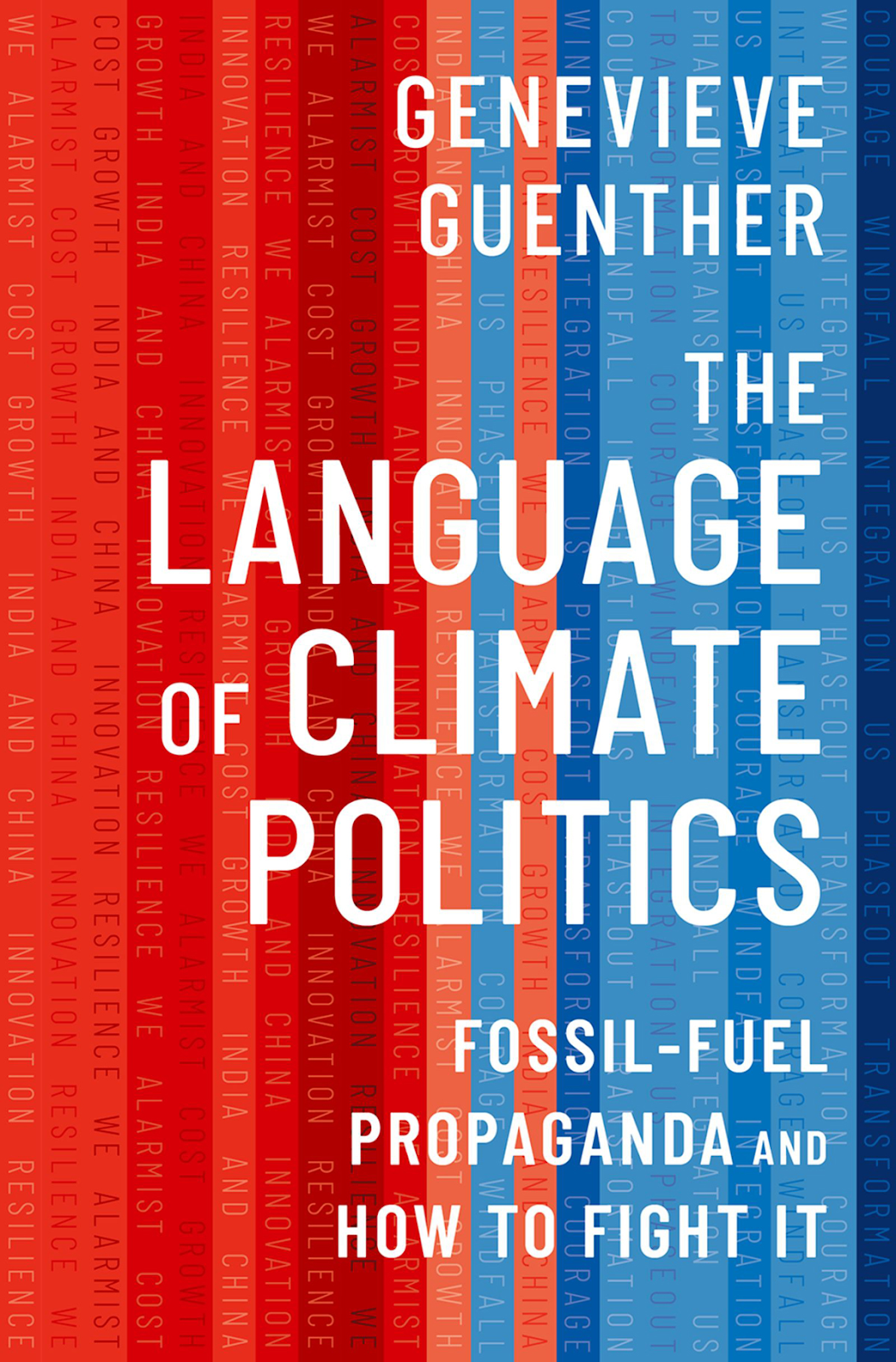


-
Subscribe
Subscribed
Already have a WordPress.com account? Log in now.
 Climate Thoughts with Brian