-
Woodburners Linked to Highest Air Pollution Exposure in Welsh Children, Study Finds
https://www.publicdomainpictures.net/en/view-image.php?image=46552&picture=wood-burning-stove
Woodburners identified as trebling the risk of indoor pollution exposure
A recent study in the Journal of Environmental Management identified woodburners as the highest source of exposure to air pollution in Welsh primary aged schoolchildren. The study measured exposure to air pollution in the participants’ homes, in their schools, and in their daily commute, using portable air quality monitors carried by the children.
Its findings suggested that the highest levels of exposure to children were to be found within home environments and that the sources of indoor combustion was a key contributor to higher levels of exposure. ‘Results showed that children’s highest and most variable PM2.5 exposure occurred within home environments, where indoor sources such as wood burning and smoking were major contributors.’
Comparing the two schools- one urban and one rural in Anglesey the study measured the homes which had woodburners and/or fireplace to identify potential sources of pollution. It highlighted that, ‘Approximately 53 % of students at School B reported having a wood burner and/or fireplace at home, compared to 21 % at School A. This suggests that indoor biomass combustion is likely a significant contributor to higher PM2.5 exposure.’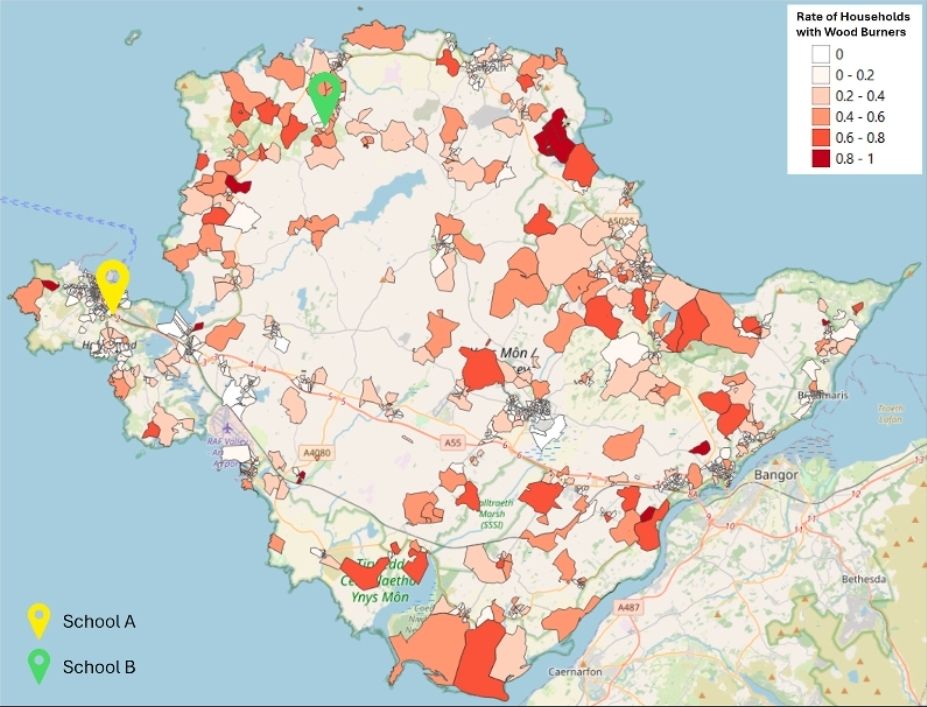
Distribution of household wood burners in Anglesey
Impact of domestic wood burning
The study continued to emphasise the high level of firewood and woodburners in Wales and the impact of this usage on PM2.5 levels.
‘In Wales, domestic wood burning significantly impacts PM2.5 levels, especially along the north coast and during winter (Welsh Government, 2024). A survey indicated that up to 75 % of households in rural Wales use firewood (Jennifer and James, 2013).’
Currently, the Department for Environment, Food & Rural Affairs is running a consultation until mid March calling for stricter emissions limits for new stoves; mandatory labelling for stoves and fuels and increased enforcement penalties. In the overview to this consultation, Defra state bluntly that ‘Air pollution is one of the largest environmental risks to human health. Fine particulate matter (PM2.5) – tiny particles that can enter the lungs and bloodstream – is linked to conditions such as heart disease, asthma, and premature death. Vulnerable groups, including children, older people, and those with existing health conditions, are most affected.’ This statement continued, with an equally strong comment that, ‘Domestic burning of solid fuels such as wood and manufactured solid fuels is a major source of PM2.5 emissions.’
Charities, such as Asthma + Lung UK, criticised this consultation for falling ‘well short’ of what is needed to protect people from this exposure, when they argued that the consultation ignored ‘the pollution from existing stoves which is one of the UK’s biggest sources of air pollution.’
Jonathan Blades, Head of Policy at Asthma + Lung UK, said: ‘The public consultation on domestic wood burning is a welcome acknowledgment of the harm caused by domestic burning, but the policy measures proposed fall well short of what is needed to protect the public from dangerously high levels of emissions. Air pollution is first and foremost a health issue. It is linked to up to 43,000 premature deaths every year in the UK and domestic burning is the only source of harmful fine particulate matter known as PM2.5 that has risen since 2003.’
Blades continued, ‘If this government is serious about protecting public health, reducing the amount of PM2.5 we breathe must be a priority, and the government should be consulting on bold, ambitious and supportive measures to bring down levels from domestic burning.’
The Government consultation document itself says, ‘We all deserve to live in an environment where our everyday lives are not negatively affected by the quality of the air that we breathe. The burning of solid fuels, including the use of woodburning stoves in domestic settings, is growing in popularity and leading to more harmful emissions entering our air.’
‘It is a public health crisis’
Joseph Carter, Chair of Healthy Air Cymru and Head of Asthma + Lung UK Cymru told me that:
“Air pollution is the biggest environmental threat to public health, second only to smoking. At a cost £1bn per year to our NHS, air pollution is draining our resources, straining our health system and cutting short over 2000 lives a year in Wales. It is a public health crisis.
The idea of glowing embers in a wood burner in your home might sound appealing, but the reality is, it could be putting you, your family and community’s lung health at risk.”
He continued, “Although we are thankfully seeing an increased awareness in Wales of the health dangers posed by wood burning, many people are still unaware and we want that to change. Sadly we are not surprised by the results of the study. It highlights the air pollution dangers of not only domestic burning, but also smoking and vehicle idling. This study confirms the important role that the decision of adults has on the air that children breathe, whether it is their parents, teachers or adult neighbours driving vehicles and burning wood. It shows the importance of awareness and education, and we hope the Welsh Government considers this report when planning an awareness campaign.”
Whether air pollution studies like the recent one in Wales, or the current government consultation will then lead to bans or partial bans on woodburners, remains to be seen. The pressure does appear to be mounting and possible health warnings on products could signal that public awareness and consumer led choices might change the market forever. -
Woodburners Linked to Highest Air Pollution Exposure in Welsh Children, Study Finds
https://www.publicdomainpictures.net/en/view-image.php?image=46552&picture=wood-burning-stove
Woodburners identified as trebling the risk of indoor pollution exposure
A recent study in the Journal of Environmental Management identified woodburners as the highest source of exposure to air pollution in Welsh primary aged schoolchildren. The study measured exposure to air pollution in the participants’ homes, in their schools, and in their daily commute, using portable air quality monitors carried by the children.
Its findings suggested that the highest levels of exposure to children were to be found within home environments and that the sources of indoor combustion was a key contributor to higher levels of exposure. ‘Results showed that children’s highest and most variable PM2.5 exposure occurred within home environments, where indoor sources such as wood burning and smoking were major contributors.’
Comparing the two schools- one urban and one rural in Anglesey the study measured the homes which had woodburners and/or fireplace to identify potential sources of pollution. It highlighted that, ‘Approximately 53 % of students at School B reported having a wood burner and/or fireplace at home, compared to 21 % at School A. This suggests that indoor biomass combustion is likely a significant contributor to higher PM2.5 exposure.’
Distribution of household wood burners in Anglesey
Impact of domestic wood burning
The study continued to emphasise the high level of firewood and woodburners in Wales and the impact of this usage on PM2.5 levels.
‘In Wales, domestic wood burning significantly impacts PM2.5 levels, especially along the north coast and during winter (Welsh Government, 2024). A survey indicated that up to 75 % of households in rural Wales use firewood (Jennifer and James, 2013).’
Currently, the Department for Environment, Food & Rural Affairs is running a consultation until mid March calling for stricter emissions limits for new stoves; mandatory labelling for stoves and fuels and increased enforcement penalties. In the overview to this consultation, Defra state bluntly that ‘Air pollution is one of the largest environmental risks to human health. Fine particulate matter (PM2.5) – tiny particles that can enter the lungs and bloodstream – is linked to conditions such as heart disease, asthma, and premature death. Vulnerable groups, including children, older people, and those with existing health conditions, are most affected.’ This statement continued, with an equally strong comment that, ‘Domestic burning of solid fuels such as wood and manufactured solid fuels is a major source of PM2.5 emissions.’
Charities, such as Asthma + Lung UK, criticised this consultation for falling ‘well short’ of what is needed to protect people from this exposure, when they argued that the consultation ignored ‘the pollution from existing stoves which is one of the UK’s biggest sources of air pollution.’
Jonathan Blades, Head of Policy at Asthma + Lung UK, said: ‘The public consultation on domestic wood burning is a welcome acknowledgment of the harm caused by domestic burning, but the policy measures proposed fall well short of what is needed to protect the public from dangerously high levels of emissions. Air pollution is first and foremost a health issue. It is linked to up to 43,000 premature deaths every year in the UK and domestic burning is the only source of harmful fine particulate matter known as PM2.5 that has risen since 2003.’
Blades continued, ‘If this government is serious about protecting public health, reducing the amount of PM2.5 we breathe must be a priority, and the government should be consulting on bold, ambitious and supportive measures to bring down levels from domestic burning.’
The Government consultation document itself says, ‘We all deserve to live in an environment where our everyday lives are not negatively affected by the quality of the air that we breathe. The burning of solid fuels, including the use of woodburning stoves in domestic settings, is growing in popularity and leading to more harmful emissions entering our air.’
‘It is a public health crisis’
Joseph Carter, Chair of Healthy Air Cymru and Head of Asthma + Lung UK Cymru told me that:
“Air pollution is the biggest environmental threat to public health, second only to smoking. At a cost £1bn per year to our NHS, air pollution is draining our resources, straining our health system and cutting short over 2000 lives a year in Wales. It is a public health crisis.
The idea of glowing embers in a wood burner in your home might sound appealing, but the reality is, it could be putting you, your family and community’s lung health at risk.”
He continued, “Although we are thankfully seeing an increased awareness in Wales of the health dangers posed by wood burning, many people are still unaware and we want that to change. Sadly we are not surprised by the results of the study. It highlights the air pollution dangers of not only domestic burning, but also smoking and vehicle idling. This study confirms the important role that the decision of adults has on the air that children breathe, whether it is their parents, teachers or adult neighbours driving vehicles and burning wood. It shows the importance of awareness and education, and we hope the Welsh Government considers this report when planning an awareness campaign.”
Whether air pollution studies like the recent one in Wales, or the current government consultation will then lead to bans or partial bans on woodburners, remains to be seen. The pressure does appear to be mounting and possible health warnings on products could signal that public awareness and consumer led choices might change the market forever. -
Review of ‘Climate Collapse?: Calls to Action from Around the World’, edited by Arkbound Foundation
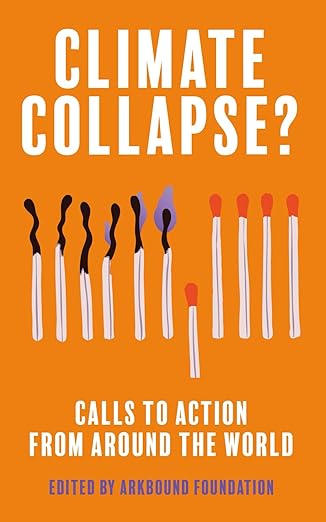
Voices from around the world speak out on climate solutions that they have experienced, to highlight that the ‘waiting for Superman’ approach is not appropriate when managing climate collapse and that local communities have the power themselves to act in a powerful manner to deliver climate action.
‘Climate Collapse?’ is, at times, blunt, critical and unforgiving, perhaps matching the topic under discussion. From, the ecological resistance of women peasants in South Korea; to women’s contributions to combating climate disorder in Haiti; to Brazil’s Landless Workers Movement; to a story of abundance amidst collapse in Sudan; to the conflict between Western conservation and ecocide in Kenya, these global voices speak out about climate injustices and offer clear avenues of hope.
All-pervasive climate breakdown is here, now.
Prof Bill McGuire, from the UK, opens the collection of voices, with his typical style, highlighting that avoiding facing facts is perilous.
‘Whether we accept it or not, our climate is already broken to such a degree that it will have a colossal impact upon every aspect of our lives, the lives of our children and their children, and the lives of those to come, not just for years, but for millennia.’
He points out the fact often forgotten, that in some ways, we are too late, that some impacts are already locked in. ‘The bottom line is that climate catastrophe is already locked- in. Things are going to be bad, and our children and many generations thereafter will inevitably face tough times. Deciding just how tough, however, is still within our gift– to some extent at least.’ He uses the Biblical proverb from Hosea when he forces us to face the fact that this climate breakdown that we are experiencing now is down to human actions. ‘We have sown the wind and now, finally, we are beginning to reap the whirlwind.’
Brian Tokar then begins the argument of how can we find hope and optimism within the world which Maguire describes. Toaker notes, ‘Images of climate-driven disasters have come to dominate our awareness on nearly a weekly basis.’ He asks the question, ‘How can hopes and dreams for a better world be sustained amidst this overt authoritarianism, disruption and chaos?’ This book’s focus imagines the world of tomorrow and how that can be built into being, as well as highlighting climate action today which moves us in this direction. A complete revolution in our thinking is required to understand the fragile equilibrium of our planet and how we are threatening our own home. “Let us make no mistake: the climate crisis is also a crisis of culture, and thus of the imagination.”— Amitav Ghosh
Cultures in conflict
The white saviour syndrome of the Global North, aiming to intervene in the Global South is addressed fully in the collection of voices. This cultural perspective is often seen as one which remains tainted by narratives of colonialism and arrogance. Matthew Azouley makes the argument that an equal playing field must exist between cultures to foster the building of global solutions. ‘Nevertheless, I have learnt enough to know that Indigenous and Global South perspectives on ecological collapse—including the climate crisis— are fundamental to a global understanding of our predicament.’ Western approaches to conservation and ecology still dominate over Indigenous knowledge, whether this is Kenya or Haiti. Powerful ideas about gender roles exist in many communities creating more divides over allowed ‘roles’.
Sharma Aurelien offers a detailed exploration of this very issue of the intersection between feminism and colonialism when she analyses women’s actions in response to climate change in Haiti. She argues that, ‘Haitian women farmers are therefore more exposed to climate effects due to their belonging to three marginalized groups: they are rural people, they are women, and they are nationals of a low- income country.’ However, these women and this community are not ‘left behind’- instead voices keep fighting to advance rights and freedoms. ‘In Haiti’s fragile sociopolitical context, women’s organizations and leaders keep advocating and acting for women’s and girls’ rights.’
Hyojeong Kim makes a similar argument about female rights in South Korea when they ask, ‘How can feminism in general respond to the climate crisis and its gendered dimensions? The emergence of a new ecofeminist women’s movement is urgently required along with a transnational solidarity beyond the nation state so as to cope with the climate crisis.’
Rising from the Ashes
Gail Bradbrook, the co-founder of Extinction Rebellion, begins to conclude the collection of these global voices by embracing the global community and the ideas about protection and regeneration. We need to acknowledge and accept that some parts of our world will never be the same again and that many things may be lost as climate breakdown continues. However, giving everything up is not an option, as this is our collective planet and our collective home.
‘For this book, people from across the world have been asked what they think, with a concern for hearing beyond the usual “whitestream” voices and in care for humanity hearing from itself in our richness and diversity. Let’s take time to be fed by words, thoughts, experiences, ideas from many orientations and cultures. Let’s take time to breathe, to feel, to think together. Then to keep walking together, perhaps with a bit more wisdom in the direction we choose.’
Bradbrook encourages us to re-find our shared humanity as our new compass direction for what remains of the 21st century.
‘We will mostly now witness the breaking down, the drowning, the burning; with our energies increasingly fixed on the challenges of survival. Nevertheless, how we approach and rise to those challenges might also contain possibilities for becoming more humane and more alive together, for a new paradigm to emerge – phoenix- like from ashes – if we focus on building cultures of repair, resistance and regeneration together.’
-
Forever Chemicals, Forever Waiting? UK’s PFAS Plan Under Fire
Does the UK’s plan to tackle PFAS ‘forever chemicals’ go far enough to protect people and the environment?
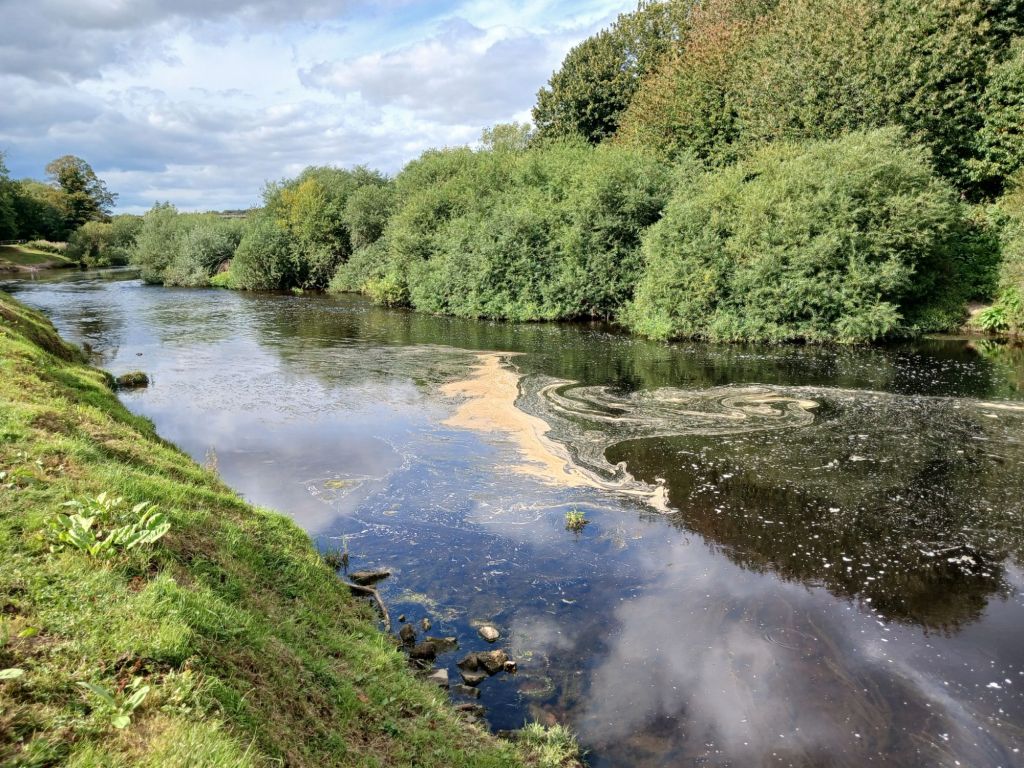
The UK Government has published its first-ever plan to tackle PFAS pollution in the last few days, with a lukewarm response from experts and environmental charities describing the plans as being nothing more than ‘shutting the door after the PFAS horse has bolted’ and not going far enough to identify and isolate the sources of pollution.
The Government’s promise, published on the 3rd February, set out the mission to mitigate against the risks from PFAS.
‘The government’s new PFAS Plan sets out, for the first time, a collaborative approach to understanding, managing and reducing these risks – while allowing continued use where no safe alternatives exist, such as in medical devices and clean energy technology.’
The policy paper acknowledged the importance and prevalence of forever chemicals stating, ‘Per- and poly-fluoroalkyl substances (PFAS), often called ‘forever chemicals’, represent one of the most pressing chemical challenges of our time. They are used throughout our everyday lives as their unique properties have brought significant benefits to society… Yet their persistence and widespread presence in our environment pose risks we cannot ignore.
This is an important issue for the government to address.’
‘Forever chemicals shouldn’t be a forever problem.’
The Department for the Environment, Food & Rural Affairs claimed that their new plan would better protect people and the environment stating ‘Forever chemicals shouldn’t be a forever problem.’
The plan aimed to better understand PFAS sources, to tackle the spread of PFAS chemicals and then to reduce exposure with comprehensive monitoring of PFAS in rivers, lakes and seas. Consulting on a statutory limit for the amount of PFAS in UK drinking water in order to increase regulatory enforcement powers was also one of the measures revealed from Defra.
‘Our vision is to reduce and minimise the harmful effects of PFAS while transitioning to safer alternative substances. There is growing evidence that their widespread use and past management have generated risks of harm to people and to the environment, including wildlife. Their persistence means that some PFAS will remain in our environment for hundreds of years.’
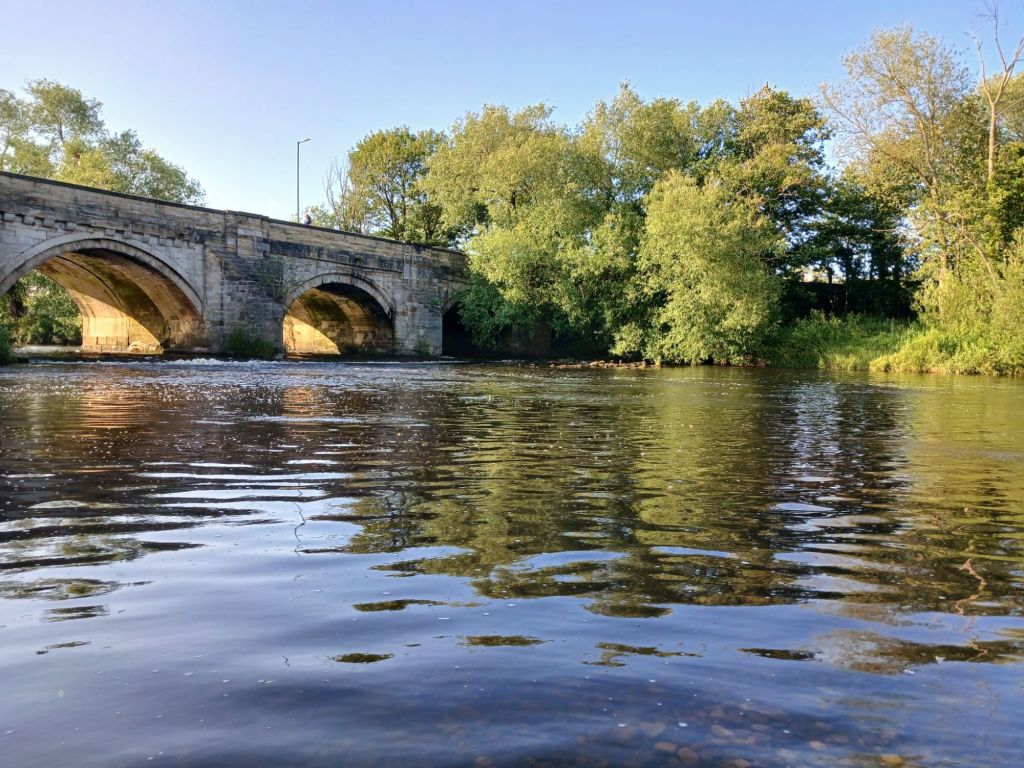
The UK Plan acknowledged the levels of exposure from PFAS pollution in England, Scotland and Wales, stating, ‘PFAS have been found in approximately 80% of surface water samples, approximately 50% of groundwater samples, and all fish samples.’
Falling short on meaningful action
The environmental charity FIDRA responded to the UK plan, arguing that the plan fell short on significant action points.
Despite some vivid acknowledgements of the ‘irreversible harm’ PFAS can present, the plan falls short on meaningful action to prevent further PFAS pollution at source.
Fidra argued that PFAS chemicals ‘present one of the most challenging pollution crises of our generation, which is why urgent and decisive action is paramount.’ They stated that the Government’s PFAS plan did not go far enough on restriction opportunities and that prevention of PFAS pollution did not appear to be a priority. They described the plan as being little more than, ‘Shutting the stable door after the PFAS horse has bolted.’
Chloe Alexander, chemicals policy lead at Wildlife and Countryside Link,echoed this criticism of the Government plan, when she was quoted in The Guardian as describing the Government as a “crushingly disappointing framework that ducks the hard decisions”.
Lukewarm response from experts
Emma Hardy MP, Minister for Water and Flooding, appeared before the Environmental Audit Committee (4th February) and was asked whether she was surprised by the negative response and whether she understood why PFAS experts expected more.
Hardy commented that she ‘was proud of the plan’, claiming that ‘this has never been done before’ and that these plans were ‘a foundation to build and develop on’ and that she ‘wanted to get something out which demonstrated this Government’s commitment and seriousness to this issue.’ However, the Chair’s response was critical, suggesting that the initial reading of the Government plan fell ‘A long way short of the coordinated action that the EU is taking collectively’, citing that other countries have acted faster on PFAS pollution. He also argued that this policy appeared to be nothing more than, ‘A plan to consult on whether to have a plan’.
Government timeline for action
The UK Government’s PFAS plan does indeed appear to focus more on a long-term vision rather than the short term action urged by experts.
It called for action to: ‘Commission research to better understand the consequences of environmental contamination by PFAS on ecosystem health and wildlife.’ In addition, it called for more monitoring of possible PFAS sources, when it stated its indicative commitment to: ‘Deliver a comprehensive, multi-year assessment of PFAS contamination in estuarine and coastal environments in England…’
Even in terms of tackling PFAS pathways, the UK plan seemed weak, in its indication to go no further than simply considering restrictions on PFAS: ‘Complete work to consider a UK REACH restriction on PFAS in fire-fighting foams.’
‘Acting now is essential’
This position to continue to monitor the situation, or the ‘Sit tight and assess’ option favoured in the satirical ‘Don’t Look Up’ film, seems to directly contradict the urgency from Emma Hardy MP in the foreword to the UK’s PFAS Plan when she makes it abundantly clear that action is needed now to avoid irreversible harm.
‘PFAS contamination threatens public health, wildlife and the quality of our natural environment. Acting now is essential to prevent irreversible harm and to ensure that our regulatory frameworks keep pace with scientific evidence.’
How long it takes for Government action to match Government rhetoric remains to be seen.
-
Planning Payments, Pollution Fears and a Paused Decision at Former RAF TollertonRushcliffe Borough Council defends £200,000 payment from housing developer
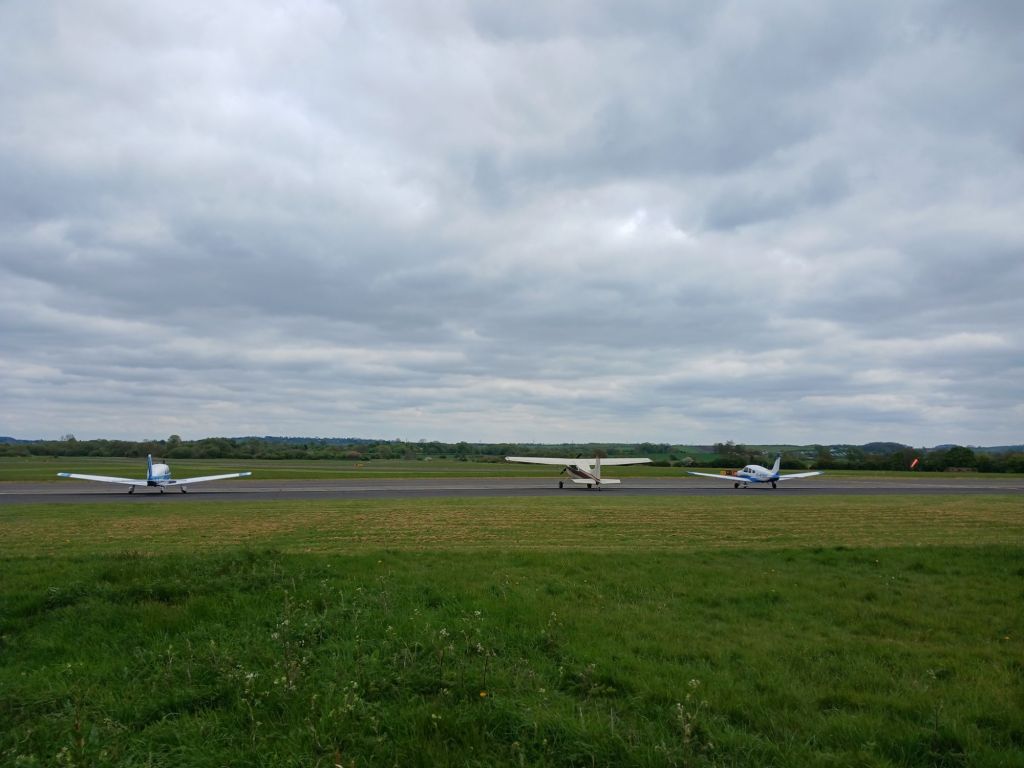
Campaigners against the controversial proposals of Vistry Homes to build 4,000 homes in and around the site of Nottingham City Airport were jubilant recently, as the local council voted to pause its decision, while more information was sought to support moving forward.
However, campaigners appeared very uneasy about the knowledge that Vistry Homes- the developer- would be making several financial payments to the local council over the first half of this year if planning momentum carried forward.
The Planning Performance Agreement (PPA) document uploaded to the planning portal in December 2025 revealed that Vistry Homes, the applicant, would pay Rushcliffe Borough Council totalling £202,006 as various planning stages moved ahead over a period of seven months. Payments of £28,858 for each stage to the council shocked campaigners as transparency and undue pressure became their new financial concerns, in addition to their environmental concerns.
Challenges over financial payments
Cllr Roger Upton, RBC Cabinet Member for Planning and Housing, responded to campaigners’ claims that financial payments from the developer to Rushcliffe Borough Council were untoward, stating that PPAs are a commonplace method in planning matters.
“Residents and stakeholders can also be assured developers contributions to the planning process or PPA amounts are placing no pressure on the Council than any other current application. This in the same way PPAs for other previous larger proposed sites have been managed appropriately and effectively in the past.
“PPA amounts vary from document to document that are submitted to Councils across the country. These can vary, such as in this case, where the amount is guided by the size and complexity of the proposed site and the extensive work the Council will have to undertake to fulfil its role.”
When asked to give detailed examples of other contributions to local projects, Cllr Upton asked the Communications and Customer Services Manager of Rushcliffe Borough Council to answer on his behalf. This response gave the information that, ‘In recent years PPAs have been agreed for the current significant Newton development near Bingham, Nottingham Forest Football Club’s proposed developments of the City Ground and proposed solar farms at Thoroton, Ruddington and Stragglethorpe.’
The level of payments from the developers to the local council for these other projects was questioned further to better understand the context of receiving a payment of over £200,000 in seven months and whether the perception of this timeframe and cost could be viewed unfavourably. Rushcliffe Borough Council told me that the PPA for the Newton development was £70,000, for each solar farm the PPA was £18,500 and for the development of Nottingham Forest Football Club City Ground was £150,000.
A large housing development of 4,000 homes may then have a larger financial payment to the council than a solar farm, especially when remediation work of the radium contaminated land at Tollerton Park would have to be included.
RAF Tollerton history
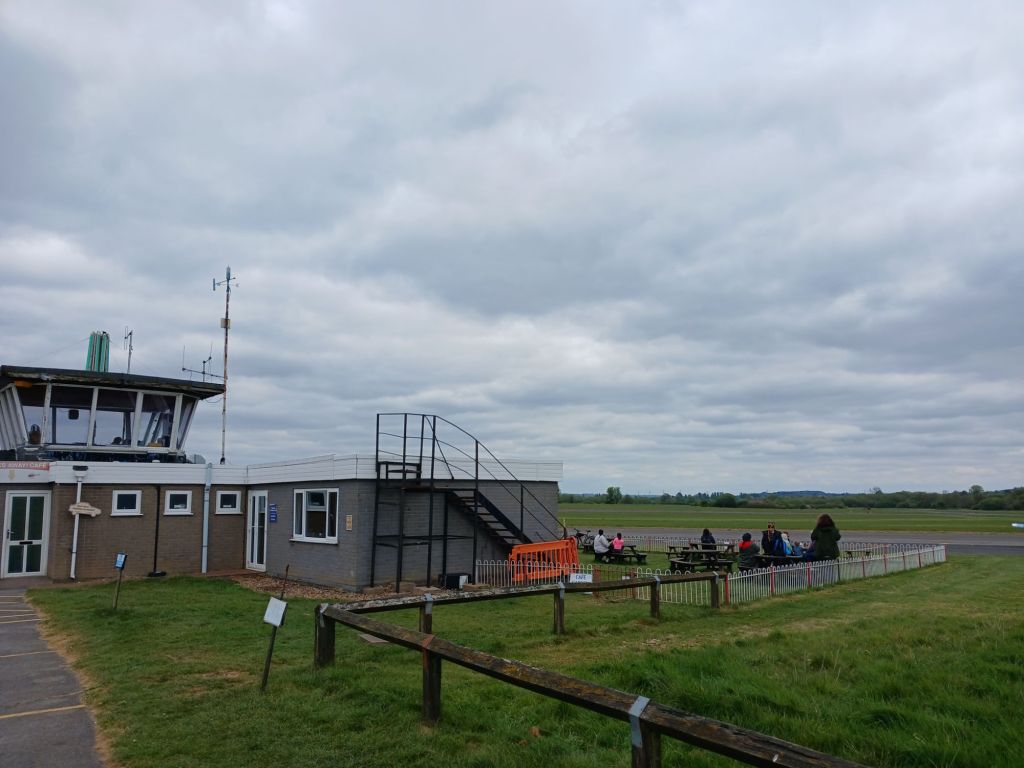
Nottingham City Airport is also known as RAF Tollerton and has a long and illustrious military past, being used regularly in World War 2 and then later as an area for aviation repair and disposal, potentially being the source for the radium discovered in the soil. In more modern times, the site has seen various uses and businesses operate, from flight training, an emergency landing site for the air ambulance and an established local cafe.
Vistry Homes have earmarked the site for a large housing development, though these plans have been dealt a blow by Rushcliffe Borough Council which voted for a pause in the planning process, while more evidence about the impact to the local area is confirmed, especially with concerns coming from the Highway Authority.
In a press release this week, the Council stated,
‘Rushcliffe Borough Council’s (RBC) Cabinet has voted to pause a decision on the next stage of planning at Tollerton Airfield whilst more detailed information is requested from the developers on highways.
It met on Tuesday January 13 and chose to not proceed with a Supplementary Planning Document (SPD) or masterplan for the site at this stage, requesting developers submit more information on highways modelling data that can inform traffic projections.
It follows consultation on the SPD last year, aware of the points local residents and key stakeholders have raised as part of the planning process for the proposed Gamston/Tollerton Development.’
Cllr Roger Upton, RBC Cabinet Member for Planning and Housing, bemoaned the lack of information requested from the developer, saying,
“We currently have applications sitting with the Council to build on the Gamston and Tollerton site, and we have been clear that we want a Masterplan for the entire development, to offer clear guidance on where the infrastructure should be sited as part of the planning process.
“We have been awaiting detailed traffic modelling data from developers, and comments from Nottinghamshire County Council and National Highways on the data and plans for the transport highway solutions in and around the site, and it is yet to arrive.
We have therefore decided to delay a decision on the SPD whilst we request this information. We do need to make a decision by June 30, 2026 and will be calling upon the developers and highways agencies to provide this information, which they have had months and years to complete.
We are aware of concerns around possible contamination on areas around Nottingham Airport, and these must be addressed as part of any planning applications.”
From Rushcliffe Borough Council
More transparency over planning issues needed
Rushcliffe Borough Councillor Debbie Soloman called for more transparency over the Supplementary Planning Document (SPD) and had asked for a request to delay its adoption days before the council meeting took place.
On the 11th January, she posted on social media, ‘I am very concerned the RBC is rushing through the decision on the Tollerton/Gamston Fields development. Therefore I have written to all Rushcliffe Borough Council cabinet members asking them not to adopt the East of Gamston / North of Tollerton (SUE) Development Framework SPD. If the Gamston Fields/Tollerton development does go ahead it needs to be done the right way -with full transparency.’
Her letter continued to highlight some of the specific concerns raised before by campaigners.
‘Dear Cabinet Members,
East of Gamston / North of Tollerton Development Framework – Request to Delay Adoption
I am writing to express my serious concern ahead of your scheduled vote on Tuesday 13 January 2026 regarding adoption of the East of Gamston / North of Tollerton (SUE) Development Framework SPD.
The issues emerging from consultation responses, particularly from National Highways, Nottinghamshire County Council and Tollerton Parish Council indicate that key technical and environmental matters remain unresolved. Chief among these is the question of land contamination across the former airfield site.
It is clear that this site carries a complex legacy of contamination, including historic industrial waste, PFA (“forever chemicals”), and deposits associated with former aviation operations. Yet the SPD moves forward without a comprehensive contamination study, a remediation framework, or the involvement of accredited specialists independent from developer control.’
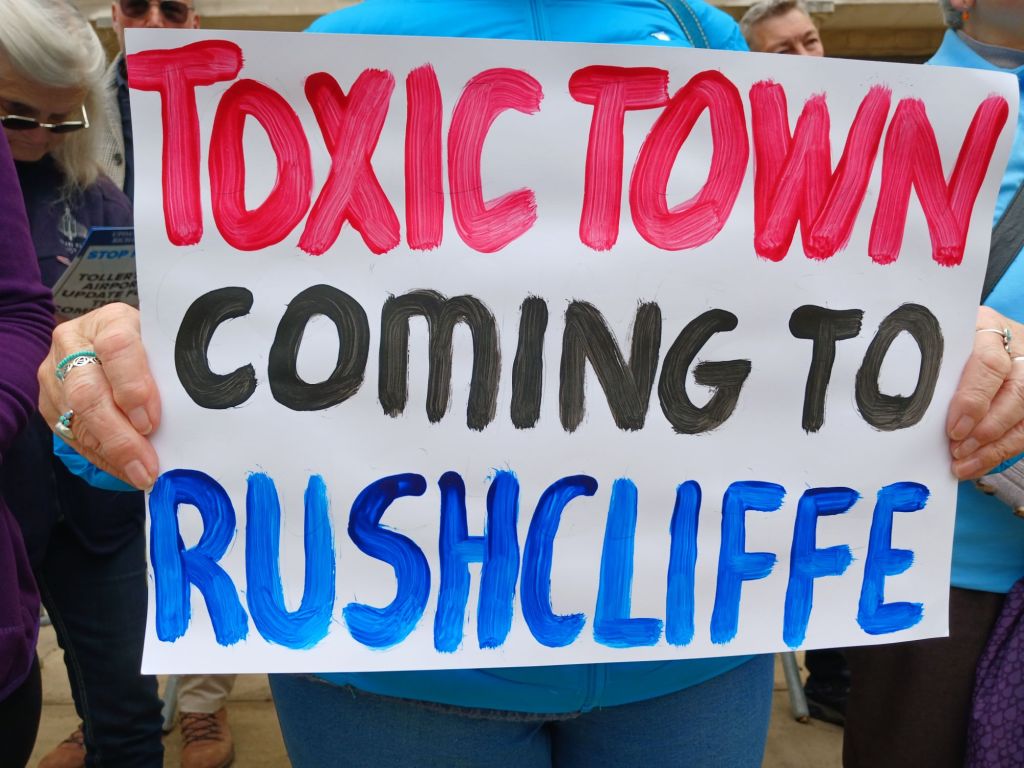
She appeared to be also concerned about the public perception and the ‘optics’ of rushing through the process, which might damage the reputation of Rushcliffe Borough Council, when she stated, ‘the optics of rushing adoption are extremely poor. What confidence can the public have if we appear to be hurrying to avoid scrutiny? A short delay would protect the Council’s reputation far more than pressing ahead under the shadow of unanswered questions.’
Campaigners pleased with calls for more investigation
Responding to the council’s decision, Sarah Deacon, one of the leading campaigners from the Save Nottingham Airfield Group, said,
‘SNAG are really pleased that RBC have taken this important step. Pausing the adoption of the SPD will allow for the collection of critical data to inform the proposed highways and transport strategy for the site both locally and regionally. This will then allow for proper costings to take place which will mean that realistic viability assessments can be produced.’

She continued her statement, saying, ‘We know from preliminary calculations that the site is not viable in terms of delivering full policy obligations – and we want the people of Rushcliffe to be fully informed about what would not be delivered. If the site is not fully viable with the delivery of 30% affordable homes, for example, because of the costs of Highways or remediation of contamination, the people of Rushcliffe deserve to know this.’
It now appears that these housing development plans will undergo closer examination and scrutiny, with the success of pressure from campaigners for transparency and dialogue.
-
Welsh Council to spend over £2.5 million to protect residents from climate change
Homes at severe flood risk to be demolished by council
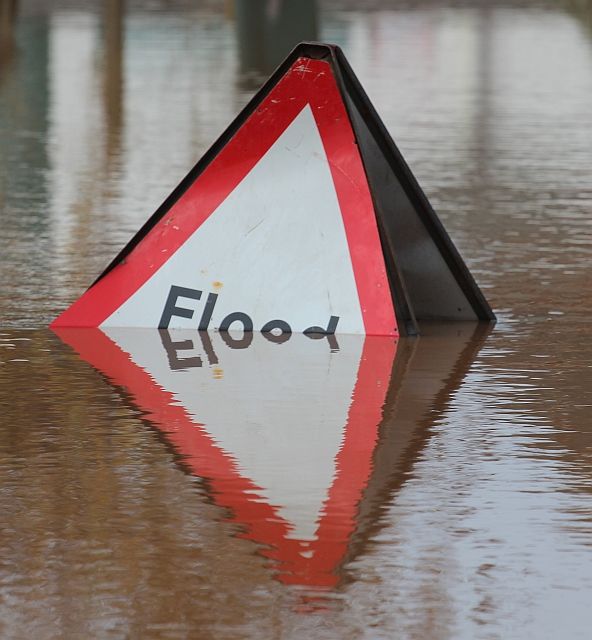
Councillors for Rhondda Cynon Taf council have approved the acquisition of 16 homes in Ynysybwl, which have been described as at ‘severe flood risk’. The homes in Clydach Terrace will be bought for £2,570,000 and are at high risk of flooding from the local river, Nant Clydach, with residents having suffered considerably with flooding owing to recent storms.
A council report described their experiences, ‘During these recent storm events much of the pavement / highway was under water and the homes were rapidly inundated with flood water with internal flooding up to 1.96m in depth. There was extensive damage to many of the properties.’
The decision from the county council will include relocation costs for the residents concerned, as well as legal fees, and will remove an ongoing flooding risk for the community.
The report noted, ‘Approval of the recommendations would enable the Council to exercise its statutory and discretionary powers to intervene in respect of the ongoing risk to health, safety and property due to flooding.’
Several flood risk management strategies had been explored, including the construction of a raised flood defence wall. Councillors however supported the conclusion that ‘this was not ‘an economically viable option under the UK and Welsh Government funding rules for flood risk management purposes.’
Increased climate change risks
Serious consideration was taken of the increased risks posed by climate change, which meant that the homes could not remain, as the report pointed out, ‘Indeed, given the implications and expectations of further flooding due to climate change, flooding may become a more frequent occurrence.’
Rhondda Cynon Taf County Borough Council stated in their decision that their conclusions were conducted in line with their statutory aim to protect the community against the threat of climate change, a role they were taking seriously.
‘The Council can use such [statutory] powers for the benefit of the authority, its area or persons resident or present in its area. Use of this power would include protecting communities against the threat of climate change and from a high risk of flooding, through the purchasing of property for the reasons set out in this report.’
The Council also stated that funding for the purchase of the homes would come from available resources within the Council’s overall flood management programmes.
Climate change displacement
Around Wales and England, many homeowners have faced the challenge of having an ‘insurance nightmare’, where obtaining insurance has been difficult owing to climate related risks and when it is offered, the premiums have been high. Unable to protect, insure or sell their homes, these Ynysybwl residents have felt trapped in their own homes.
Although this instance has been described as a ‘unique set of circumstances’, Rhondda Cynon Taf County Borough Council has rightfully placed the safety of residents at a high level, and has acted decisively to prioritise the housing needs and the well-being needs of the community.
This may not be the first displacement of people and communities within the UK owing to climate change- what is certain though, is that it won’t be the last. -
Review of ‘The Problem With Plastic: How We Can Save Ourselves and Our Planet Before It’s Too Late’ by Judith Enck and Adam Mahoney
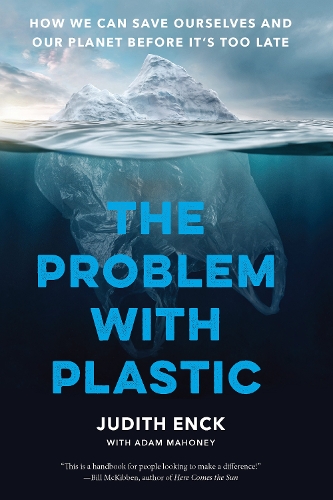
Plastic pollution and contamination sadly seems to be so ingrained into our environment that yet another book on the issue appears to be superfluous. That being said, Enck and Mahoney peel back the veneer of company ‘plastic-washing’ and false promises to challenge the dominant and overwhelming narrative from the plastics industry (read fossil-fuel industry) that if individuals were just better at recycling, then the problem would be solved.
They make the early point that despite plastics being a relatively new invention, they have colonised the world, making us overly-dependent and addicted to their use. ‘What began as a marvel of modern science has been woven so tightly into the fabric of our lives that imagining a world without it seems impossible.’
Humans once lived in a world without plastic and this seems hard to fathom now. ‘In just seventy- five years, plastic has cradled our planet in a synthetic embrace.’ Enck and Mahoney address the systemic issues at the core of the plastic crisis and explore the links to environmental injustices, using repeated examples of neighbourhoods and communities blighted by plastic pollution, with attendant increased health risks. They call out big business as being a knowing actor in the ‘plastic racism’ and argue that short-term profits are more of a priority to these companies than real solutions to reduce the production of plastic. ‘Despite the mounting evidence against the plastics industry, those in charge continue to double down on false solutions, successfully misleading the public and hindering real progress.’
No place untouched by plastic
Enck and Mahoney remind the reader that, ‘Today, there isn’t a place on Earth untouched by plastic.’ From plastic bags deep in the Mariana Trench to plastic pollution on the slopes of Mount Everest, to inside the human body with microplastics and nanoplastics, the contamination is everywhere, with the tap of production not even close to being shut off. For an industry that is not older than the oldest person alive today, this shocking impact on our world is the worst of achievements. ‘Half of all the plastic ever created has been around only since 2007’
The authors make the point that massive production of plastic will thwart and dwarf the best efforts of recycling, or even ‘chemical recycling’, which continues to stand at less than 10% globally. The same fossil-fuel playbook of hoping for a technological ‘magic bullet’ solution, which will allow production to continue and profits to prosper, has been successfully used by the plastic industry and it is this that the authors want us to be alerted about. This should be no surprise as the vast majority of plastics are made from fossil fuels and it is the same industry pushing both products.‘Plastics are made from fossil fuels and chemicals. The world’s biggest oil and gas companies are also the biggest plastic producers.’ … ‘In less than a century, plastic has changed the world. In 1950, the world produced just 2 million tons of plastic. It now produces over 450 million tons per year.’
‘With microplastics seemingly everywhere—in the air, water, and food we consume—it’s easy to feel overwhelmed.’
Against this industrial plastic behemoth, it can feel that our efforts and voices are insignificant and that it is easier to not challenge their narrative, however Enck and Mahoney argue that this is far from the case, and that the plastic edifice is beginning to crumble. They highlight communities where local protests have successfully repelled fracking industries, incinerators and landfill operators. ‘Most people experience plastic in passing as a brief relationship with a throwaway item. The bulk of the consequences, though, are saddled upon the local communities where plastic is fracked, cracked, dumped, and burned: from the Indigenous, to the free towns, to the poor working class. In short, plastic kills. Yet organized resistance to plastic is spreading across the globe.’ It appears that it is the communities which are threatened the most which are standing up the most against the polluters, but they need the help of powerful, unafraid governments, which are not content with solutions that ‘skim the surface’, but which apply rigorous regulation to industry. ‘As with traditional landfills, incinerators and toxic ash landfills are overwhelmingly located in low-income and minority communities where residents bear the brunt of the health and environmental impacts from plastic pollution.’
The authors call for meaningful and significant change to phase out this plastic pollution.
‘Meaningful changes that significantly reduce plastic production and waste must occur on a vast scale, one that matches the current volume of plastic produced and consumed…Achieving such large-scale change requires the introduction of new laws that compel industries to take actions they have otherwise failed to initiate on their own.’
The authors make the repeated point in ‘The Problem with Plastic’ that,
‘If the science is clear and the damage so severe, why hasn’t the crisis been meaningfully addressed?’
A cleaner, healthier future is in our hands
In order to achieve this cleaner and healthier future, Enck and Mahoney powerfully argue for a two-pronged attack- one which is government led and one which is consumer led. They urge that meaningful choices for customers away from plastics cannot happen magically on its own and need the helping hand of a necessary Big Government. The current unrealistic self-policing practices of the plastics (fossil-fuel) industry must come to an end.
‘Governments must implement strict regulations to curb plastic production, enforce transparency in corporate sustainability claims, and eliminate subsidies for plastic production under the guise of recycling innovation. And we, as consumers, must be empowered with better choices, clearer labeling, and access to plastic-free alternatives that are genuinely sustainable. The petrochemical industry will continue pushing misleading solutions unless there is strong pushback from communities, policymakers, and environmental advocates.’
The authors close by reminding us that profound transformation is possible and that inventions, although they can’t be ‘un-invented’, can be refined (!), improved upon and in many cases, left behind, as more sustainable, efficient and safe options become widely accessible.
‘Yet this is no natural catastrophe; it is human-made, and that means it can be unmade. Plastic pollution, climate change, and environmental injustices are not inevitable; they are the results of choices made by businesses, governments, and, to a lesser extent, you and me.’
The path forward to save ourselves and our planet from this plastic juggernaut will likely not be an easy one. It is reliant on individuals moving away from convenience to choice, from being fettered to plastics to freedom, and from apathy to action. When held against the healthy vision of the world, just over the horizon, this surely is a price worth paying.
‘The way forward is daunting but not impossible. It requires courage, persistence, and a shared vision of what the world can be.’
-
Review of ‘The Nature of Pandemics: Why Protecting Biodiversity is Key to Human Survival’ by Jake M. Robinson

Robinson’s latest book, The Nature of Pandemics could not have come at a more timely moment, as hospital admissions of flu patients in the UK rose by 55% in one week owing to a winter ‘super flu’.
Robinson explores what lessons have been learned from the Covid-19 global pandemic and warns that a proactive approach to the next Disease X is far more sensible than a reaction which might come too late.
This book repeatedly urges for action and awareness when it comes to emerging diseases and strongly warns about the dangers of the deadly duo of apathy and ignorance. As Robinson notes, ‘Complacency is the breeding ground for disease. Where vigilance falters, contagions thrive.’
The Nature of Pandemics begins by looking to the past for clues and lessons, noting the incredible bravery of the villagers of Eyam, Derbyshire in 1665, who, through their actions, taught the future about containment. ‘Exploring the annals of past pandemics can help illuminate the path ahead, casting light on future outbreaks.’ Robinson begins the book by ensuring that his readers are clear on the various terms of pandemics, outbreaks and epidemics, especially in the modern world, where they are often used interchangeably by the general public.
Throughout the text, he convincingly argues for a ‘One Heath’ approach and mindset- an approach which ‘acknowledges that the health of humans, non-human animals and our environment are inseparably linked.’ He cautions that finger-pointing and blame do not by themselves offer solutions and can oftentimes hide the solutions, if the closeness between humans, non-humans and the environment is not well understood. ‘Yet pointing the finger at wildlife for pandemics is off track. It’s a misguided heuristic that overlooks the complexity of diseases, ecosystems and human antics. It’s also a way to keep solutions buried in a grave of misconception.’
When we push nature to its limits, nature pushes back.
Dilution, diversity and amplification effects are all explored in the text, with human behaviour placed under the microscope. Robinson argues that global movement of people can create a convenient mode of transport for pathogens. ‘Millions of people cross oceans and borders each year. As we do, we provide a comfy vehicle for pathogens.’ The change in land-use, from practices such as deforestation, and also a lack of awareness on the importance of soil, can allow for the evolution, emergence and mutation of diseases.
‘Over 30% of new diseases reported since 1960 can be attributed to deforestation and land-use changes. Closeness is an issue. By changing the land, we increase human-wildlife contact.’ Throughout the book then, Robinson argues that spillover events can not be described as ‘accidents’, but are a predictable outcome from the closeness between species and the pressure of conditions that this can bring. ‘Spillovers don’t just happen. They’re a consequence of fractured ecosystems and close interactions between humans and other organisms. ‘When we push nature to its limits, nature pushes back.’
Disease X- It’s Coming
‘The Nature of Pandemics’ should not be read as an ‘alarmist’ or ‘doomist’ text- instead it rationally outlines the likelihood of global pandemics and the emergence of ‘new’ or ‘old’ diseases that are flourishing in our world, sometimes through political inaction, or through the dangers of antimicrobial resistance. ‘Disease X symbolises the perpetual race against new and evolving pathogens. It’s an ongoing struggle to keep pace with microbial evolution- a relentless drive for survival.’ Disease X itself is simply a term used to represent the next unknown pathogen that could cause a severe pathogen that could cause a severe pandemic, so to some extent, we are both preparing for a ‘known unknown’ as well as an ‘unknown unknown.’ At present, the statistics warn that another event like COVID-19 is coming.
‘The current likelihood of experiencing another COVID-19-like event in one’s lifetime is 38%, a figure that may double in the coming decades due to increasing rates of disease emergence.’
What was particularly refreshing about Robinson’s arguments was that he did not shy away from highlighting that pandemics, such as bird flu, within non-human species are already happening at an alarming rate. Treating the ‘non-human animal kingdom’, in a medical sense as well through vaccinations, to ensure positive health could help bring stability to linked species and food webs.
A critical crossroads
In order to ‘stay ahead of the curve’ then, Robinson suggests that re-building the connection to the natural world could be seen as a public health intervention. He argues that, ‘It’s clear that our relationship with the natural world is at a critical crossroads.’ He highlights examples of nature regeneration, green prescriptions, community level work that together sow the necessary seeds of change that can help address the looming and current threats. ‘In a world facing a double burden of disease, from contagious outbreaks to chronic illnesses, reconnecting with the natural world may offer a powerful form of relief.’
As per his other books, Robinson challenges us to shift our mindsets and arrogance about our place in the ‘animal kingdom’ and begins to suggest that our relationship with nature should be heading towards a symbiotic relationship where all parties mutually benefit. He writes, ‘We must recognise that the health of our planet and its inhabitants is inextricably linked to our actions.’
Pandemics happen. They exist. They have existed and they will exist. They are a part of our world. We need to learn how to stop them from being our world. The Nature of Pandemics by Robinson, charts this course for us.
-
Review of ‘Life on a Little- Known Planet’ by Elizabeth Kolbert

Kolbert, the Pulitzer Prize winning author, has gathered for her readers 17 celebratory articles from the last 20 years of her writing career, to highlight and inspire others working for a better climate today and tomorrow.
With devastating climate events happening daily around the world, articles on issues from ten years or over, may seem out-dated to some readers. The lesson here, however, is to acknowledge the journey towards climate action, that sometimes has happened slowly and other times has been revolutionary in nature. Many of the essays draw our focus towards solutions and how the impact of an individual’s work on conserving, communicating, rewilding and protecting our precious world and ecosystems, can motivate and inspire local communities to work together.
Kolbert reminds her readers that, ‘We live in an extraordinary time’ and that the alarming pace of climate decline we witness in the modern world, is a rare occurrence in the planet’s history and one which we are in danger of pushing past a point of no return. ‘But over the last four billion years, only very rarely has change rushed along at the pace it is moving today.’ Rising global carbon emissions and the resulting need for decarbonisation can become political footballs, which can delay helpful technologies which may play a part such as carbon dioxide removal initiatives. Kolbert is quick to note the challenges that need to be surmounted before any of these programmes could be feasible at large scale and suggests instead that these efforts may simply be a distraction from the need to turn the curve of global emissions back down to the steady and stable levels of the past.
Kolbert notes, ‘The amount of CO₂ in the air now is probably greater than it’s been at any time since the mid- Pliocene, three and a half million years ago, when there was a lot less ice at the poles and sea levels were sixty feet higher.’
‘Life on a Little- Known Planet’ is not by any means, a ‘doomist’ text. Instead, it profiles dedicatedindividuals, including more famous names like James Hansen and Christiana Figueres, one of the architects of the Paris Agreement, along with their experiences and expert views.
It also focuses on the efforts of individuals around the world, who have a strong sense of place and connection with their environments. The moral and legal question of whether the natural world should have rights, is evaluated by Kolbert and is found to exist throughout human history. ‘From a certain point of view, granting nature a say isn’t radical or new at all. For most of history, people saw themselves as dependent on their surroundings, and “rivers, trees and land” enjoyed the last word.’
Witnessing how both our local and global environments are changing, transforming and collapsing, reminds us of what we are in danger of losing. Writers like Kolbert have been sounding the climate alarm for over 20 years now and this is brought into sharp relief when we read her prescient articles dating back to 2005.
When languages die out; when ecosystems die out; when insect colonies die out; we are not just in danger of losing connections, species and interconnected worlds- which we are still touching the surface of- no, instead, we are in danger of losing ourselves and our relationship with our world. How we respond to the climate crisis as the defining challenge of our times, means that we have to move beyond words, treaties and pledges. We need a response which is rooted in gratitude.
The Earth is not a capitalist commodity.
It is our home.
-
Review of ‘Clearing the Air’ by Hannah Ritchie

‘Climate change- and the energy, materials and food systems that drive it- is a massive but solvable problem.’
It is not often that we find a climate book that is openly honest, factual and optimistic about where we are in ‘one of the biggest challenges that humanity faces’. Ritchie structures this book into a question- answer format which makes the writing accessible, while at the same time, objective and factual. Her 50 questions are divided into 10 sections covering issues ranging from food, carbon removal, heating, electric cars, renewable energy and more. Every section has clear action points which are necessary to bring about the change that is needed. Her objective, data based clarity approach makes her writing compelling and her arguments convincing. She argues that ‘We are not only capable of solving climate change but also poised to create a better future for ourselves in the process. To do that, we first need to understand that it’s possible.’
Ritchie repeats that aiming for ‘perfect solutionism’ is a pathway doomed to failure. She argues, like many others, that we should not ‘let perfect be the enemy of good. ‘Another problem is that we seem to be stuck in something I call ‘perfect solutionism’. People seem to expect solutions to climate change that have no downsides…Unfortunately, perfect climate solutions don’t exist.’ She challenges what this search for a ‘perfect solution’ actually means: ‘We also need to recognise where a search for perfection will leave us: in a much hotter world, still hooked on fossil fuels, with millions still dying from air pollution.’
‘It won’t be straightforward, but it will be worth it.’
Ritchie begins by tackling some of the oft-repeated questions that seek to delay climate action. Some of these will now be summarised here, owing to the quantity of times we have seen these arguments. ‘Isn’t it too late? Aren’t we headed for a 5 or 6℃ warmer world?’
Ritchie tackles this question head on and deals with it by highlighting how much progress we have made from the early scenarios that suggested these higher global temperatures. She urges honesty in these discussions, in order that the public do not lose trust in the messages from climate scientists. Her succinct answer is that, ‘Every tenth of a degree matters. There’s no point at which it’s too late to limit warming and reduce damage from climate change.’
Attention is then turned to the issues of polarisation, or apparent political divides and support for climate action. Ritchie argues that the data indicates that ‘more people care about climate change than you think’ and that views on this are skewed by the preferred media that is consumed. She points to survey findings which indicate that the public welcome climate policy action. ‘A survey of 59,000 people across 63 countries found that 86% thought that humans were causing climate change and that it was a serious threat to humanity.’ Ritchie urges that talking to real people about climate issues and actions, such as installing solar panels or choosing to drive an electric car, can really make a local difference. When communities work together and people talk to each other, solutions can be found which then drive further innovation. ‘Systemic change is driven by culture and public sentiment, and how we all think and talk about climate solutions shapes that culture.’
Why should my country act when others are not acting?
Ritchie also explores the ‘1%’ argument when she poses the question, ‘My country only emits 1% of the world’s emissions; surely it’s too small to make a difference?’ She highlights two factors here when this is used as an excuse not to act; one, that ‘the world’s ‘small emitters’ make up more than one-third of the world’s emissions, enough to significantly turn the dial’ and secondly the moral argument of understanding the importance of historical emissions and not just emissions now. ‘There is also a strong moral argument for why countries like the UK should care, even if their emissions today are not a big piece of the pie. The UK emits just 0.9% of emissions, but if we add up all its historical emissions, it accounts for 4.5%.’ Countries like the USA historically have emitted around 24%, but the spotlight is rarely focused on them, but rather the climate scapegoat of China.
Ritchie does focus on China and answers the question, ‘Aren’t our efforts pointless if China’s emissions keep growing?’
She acknowledges China’s position now, but also highlights its climate leadership position, when she argues that the data demonstrates that, ‘China is the world’s largest emitter but it’s rolling out renewables and electric vehicles at breakneck speed.
China is rolling out solar and wind at a staggering rate. In a single year, it builds enough solar and wind to power the entire UK. In 2023, it installed more solar power than the US had in its entire history.’
She makes the point that, ‘[r]elying on others is a geopolitical liability’, one which was demonstrated only too well in the UK, when the impact of Russia’s invasion of Ukraine was felt in electricity prices. Her point is that solar and wind energy are free in every country, although some countries may make decisions on their energy needs depending on their geography and local conditions.
The future is there, waiting for us to take it. Or, rather, build it.
‘Clearing the Air’ continues in this analytical approach, outlining the facts around electric cars, the energy needs from the food industry, heating and cooling and nuclear power- the ‘big topics’ of climate discussions and policy. Throughout, Ritchie stresses what the data indicates, which heightens the optimistic possibility of what can be achieved.
‘Getting our emissions to zero- while providing a good life for billions of people- is one of the biggest challenges that humanity faces. It’s possible to do it, and there are very few technical constraints in our way, but that doesn’t mean it’ll be easy.’
Ritchie finally urges us to understand and appreciate that a mindset shift will help enormously. We accept that society has changed in the past- oftentimes very quickly, but oddly, we find it difficult to project this understanding into future events.
‘We accept that changes have happened in the past but are sceptical that tomorrow, next year or the next decade will be much different.’
It can be difficult, when living in a transitional moment, to recognise that change is happening and that attitudes are shifting. But looking back to how much progress we have made to reduce emissions and to negate high emission pathways, demonstrates that significant progress has been made.
The journey has already started.
Where it ends, is up to us.


-
Subscribe
Subscribed
Already have a WordPress.com account? Log in now.
 Climate Thoughts with Brian