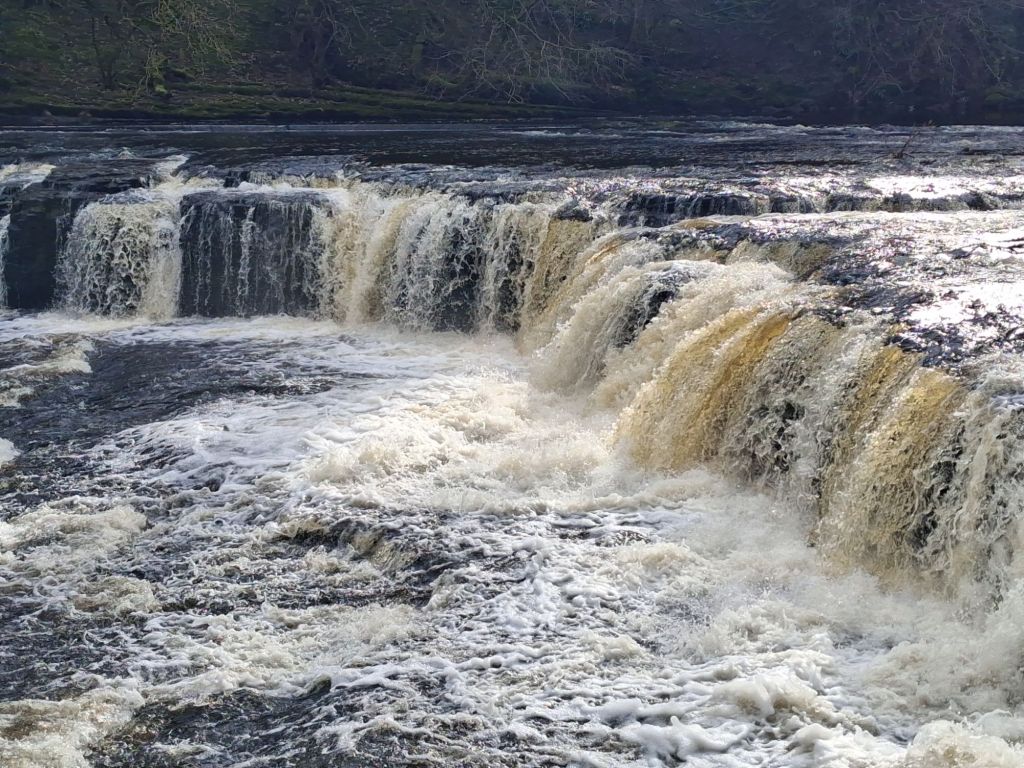
The Aysgarth waterfalls in the River Ure, Yorkshire, made famous in Kevin Costner’s ‘Robin Hood: Prince of Thieves’ film, are now sadly becoming infamous owing to consistently high levels of pollution.
Dangerously high levels of the bacterium which causes Legionnaire’s disease were found at Hawes- deep in the Yorkshire Dales- recently, when a comparison study for the campaign group Stop Ure Pollution (SUP) was carried out on the Rivers Ure, Wye and Thames.
Another bacterium found at Hawes was described as a serious pathogen by the UK based biotechnology company, Molendotech, which carried out the comparison. The company analysed water samples from two sites on the River Thames, one on the River Wye and one on the River Ure using environmental DNA (eDNA) testing. Only those from the Ure were described by the company as of the highest clinical concern.
A wake-up call is needed
Richard Loukota, Chairman of Stop Ure Pollution, said: ‘The [test] results should be a wake-up call. The River Ure has performed worse than the River Wye, which is widely regarded as one of Britain’s most environmentally damaged rivers, and worse than the Thames despite its far larger population.
‘It is time for every organisation with direct or indirect responsibility for the river; the Yorkshire Dales National Park Authority, the Environment Agency, Yorkshire Water, farmers, agricultural contractors, landowners and Local Authorities to acknowledge the scale of the problem and work together to stop pollutants entering the river.’
And SUP’s vice chairman Toby Milbank commented: ‘The Environment Agency’s “advice-led” approach has run its course and has been largely ineffective in protecting England’s rivers. The Farming Rules for Water must be properly enforced, illegal slurry spreading of organic manures is a criminal offence but the number of prosecutions in the River Wye catchment, Thames and the River Ure Catchment combined, is currently zero.
In addition, 1,797 sewage overflow events should never be regarded as acceptable. Only by tackling agricultural runoff, improving sewage treatment infrastructure and restoring natural river buffer zones will we begin to return the River Ure to good ecological health.’
The River Wye has become the national symbol of river decline after years of ecological damage caused primarily by agricultural runoff and sewage pollution. Yet the River Ure sample contained E. coli levels of 3,700 CFU/100mL—almost twice those recorded in the River Wye and more than five times the level found at Henley on the River Thames, despite the Thames serving a vastly larger population.
The River Ure sample also contained elevated levels of Legionella pneumophila and Pseudomonas aeruginosa, together with extremely high enterococci counts, all recognised indicators of significant faecal contamination and poor water quality. The findings reinforce Stop Ure Pollution’s weekly monitoring at Aysgarth Falls and Ulshaw Bridge.
Campaigners believe that the evidence points towards a combination of diffuse agricultural pollution, particularly slurry and manure entering watercourses, together with untreated sewage released from wastewater treatment works and storm overflows. During the winter, volunteers recorded and reported 192 acres of alleged illegal slurry spreading to the Environment Agency, while Yorkshire Water’s 18 sewage treatment works in the River Ure catchment recorded 1,797 sewage overflow events lasting a combined 4,215 hours during 2025, combined, this is a total of over 175 days of untreated sewage entering the River Ure.
‘Persistent, concerning’ levels of pollution
These findings come at the end of a torrid year for pollution in the River Ure.
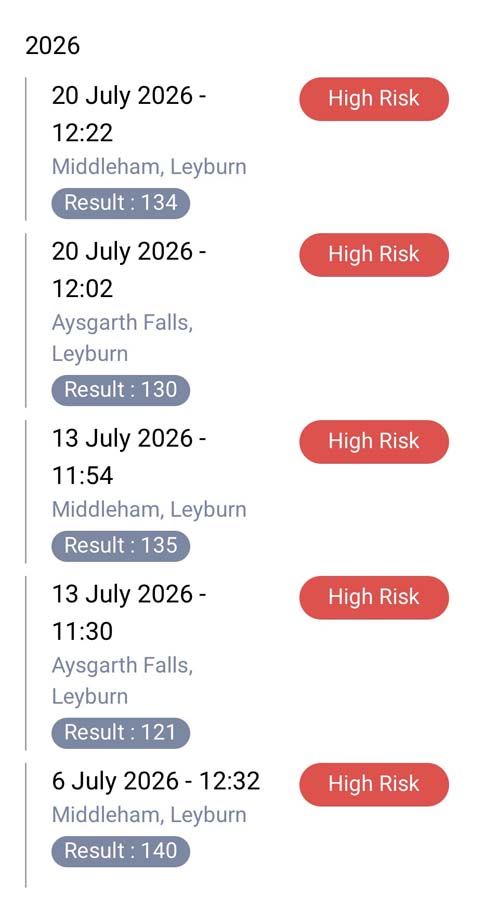
Stop Ure Pollution campaigners have completed a full year of weekly water quality monitoring at Aysgarth Falls on the River Ure, revealing persistent and concerning levels of bacterial pollution at one of Yorkshire’s most popular inland bathing locations.
Between June 2025 and June 2026, volunteers carried out weekly testing using the Bactiquick bacterial endotoxin testing system, producing what is believed to be one of the most comprehensive independent datasets collected on the River Ure. The results indicate that almost nine out of every ten weekly samples (88.2%) fell into the “High Risk” category, with only 2.9% of samples indicating low risk.
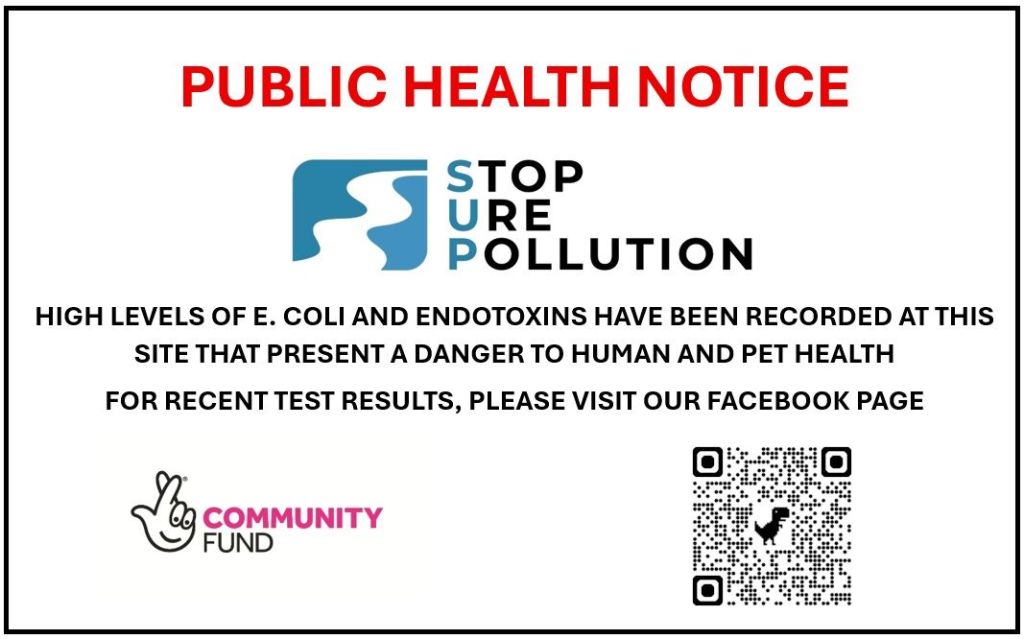
Stop Ure Pollution is now urging swimmers, paddleboarders, kayakers, canoeists, anglers, dog walkers and anyone entering the river to exercise caution, by using signs like the one below.
A river under continual pressure
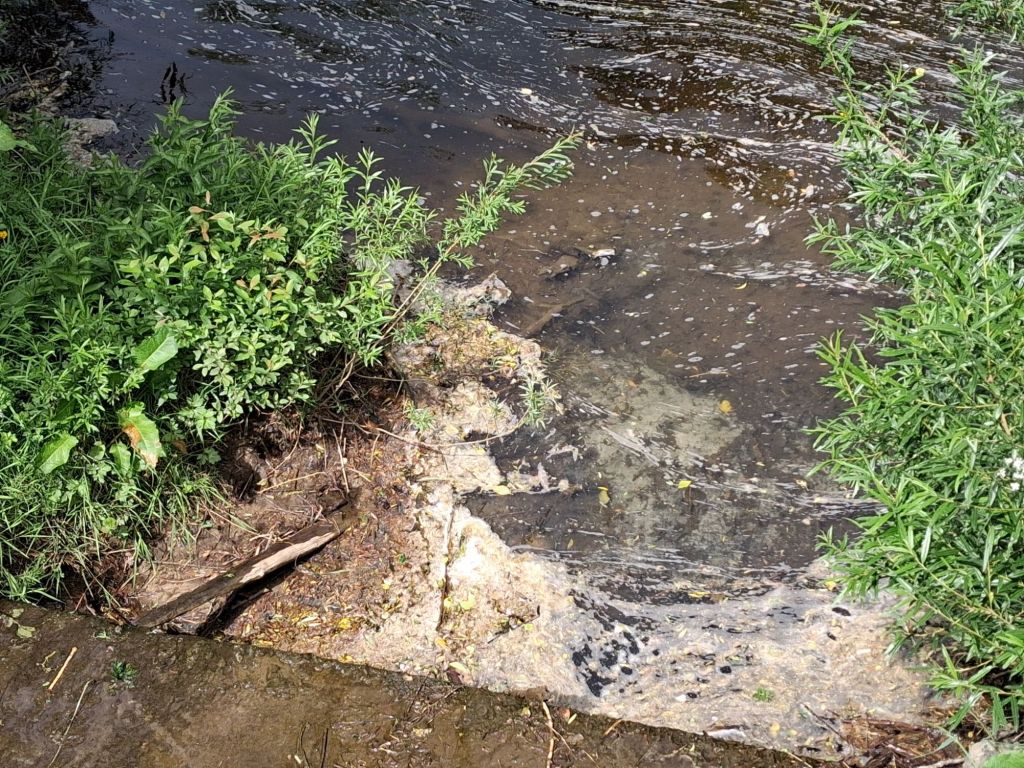
Early evidence suggests that the most likely causes of the bacterial pollution are a combination of diffuse agricultural pollution from organic manures, slurry and farmyard manure, together with contamination arising from untreated sewage discharges from waste treatment works.
During the 2025/26 winter spreading season SUP volunteers recorded and reported to the Environment Agency what appeared to be illegal slurry spreading on 192 acres of farmland. It is illegal to spread slurry on waterlogged, frozen ground, within 10 metres of a watercourse, or without agronomic justification. The organisation says the Environment Agency has indicated it is preparing for further monitoring and enforcement activity during the coming winter.
Richard Loukota, Chairman of Stop Ure Pollution, concluded,
“After testing the River Ure weekly for the past year at two locations, the extent of the pollution has become abundantly clear. These are not isolated incidents or one-off pollution events—they point towards a river under continual pressure from multiple sources. We believe the long-term solution is equally clear. Illegal slurry spreading must be eliminated through a combination of common sense backed up by stronger monitoring and enforcement. Yorkshire Water must continue investing in its sewage treatment infrastructure to reduce spills. Farmers should be supported in fencing livestock away from riverbanks and establishing wide natural buffer strips that filter pollutants before they reach the river.
“Only by tackling agricultural runoff and sewage pollution together will we begin to restore the River Ure to the healthy river that local communities, wildlife and visitors deserve.”
The River Ure and the Aysgarth Falls, instead of being a tourist attraction, may run the risk of being known as a pollution hot-spot and to be avoided, negatively impacting the local economy, reliant on tourism.

