https://commons.wikimedia.org/wiki/File:Chicken_meat_industry.jpg
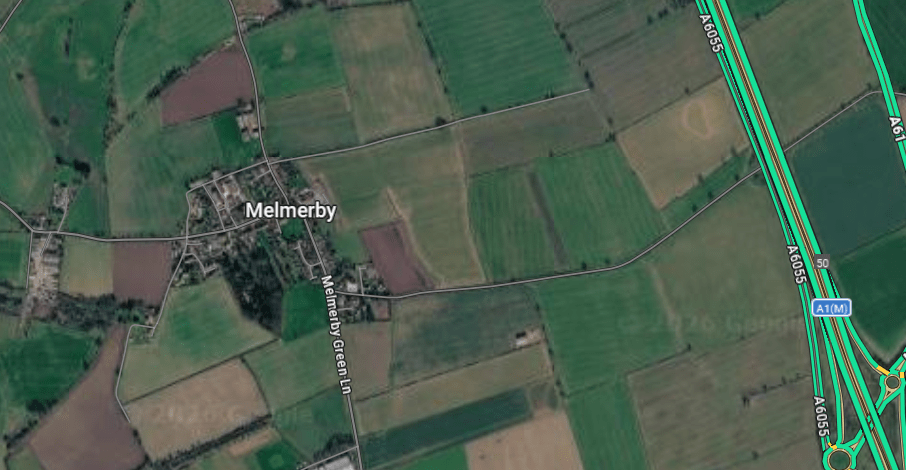
Plans to build a large chicken factory farm, capable of producing 2.7 million birds each year in the village of Melmerby, near Ripon, are coming under renewed scrutiny from campaigners.
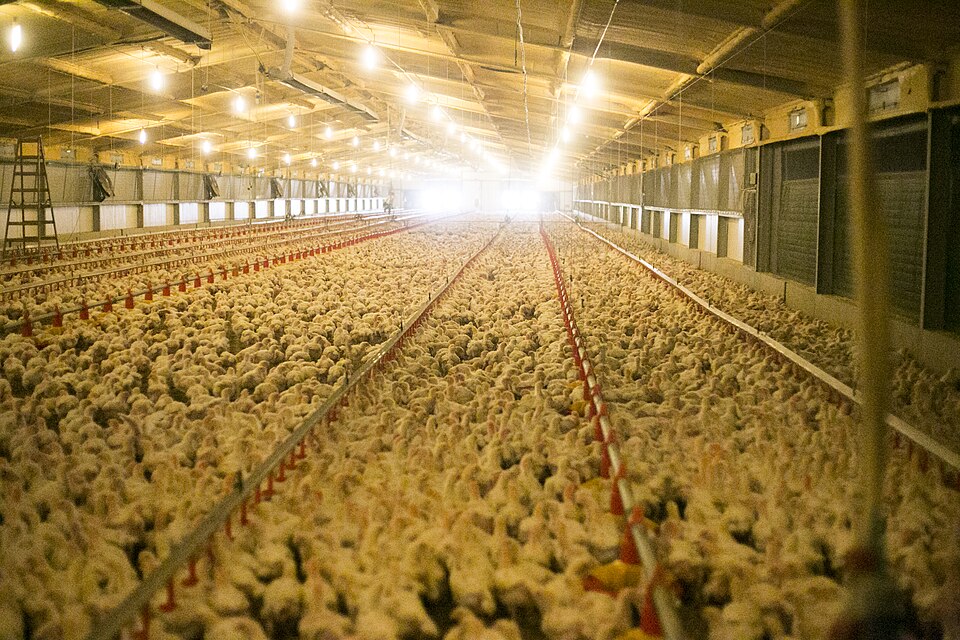
Forest Poultry Ltd have submitted a planning application to erect six poultry housing units, 126 metres in length, to produce approximately 2.7 million birds each year. Each poultry house would accommodate approximately 60,000 birds, resulting in a total capacity of 360,000 birds across the site.
Birds will be delivered to the site as day-old chicks and reared within the poultry houses for approximately 38 days.
Approximately 30% of the birds will be removed at around day 30, with the remaining birds removed at the end of the cycle on days 37 and 38.
The site is expected to operate at approximately 7.5 flock cycles per annum, producing in the region of 2.7 million birds each year- this number would push this factory farm into one the biggest farms in the country.
‘A lifetime of suffering and terrifying death’
The UK branch of the charity People for the Ethical Treatment of Animals (PETA), have signalled their strong opposition to this proposed mega-farm.
PETA sent a petition to North Yorkshire Council, signed by 18,000 concerned members of the public, including several hundred local people, urging them to reject the plan.
In the petition, PETA pointed out that in addition to causing cruelty to animals on a massive scale, the planned farm would have many negative effects on the local area, including generating enormous quantities of manure and environmental pollutants, such as ammonia.
“Thousands of compassionate people have spoken, and North Yorkshire Council must heed the concerns of its constituents and the general public over animal suffering, the environment, and the health of the community,” says PETA Senior Campaigns Manager Kate Werner. “PETA is calling for this plan to be scrapped to spare birds from a lifetime of suffering and a terrifying death.”
PETA’s Vice President of Programmes, Elisa Allen, also added:
‘Packing nearly 360,000 birds into a chicken prison is barbarously cruel, as if the birds were feelingless widgets, and it’s a recipe for pollution on a staggering scale. These vile megafarms poison the air, foul waterways, and damage the countryside, fuelling an environmental crisis that harms communities and the planet.
A vast number of people object, and North Yorkshire Council must listen and reject planning permission, or be damned along with the megafarms.’
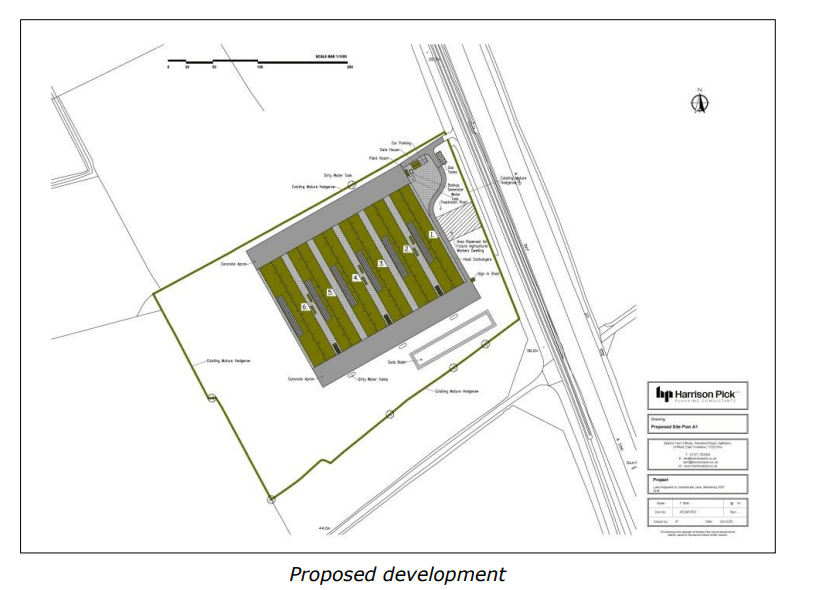
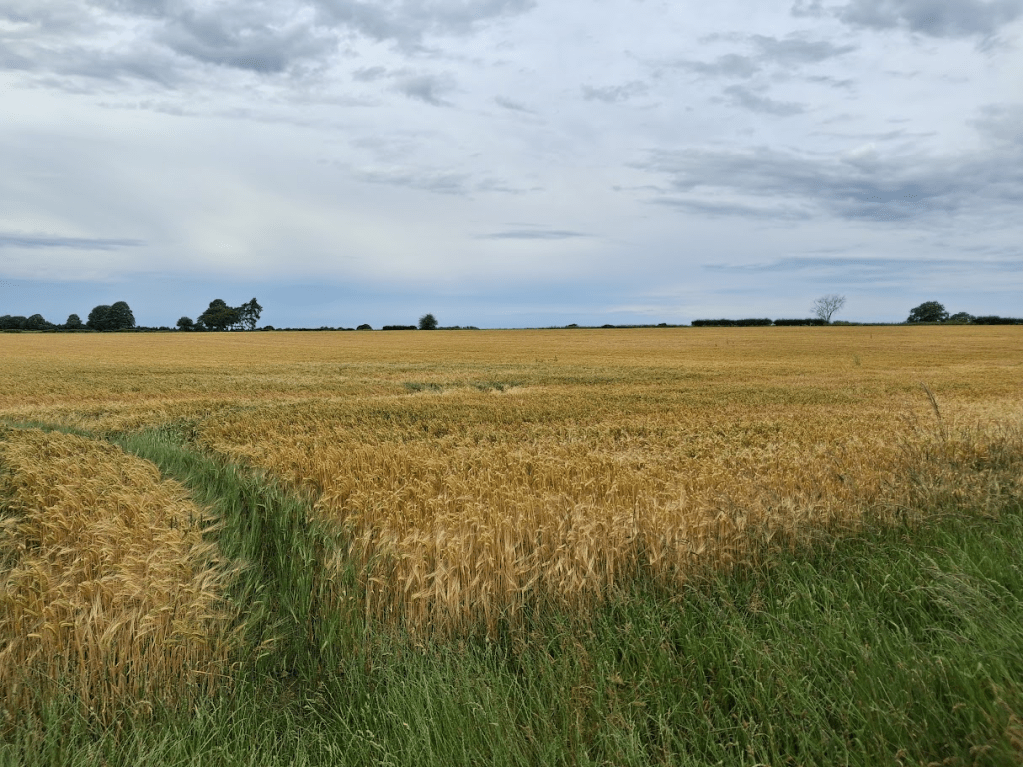
The proposed site
Potential health risks?
Jo Lazarus, Campaign Coordinator at Communities Against Factory Farming, said:
“Following a highly successful public meeting, residents of Melmerby and surrounding villages are continuing to voice their opposition to this intensive mega farm. Local people do not want the smells, noise, animal cruelty nor health risks of a factory farm on their doorstep, and are joining together to make sure these disastrous plans do not get off the ground.”
One of these local residents, Chris Lay from Melmerby, added, ‘Between 50 and 60 villagers attended a public meeting in the village hall, and an active Action Group has now been set up to explore many aspects of the planning application. Residents are concerned about air pollution, the impacts of factory farming, animal welfare and what it’s going to do to the local environment. It’s felt that the development of such a large site is totally out of keeping with the rural environment of the area.
“Especially worrying is that the planning application seems to ignore any potential impact on human health and the impact of the vast amount of ammonia that this site will emit. There is good evidence emerging that ammonia contributes to PM2.5 hotspots which are one of the worst forms of pollution for human health as the particles bypass the body’s defences and can lodge deep inside the lungs. Research suggests a causal link between PM2.5 and poor health outcomes. This particular site is next to the A1(M) motorway, and the combination of ammonia and traffic pollution may exacerbate the PM2.5 issue.”
‘Supports high-welfare farming’
On the other hand, supporting comments for the proposal from the National Farmers’ Union are publicly available on the North Yorkshire Planning Portal. The County Adviser for the NFU, perhaps not surprisingly, indicated its support saying, ‘We consider this proposal to be an important and policy-compliant investment that strengthens domestic food production, supports high-welfare farming, and contributes to the resilience of the rural community.’
They further argue that ‘This proposal is supported by robust environmental management measures covering manure handling, odour control, drainage, and biodiversity enhancement.’
However, documents from the Environmental Health suggest that odour and noise statutory nuisances may need more mitigation if residents are not to be impacted.
‘Environmental Health has reviewed the odour and noise assessments with regard to statutory nuisance. While the modelling indicates compliance with recognised benchmarks, statutory nuisance cannot be ruled out, as actual impacts will depend on weather, management and day-to-day operations.’
‘For odour mitigation, the following measures should be secured because they are necessary to minimise odour emissions and protect residential amenity: Using high-speed ridge-mounted fans to provide vertical exhaust and effective dispersion of odorous air. Timing litter clearance, where possible, to coincide with wind directions that carry emissions away from nearby dwellings. Maintaining good biosecurity and husbandry, including managing litter quality and moisture, to reduce odour generation. These measures are required to manage the risk of statutory nuisance and to ensure appropriate protection of nearby residents.’
600 HGV trips in 4 weeks
Local campaigners however have also highlighted transport concerns as part of their protest, alongside the odour nuisance, arguing that the rural setting would become more of an industrial one with the estimated 600 2-way HGV trips within a 4 week period, averaging 150 HGV trips a week. One of the access roads- Underlands Lane is a two-way single carriageway measuring approximately 5m in width and there are concerns about road safety in terms of visibility and damage to the road.
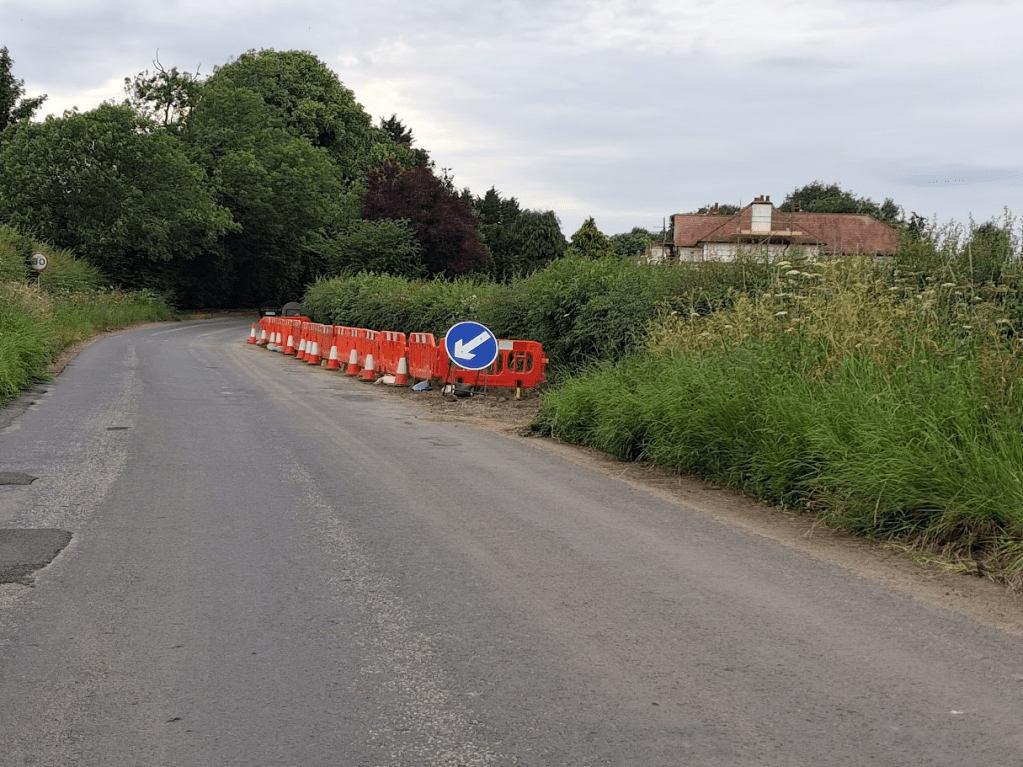
Underlands Lane roadworks on a blind corner
Harry Shepherd, the director of Forest Poultry Ltd, was contacted for comment.
North Yorkshire Council has until 19th August to make a final determination on the proposal.


