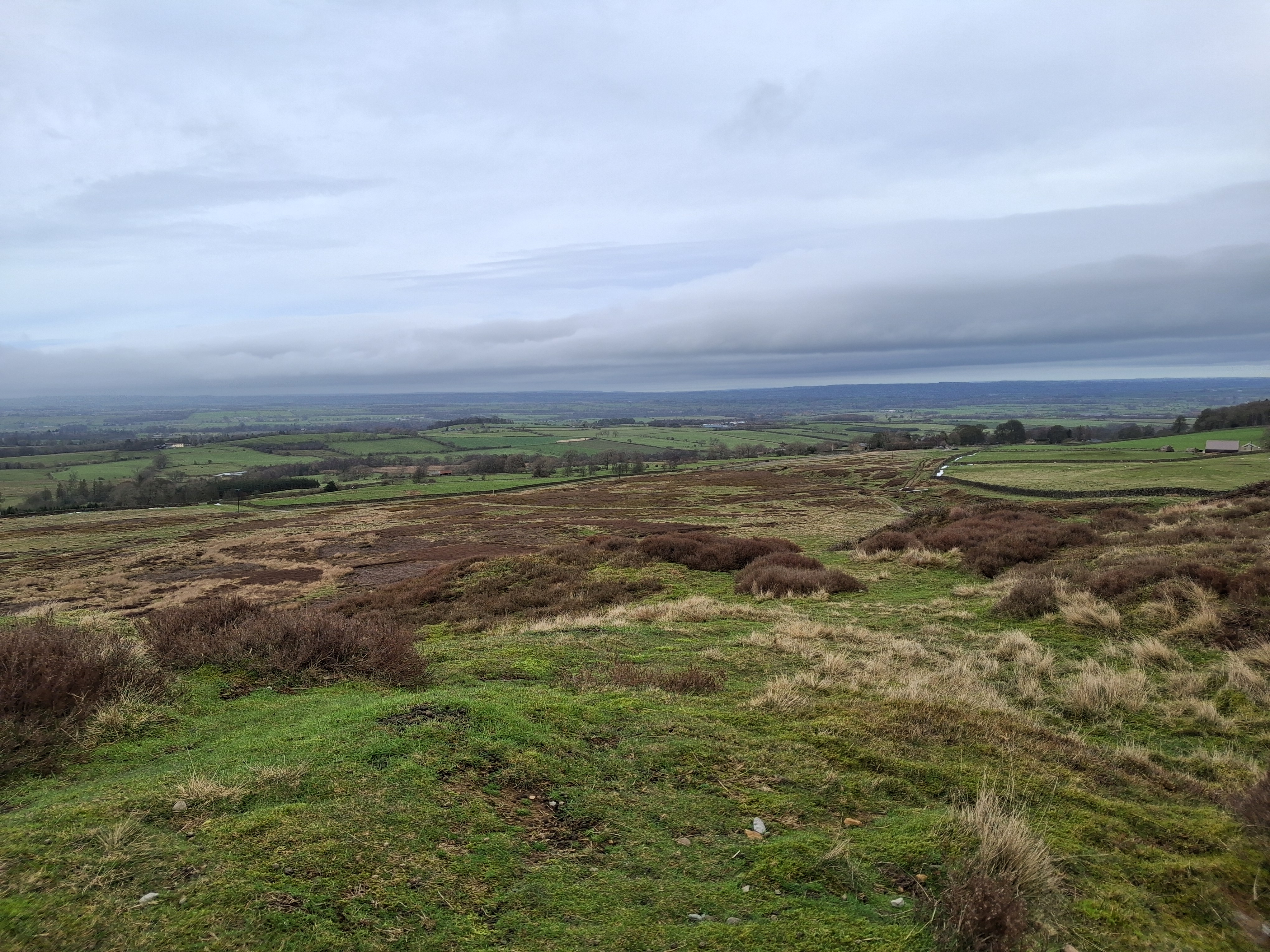
First steps in assessing the environmental impact for Hope Moor wind farm proposal taken in Yorkshire
Fred. Olsen Renewables continue their public consultation on their proposals to build approximately 23 wind turbines on the edge of the Yorkshire Dales, near to Richmond and Barnard Castle. This planned project would generate more than 150MW of renewable energy and would generate enough power for 135,000 homes and businesses, with the initial design of the wind turbines to blade tip being around 200 metres high.
Olsen’s Scoping Report was submitted to the Secretary of State, today, on 29 May, and marks the first formal step in the Environmental Impact Assessment process. The report covers ecological impacts, geological impacts, ornithological impacts and access and traffic arrangements among other issues.
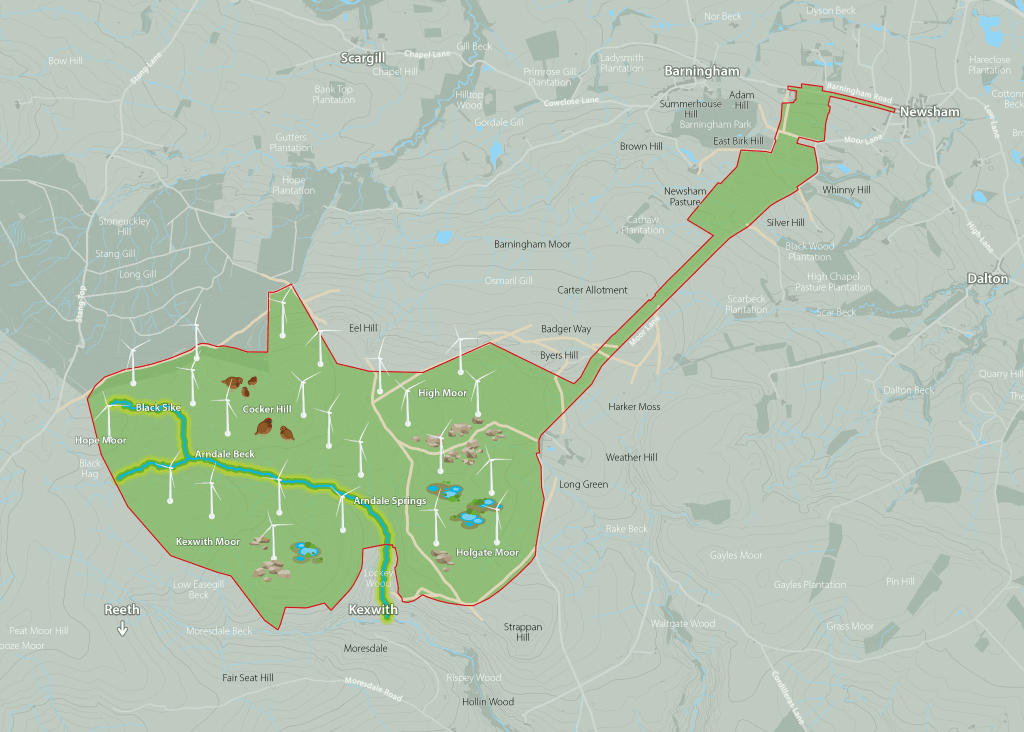
https://hopemoor.co.uk/documents
Six public consultation events have taken place so far since the consultation opened on the 6 May and a further two public events are still to be held. As well as these public events, Fred. Olsen Renewables is also hosting an online webinar on Wednesday 10 June at 6pm.
Euan Hutchison, UK Development Director for Fred. Olsen Renewables, said:
‘We are halfway through our first stage of public consultation – thank you to everyone who has participated so far. There has been good attendance at events from communities, elected representatives and wider groups, and we’ve gathered invaluable local insights and knowledge. Community input is central to how we develop our proposals, and we are grateful for the wide range of views, for and against, and the valuable feedback we’ve received to date.
Feedback will be used to inform how we refine our proposals further. At stage two consultation, we will present feedback summaries and key themes, how we’ve responded to them, and explain how this feedback has shaped the project. We encourage anyone interested to submit feedback on our initial proposals and attend any of our upcoming events to ask questions and speak to the project team.
We look forward to reviewing the feedback we have received, and to continuing the productive conversations and engagement with local communities.’
Local opposition mounts
Local campaigners, The Hope Moor Action Group, are concerned about the lack of information which they believe is not forthcoming from the developers. They focus on ‘grid connection’ as a key concern, a concern which is not allayed by Fred. Olsen Renewables progressing this as a separate application.
‘Recent changes to grid connection processes across the UK mean that the grid connection point will not be confirmed until later in the development timeline. As a result, the grid connection route and method do not form part of this application and will instead be progressed through a separate application.’
Construction traffic and access have also been cited by campaigners as problematic areas, with Fred. Olsen having outlined two possible options for the construction arrangements.
‘To further manage construction traffic and reduce reliance on local roads, a dedicated haul route from Barningham Road is proposed. Two potential options are currently being considered: Option 1: A haul route linking Barningham Road to Moor Lane, from where construction traffic would continue to the main wind farm site. Option 2: A direct haul route linking Barningham Road to the main wind farm site.’
A spokesperson for The Hope Moor Action Group told me, ‘The thought of thousand upon thousand of truckloads of construction vehicles thundering through the village then up onto Moor Lane is unimaginable. A number of the houses in Newsham which sit on the access road have no conventional foundations and the owners are very unhappy about the plans and Olsens simply state they will use monitoring equipment to measure any tremors- not very reassuring for the home owners.’
Mr Wilson continued, ‘It is clear that Olsens have no real understanding of the depth of local feeling about this unwanted imposition.’ He claims that the proposal is not about ‘green energy’ at all, but what he terms ‘green capitalism’ when he told me, ‘I also enquired about the viability of the project if the current inflated prices of the CFDs dropped significantly by the time Olsens came to tender, and they clearly stated that if the project was not profitable they would not proceed, which seems to confirm that this is all about Green Capitalism and not Green Energy.’
‘Visual impact will be obvious’
One of the local MPs in the area, and ex-Prime Minister, Rishi Sunak has already voiced his public objection to the proposed wind farm, highlighting that ‘beautiful views’ might be ‘spoiled’ by wind turbines.
“The application site lies just outside the northern boundary of the Yorkshire Dales National Park but its visual impact on the landscape of Swaledale, Wensleydale and further afield will be very, very obvious.
“We have just opened the Coast to Coast Walk as one of the UK’s National Trails – a celebration of what makes this part of the world so special. After more than 10 years of campaigning for that to happen, I cannot support a plan which will lead to the views from many parts of the trail – some of the most beautiful – being spoilt in this way.”
“I have seen wonderful work in our area to protect and restore peatland. It is a unique resource, locking up huge volumes of carbon and playing an increasingly important role in water management. Healthy peat acts as a natural sponge, absorbing water to reduce flood risk to communities in the lowlands.”
Fred. Olsen Renewables, as part of their application, have recently produced a document highlighting the theoretical visibility of the blade tips, which offers support for this ‘spoiled view’ argument.
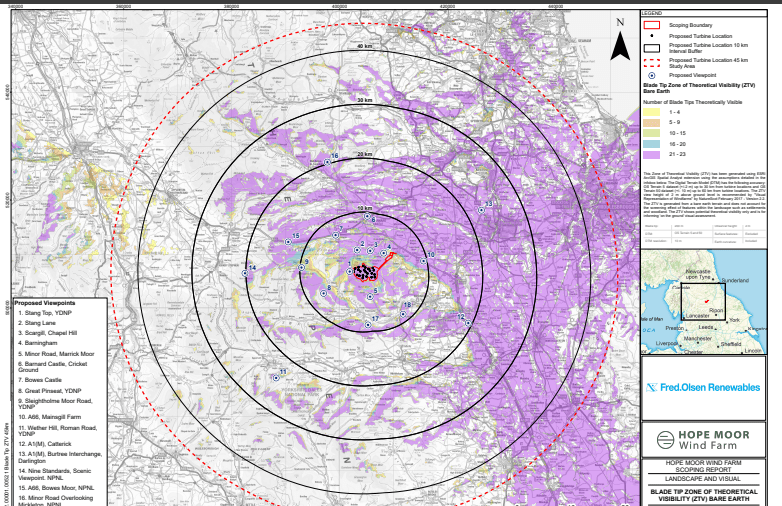
https://hopemoor.co.uk/documents
Public support for wind turbines and Net Zero
Against this argument of ‘spoiled views’, it must be remembered that national public opinion does not support this argument. When asked by YouGov in 2022, ‘And do you think that onshore wind farms generally make a landscape look better, make it look worse, or make no difference?’42% responded that wind turbines did not make a landscape look better or worse.
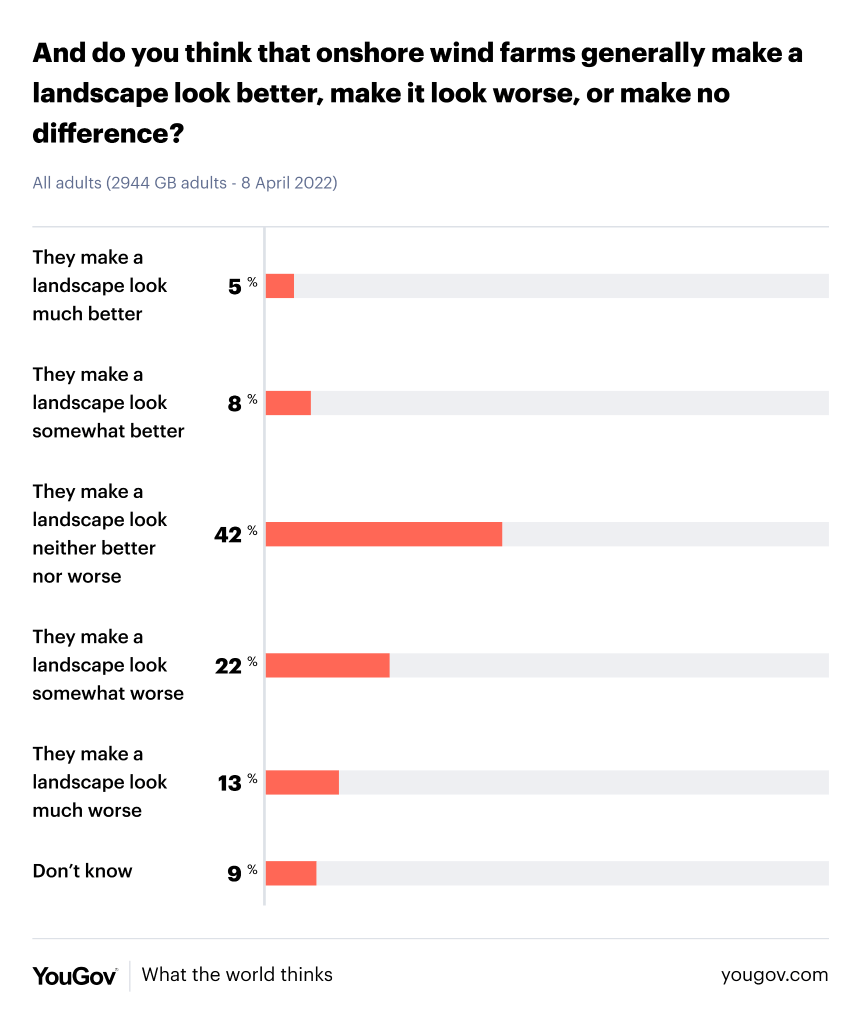
Government polling in 2024 revealed that 77% of respondents supported on-shore wind and 83% supported off-shore wind as energy sources. In 2025, polling for KPMG, indicated that 65% of respondents supported the UK transitioning to renewable sources of energy with only 12% opposing. Taking a wider stance, 60% of Britons support Net Zero, with 25% in opposition.
The application to develop approximately 23 wind turbines in a remote spot of the Yorkshire Dales, clearly will continue to work through its process, with the ultimate power perhaps resting with the Secretary of State by using the Section 35 Development Consent Order powers.
THIS PIECE WAS UPDATED ON 30 MAY TO INCLUDE COMMENTS FROM THE HOPE MOOR ACTION GROUP.

