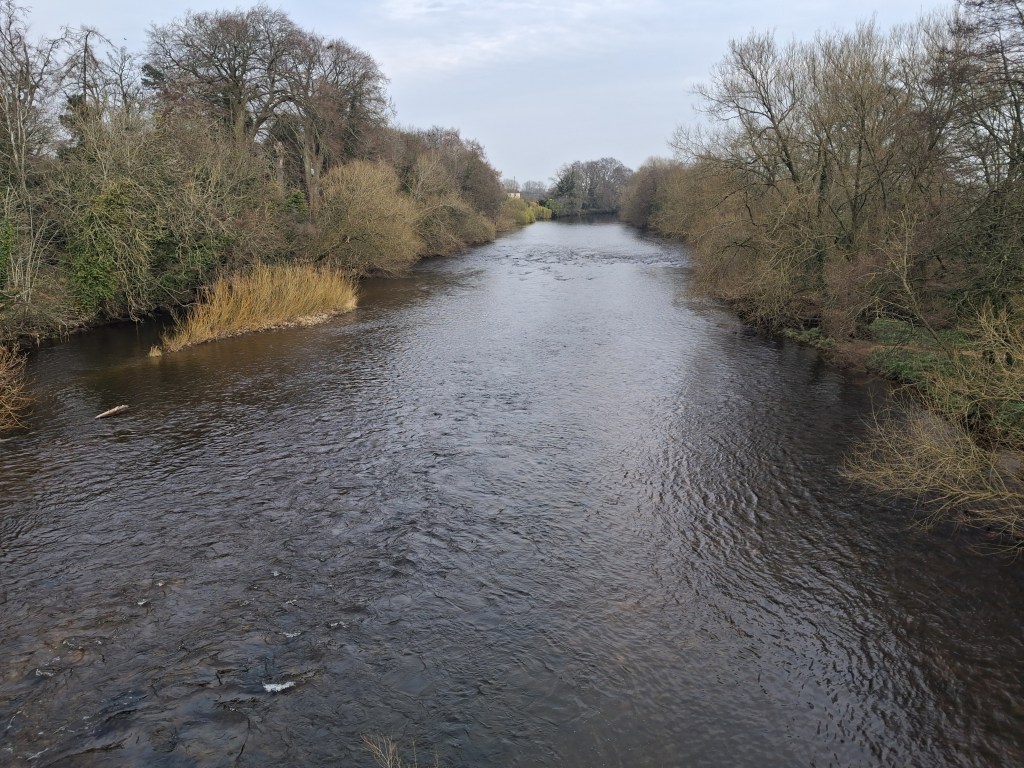
A groundbreaking multimedia exhibition reveals the invisible chemical threats facing Yorkshire’s rivers and asks what individuals can do about it.
An exhibition combining fine art photography, immersive soundscapes and cutting-edge environmental science is coming to York in just a few days’ time, shining a light on a form of river pollution that rarely makes headlines but affects every river in the region.
‘Confluence for Change’ opens at the Sliding Water Gallery, Marygate, York, on 30th May and runs until 12 June. Admission is free and the gallery will be open daily between 1100 and 1600. The exhibition is running as part of the York Festival of Ideas and draws on findings from the ECOMIX project – the most extensive study of chemical pollution in Yorkshire’s rivers ever carried out.
New scientific messaging
Most people are aware that Yorkshire’s rivers face pressure from sewage and plastic. What is far less well known, is the threat from chemical pollution: the invisible cocktail of pharmaceuticals, pesticides, traffic chemicals, veterinary medicines and household products that enters our waterways every single day from every corner of modern life.
‘Confluence for Change’ makes this hidden crisis visible.
Photographer William Joshua Templeton has spent time along the banks of Yorkshire’s study rivers capturing images that are at once beautiful and unsettling – rivers whose surface gives no hint of what lies within. Audio artist George Hiraoka Cloke has composed immersive soundscapes drawing on recordings made along the riverbanks, inviting visitors to hear the waterways in a new way. And Professor Alistair Boxall, who leads the ECOMIX project at the University of York, provides the scientific foundation – translating years of data into something any visitor can understand and act on.

Small changes can make a difference
Professor Boxall told me that, ‘When people think about river pollution, they will typically think about sewage and microplastics and not the chemicals dissolved in the water that might be causing ecological harm. My hope is that the exhibition will start to make the invisible more visible and raise awareness around some of the problems of chemical pollution of our rivers.
As well as the imagery and soundscapes, visitors to the exhibition will be able to view and interact with the data that we have generated on the levels of chemicals in different rivers across the region. They will be able to learn about what is hidden in the water, why this matters and importantly, what they can do to protect the health of these precious ecosystems.
My ultimate hope is that this exhibition will start to alter the way in which people think about and interact with rivers in the region. Small changes by lots of individuals will help protect these valuable ecosystems into the future.’
What the science found
The ECOMIX project monitored 19 locations across ten Yorkshire rivers – from the River Swale in the north to the Sheaf in South Yorkshire – taking water samples every six hours for a full year. Those samples were analysed for a wide range of chemical pollutants measuring, for the first time, the chemical pulse of Yorkshire’s rivers.
The findings are striking.
Pharmaceuticals, including the diabetes drug metformin, common antibiotics and antidepressants, were found most frequently and in the highest concentrations. Pesticides, cocaine, insect repellents, cattle wormers and chemicals from car tyres were also detected. Many of these substances have been shown in laboratory studies to affect the health of fish, invertebrates and algae at levels found in Yorkshire’s rivers. In rivers, these chemicals don’t arrive one at a time, they form a cocktail whose combined effect on river life is still being understood.
Exhibition involves fine art and soundscapes
Throughout the run of the exhibition, members of the project team will be present at the gallery to talk visitors through the photography and audio, to discuss the science behind the work, and to answer questions about what is happening in the rivers of Yorkshire.
Professor Boxall added that he was looking forward to presenting to a wider audience saying, ‘This exhibition is a bit of an unusual activity for me. I typically present the results of the work of my team in very technical talks at scientific conferences and in lectures to students on our undergraduate and masters programme. I am hoping that the beautiful images and soundscapes in the exhibition will appeal to a much wider audience.’
The exhibition ends with a short film showing on the 6th June followed by a panel discussion that will run at the University.
For those with a particular interest in their local river, whether they live on the banks of the ECOMIX study rivers (Aire, Calder, Derwent, Foss, Ouse, Rye, Sheaf, Swale, Wharfe, Wiske) this is a unique chance to find out exactly what was found in the water near them, and what it might mean.
‘Confluence for Change’ is presented as part of the York Festival of Ideas, an annual celebration of debate, performance and creative thinking led by the University of York. Further details can be found on the Festival of Ideas Website at: https://yorkfestivalofideas.com/2026/

