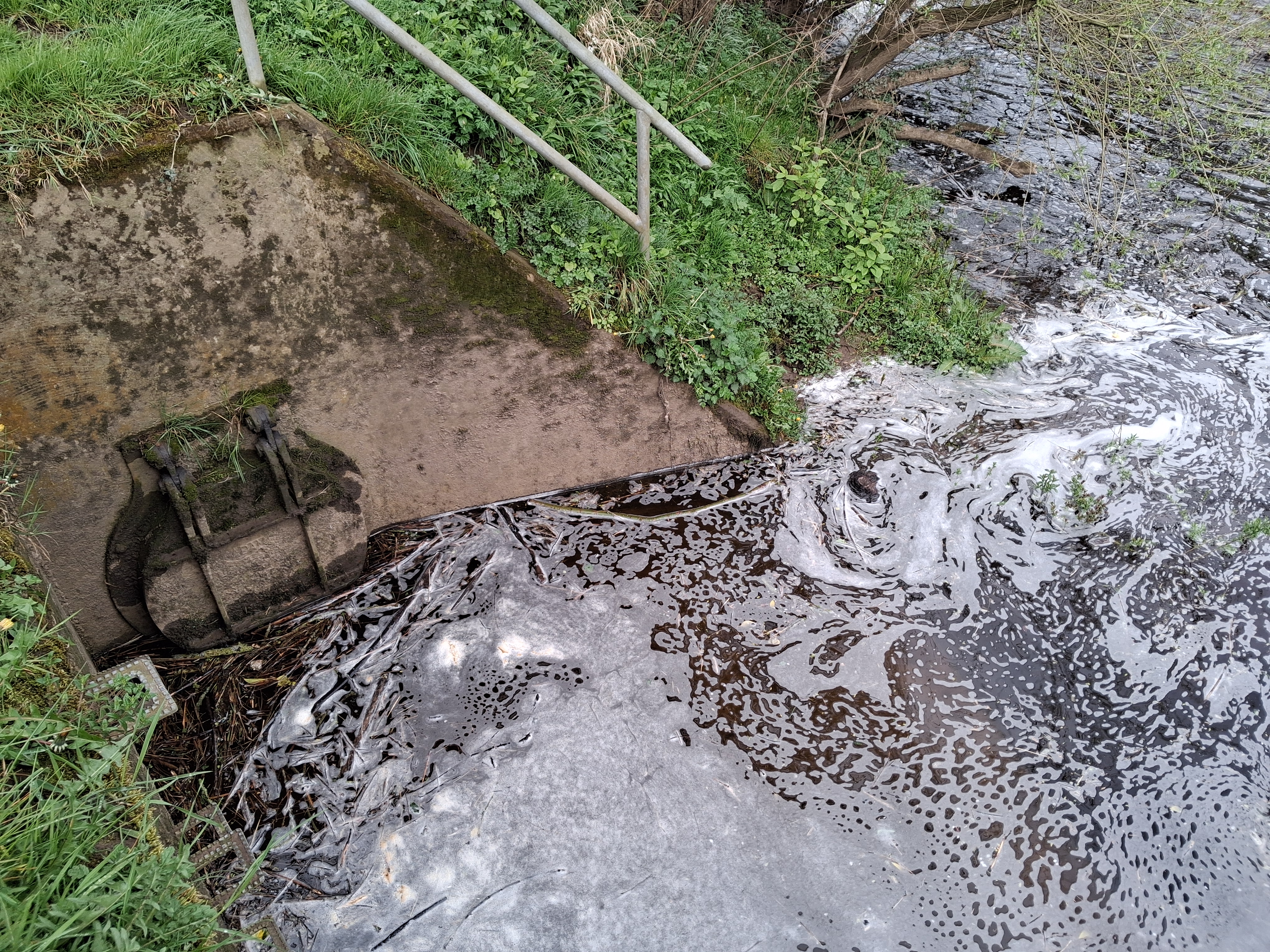
In yet another exclusive on pollution incidents, Channel 4 revealed last night (Wed 6th May) that the Environment Agency has not completed a single prosecution of a water company for any pollution occurring in the last five years, despite almost 2 million sewage discharges.
None of the completed prosecutions relate to the thousands of serious pollution incidents that happened since mid- 2021.
Channel 4 pointed out that while there have been examples of water companies facing sentences over the past five years, that every prosecution relates to incidents prior to mid-2021. The most recent water pollution incident to be successfully prosecuted was Welsh Water, who were fined £90,000 in 2024 for “exceeding permitted levels of sewage effluent” into the River Wye between August 2020-June 2021.
58 prosecutions out of 11,474 investigations
According to the EA’s own data, in the past decade there have been very few prosecutions. In a letter to parliament’s Environment Committee, the EA’s Chief Executive Philip Duffy said that between 2015-2025 there were 11,474 water company investigations, but only 58 of these resulted in a prosecution- a prosecution rate of just 0.5%.
Avoiding criminal convictions
The Environment Agency however, blamed the time for investigations to reach court, sometimes taking years, and they claim there is a viable, quicker alternative – the “Enforcement Undertaking” (EU).
Rather than face prosecution, undertakings mean water companies can offer to make payments, sometimes exceeding £1 million, to environmental trusts or charities to compensate for their offence.
But undertakings allow water companies to avoid criminal conviction entirely. By paying a charity for serious offences, they avoid a court appearance and are given ‘a get out of jail free card.’
Whistleblower Robert Forrester, an EA employee for more than 20 years, and who appeared in Channel 4’s recent docudrama “Dirty Business”, portrayed as a female Environment Agency employee who, like Forrester himself, leaked data to sewage campaigners, commented:
“It’s not like these serious crimes aren’t happening. They’re actually happening more and more…[EUs mean] the deterrent effect is no longer there…It’s a way of avoiding the criminal system.’
A ‘Get out of Jail Card’
Feargal Sharkey, the waterways campaigner, who appeared on the Channel 4 broadcast, argued that the fines simply don’t work and that prison sentences should happen.
‘For water companies, it’s simply a get out of jail card. It’s a very cheap alternative to what actually should be the consequences for them.
What we need to change is the behaviour of these water companies. The fines don’t work. It’s time we actually started upholding the law and sending some of these directors and executives to jail.’
What we need to do is actually now demonstrate to these companies we are prepared to enforce the law as it stands to hold them accountable and to properly remedy the situation, not simply let them off with what effectively is a slap on the wrist.’
If we put one water boss in jail for 6 weeks, the whole industry would utterly transform itself at 9 o’clock tomorrow morning when those companies open for business.’
The whole thing is a sham and it’s an avoidance scheme by government. And, in fact, government now for me, have become as wilfully complicit in all of this as the Environment Agency, by knowingly, blatantly, deliberately refusing to enforce the law and letting these companies carry on this fraud and a criminal fraud against billpayers in England and Wales.
EUs are ‘a brilliant tool’
Defending the use of Enforcement Undertakings (EUs), Helen Wakeham, the EA’s Director of Water argued,
“They are a brilliant tool for the Environment Agency. In the past year, the Environment Agency secured £8.5 million for the water environment through enforcement undertakings. The reason why we use them is they are faster than criminal prosecutions, so a prosecution can take us years to bring to court and take up a lot of our time.”
She added, “We do take action on every water pollution incident report that we receive. Some of those are exceptionally minor, a handful are serious, and those are the ones that we investigate very thoroughly.”
However, a prosecution rate of pollution incidents of just 0.5% between 2015-2025 is not enough to fool the public into thinking that serious enforcement is happening.
Downgrading serious incidents to ‘minor’ problems
The Environment Agency’s rules state that they would not normally accept an EU for the most serious incidents of Category 1 and Category 2, but FOI data indicates the systematic downgrading of thousands of serious incidents to ‘minor’ problems, without even visiting the site where the pollution occurred.
Between 2016-2025, there were almost 6,000 examples of this downgrading.
Public interest not served by court trials
In a shocking admission, Water UK, which represents the water industry, told Channel 4 News: “The Government’s independent review of the water sector concluded that the public interest was not always best served by years of court proceedings. Undertakings can ensure faster accountability and deliver funding directly into the environment.”
With over 100,000 signatures on a referendum to bring the water industry into public ownership, it appears that the public do not take kindly to industry deciding what is in their best interest. Not when they can’t swim in rivers, seas and waterways, while pollution incidents continue unabated.
UK Government has no intention of nationalising water companies
The UK Government responded to this public petition, saying, ‘The Government has no intention of nationalising the water sector currently and does not believe that a national referendum would deliver faster improvements for customers or the environment. Any move to nationalisation would take many years to implement, involve significant legal and operational complexity, and risk prolonged uncertainty and disruption across the sector.’

