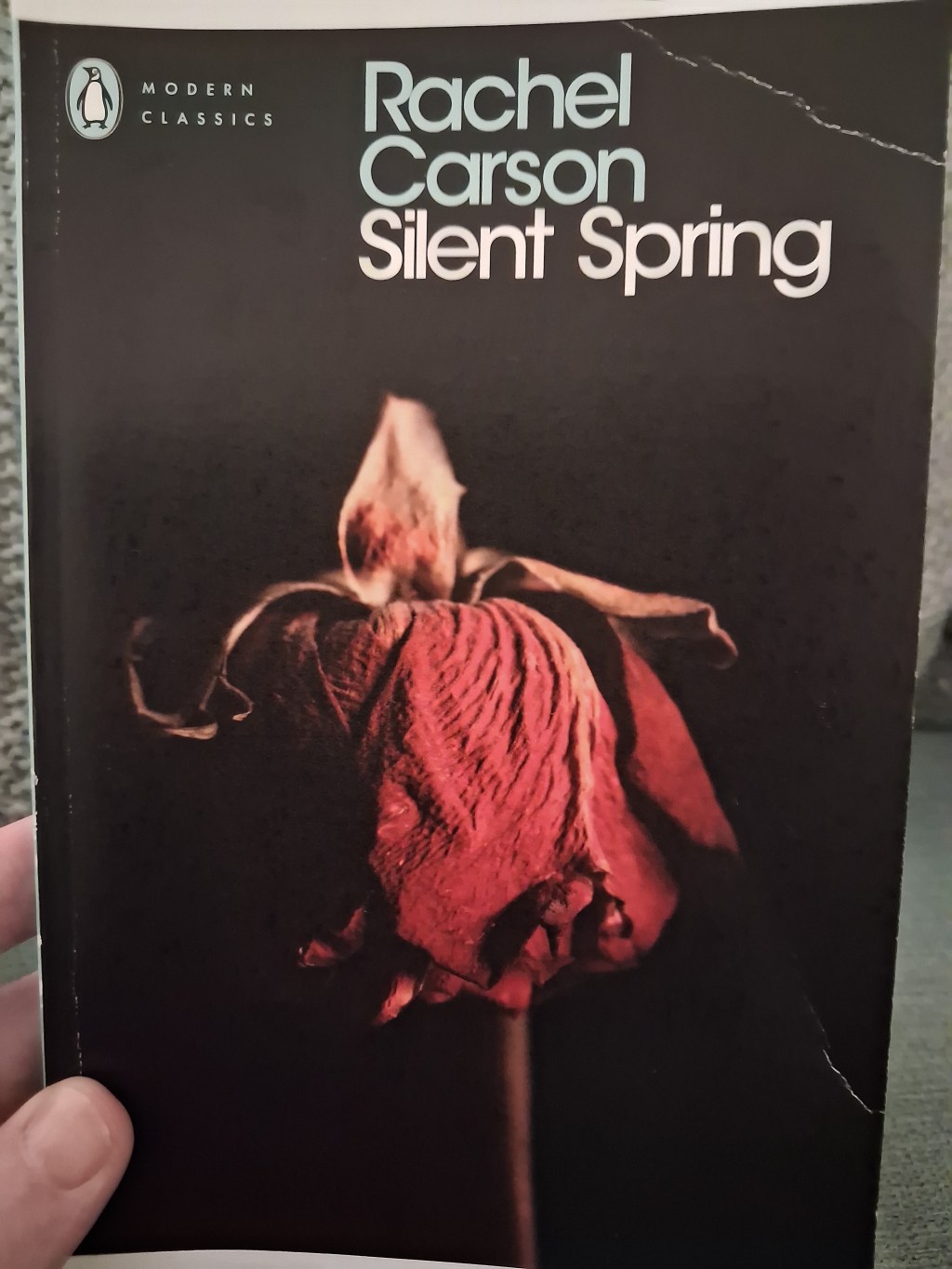
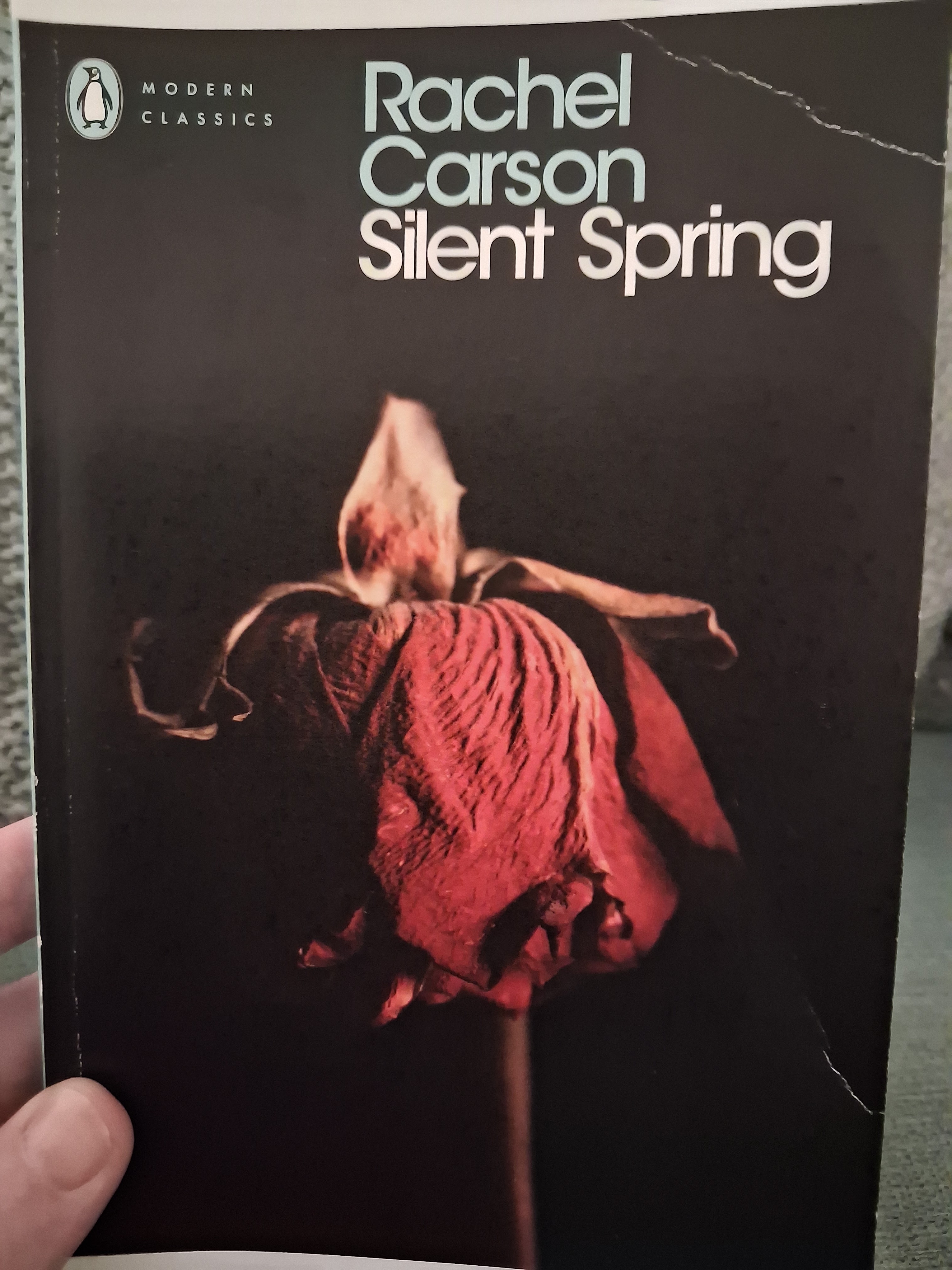
I must begin by making a whispered confession- this is the first time that I have read ‘Silent Spring’ by Rachel Carson. Of course, I have previously been aware of its revolutionary impact, ground-breaking work and awakening of the public, but it always seemed to be a book to be read at another time.
Here, then, is perhaps the tragic beauty of ‘Silent Spring’; that though I read this book through the lens of 2026 and in the United Kingdom, I do not have to search the news for too long to see similar stories of communities bitterly complaining about being contaminated by the chemical industry, of the environment being polluted by ‘forever chemicals’ such as TFA, and even only this past week, that blood samples from a range of Europeans have indicated the highest TFA levels yet measured in humans. The tragedy being that despite 64 years from its publication in 1962, we continue not to heed the clear warnings raised by Carson and allow ourselves to be the guinea pigs of a chemical industry intent on profits.
Chapter headings sound ominously familiar to the modern day reader: ‘Rivers of Death’; ‘Realms of the Soil’; ‘And No Birds Sing’; and ‘Surface Waters and Underwater Seas’. Passages of the text are so relevant to the world of 2026, that it seems that they were only written in the past year. ‘For the first time in the history of the world, every human being is now subjected to contact with dangerous chemicals, from the moment of conception until death.
They have entered and lodged in the bodies of fish, birds, reptiles, and domestic and wild animals so universally that scientists carrying on animal experiments find it almost impossible to locate subjects free from contamination.’
Carson points the finger firmly at industry, which may explain their expensive campaign against her catalogue of examples which exposed them. ‘All this has come about because of the sudden rise and prodigious growth of an industry from the production of man-made synthetic chemicals with insecticidal properties…New chemicals come from our laboratories in an endless stream.’
Carson aims to teach the uninformed public- ‘If we are going to live so intimately with these chemicals- eating and drinking them, taking them into the very marrow of our bones- we had better know something about their nature and their power.’ In her ‘Elixirs of Death’ chapter, she chronicles a range of weedkillers and their potency. The desire for a quick and easy method of killing unwanted plants has given rise to a large and growing array of chemicals that are known as herbicides, or, less formally, as weed killers. And it shouldn’t take long for the modern reader to recognise modern brands, such as ‘Roundup’ which have caused controversy in the present for having active ingredients which the WHO describes as, ‘probably carcinogenic to humans.’
Carson’s prophetic voice continues as she turns her attention to water pollution and the rise of carcinogens, painting a picture which again, is echoed in the current state of UK rivers. ‘…an appalling deluge of chemical pollution is daily poured into the nation’s waterways.’ Sadly, the public only notice this when there are significant ‘newsworthy’ fish die offs. ‘For the most part this pollution is unseen and invisible, making its presence known when hundreds or thousands of fish die.’ She does warn however of ‘doomism and defeatism’ and advocates for action and awareness. ‘To assume that we must resign ourselves to turning our waterways into rivers of death is to follow the counsel of despair and defeatism.’
Carson warns about the dangers of accepting this new contaminated world, and argues that, ‘Man has put the vast majority of carcinogens into the environment, and he can, if he wishes, eliminate many of them.’ It is horrifying to note that in recent news, we have seen twin stories which highlight the impact and dangers of our contaminated world. New research has indicated that cancer rates are rising more quickly among young people, while at the same time, 485 chemicals in US pesticide products have now been linked to breast cancer. It appears that we may have wasted the past 60 years trying to ‘turn off the tap’ of the chemical deluge of our planet. ‘No longer are exposures to dangerous chemicals occupational alone; they have entered the environment of everyone- even of children as yet unborn.’
Carson’s central message- decades old now and still not urgently acted on- is that the potential harm of pesticides, insecticides and chemicals have not been fully assessed and the long term health impact on humans may continue to be a ticking time bomb, where prevention could be the most effective solution. ‘The central problem of our age has therefore become the contamination of man’s total environment with such substances of incredible potential for harm.’
We cannot continue to live in a contaminated world. Rachel Carson’s ‘Silent Spring’ moved the needle significantly on the dangers of the widespread use of pesticides and the awareness of a massive industry profiting from an ecological desert. As recent press stories reveal however, the names of the chemicals have changed in the 21st century, but the dangers remain.

