Immediate call for global action to shift world towards a “Nature Positive” approach is published today in Frontiers in Science.
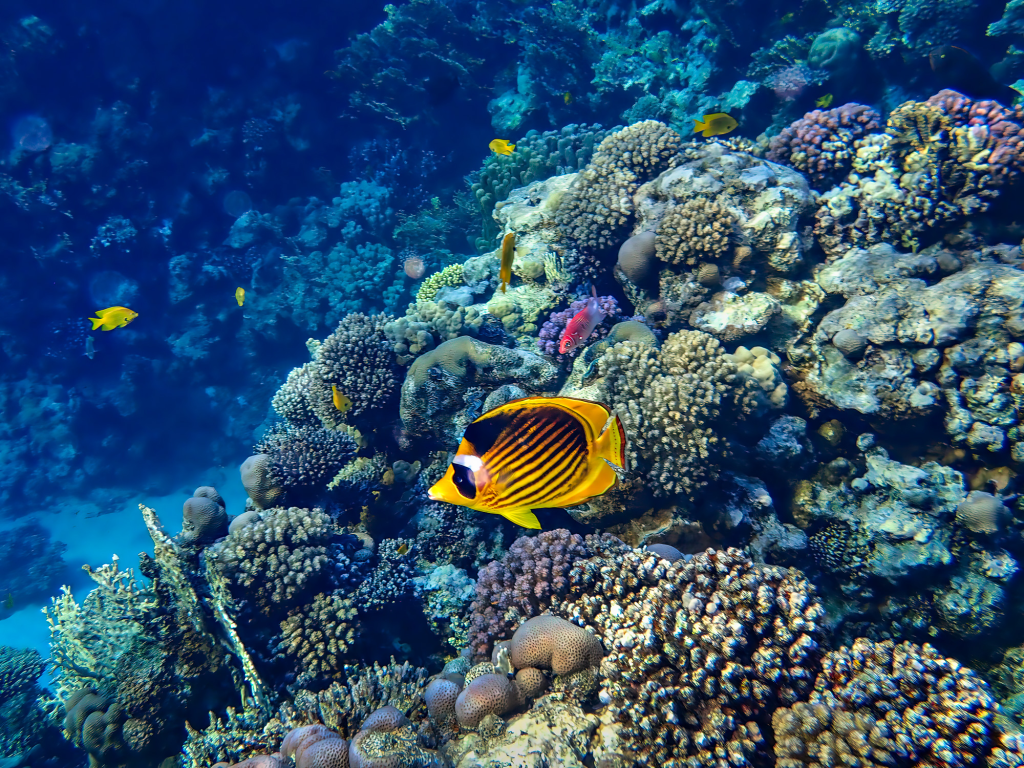
Harvey Locke @2026
‘Human activities are driving a global decline in biodiversity and are interfering with the natural processes essential for human well-being. Achieving climate and development goals is impossible without keeping nature intact.’ This is the blunt assessment of a new report published today in Frontiers in Science.
The authors continued in their stark message, ‘Human exploitation of nature driven by prevailing economic systems of production and consumption is causing a rapid and catastrophic decline in biodiversity while simultaneously disrupting the climate system. These actions are actively destabilizing the Earth system upon which human health and development depend.’
They argue that an urgent shift towards a ‘Nature Positive’ (NP) framework is needed, where current biodiversity frameworks are extended and made more ambitious, in order to prioritise Nature positive goals as highly as climate goals.
“To move toward stabilizing our Earth system, we need to adopt a unified Nature Positive approach to global environmental goals and governance. This means global agreements for human development, the climate, biodiversity, and the ocean,” said lead author and renowned Canadian conservationist Harvey Locke, Vice Chair for Nature Positive, IUCN World Commission on Protected Areas.
Locke urged, ‘“We must act now to halt and reverse the loss of nature by 2030 toward achieving an integrated equitable, Nature Positive, and carbon neutral future.”
The paper argues that the loss of nature drives increasing risks to human health including a greater spread of zoonotic diseases. Furthermore, water supplies, already threatened and under pressure in many places around the world, are also significantly affected by biodiversity.
Co-author Prof Raina K. Plowright from Cornell University, USA said: “Prioritizing nature is essential for reducing the infectious disease spread and protecting human health globally. It is the only practical way to ensure that the 21st century progresses toward health, peace, prosperity, stability, and natural beauty.”
Halting the loss of nature is paramount
In order to achieve the Nature Positive Goals, which build on the Kunming-Montreal Global Biodiversity Framework (GBF) and the Sustainable Development Goals (SDGs), the authors emphasise the importance of keeping nature intact as the first priority. Co-author Prof Johan Rockström, joint director of the Potsdam Institute for Climate Impact Research (PIK) in Germany, said: “Achieving climate and development goals is simply impossible without keeping nature intact. Our findings emphasize the vital importance of immediately halting the loss of remaining intact biomes and ecosystems, which are irreplaceable and cannot be quickly restored. And then in parallel, reverse species extinction risk and accelerate nature restoration efforts, which take more time.”
Human exploitation of the environment has accelerated
The paper concluded its assessment with a clear warning. ‘Unless we act swiftly to make the world Nature Positive (NP) by 2030, our lives are likely to become very difficult in a destabilized Anthropocene.’ It added, ‘It is time for us to recognize that nature is the foundation of all human affairs.’
It argued that the conditions that have made modern human civilisation possible are now unravelling and breaking down and that human exploitation of the environment has accelerated since the mid-20th century, leading to humanity being the dominant force driving planetary change. It states clearly, ‘We are destabilizing critical components of the Earth system, particularly biodiversity and the climate.’
Harvey Locke, one of the lead authors, concluded by urging that biodiversity was much more than a luxury, but instead a necessity for human well-being. ‘Too often biodiversity is seen as a ‘nice-to-have’ luxury that takes second place to so-called ‘real world’ concerns about the economy and human development. We show that this is a fundamental misunderstanding of reality. Biodiversity at all scales is integral to the functioning of the planet (including the climate system and freshwater). It is therefore both vital to human well-being, and the context for all economic activity.’

