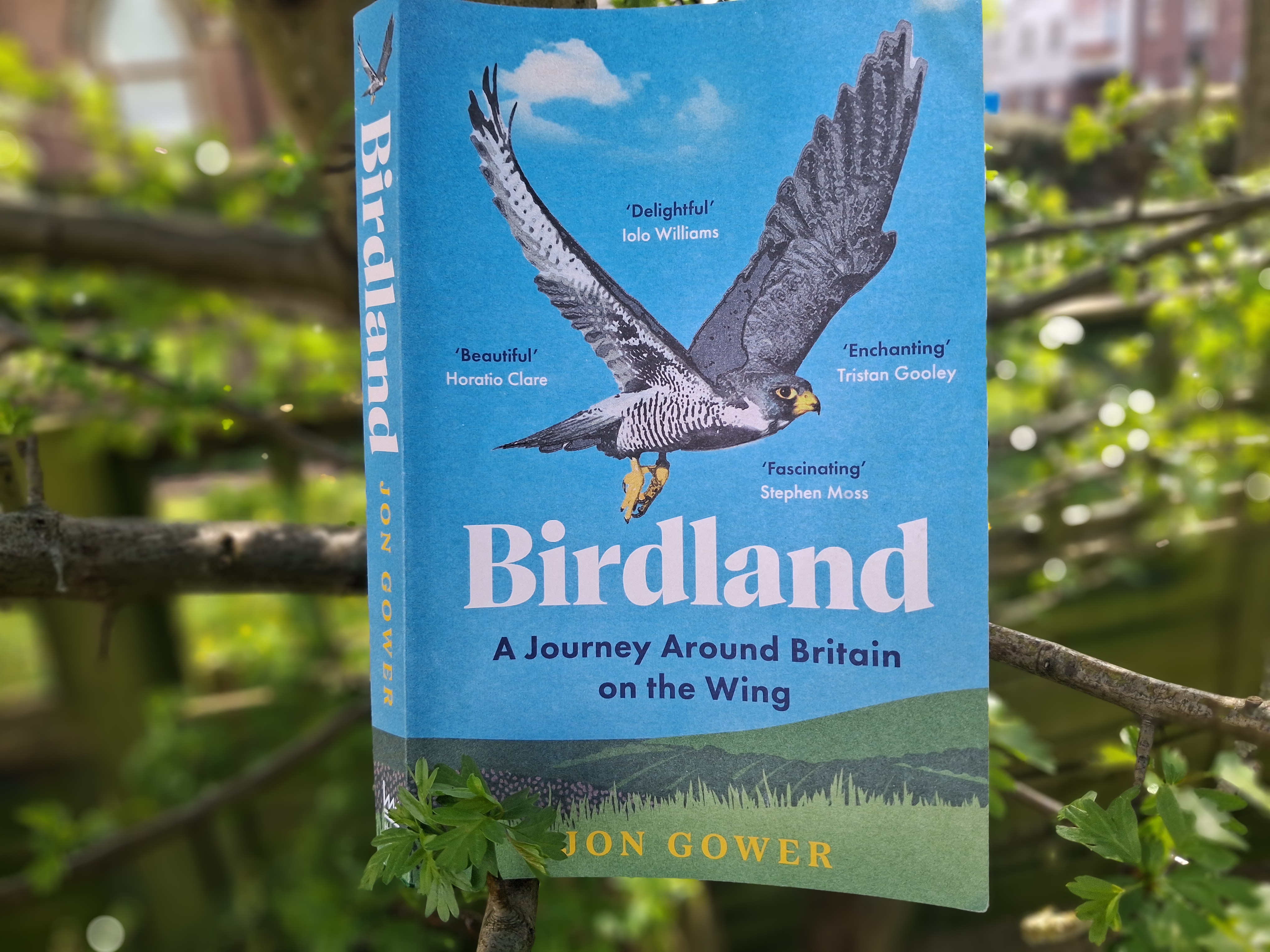
Gower takes us on a joyous journey around Britain in ‘Birdland’, as he celebrates both the ‘commonplace’ and the ‘rare’ miracles of birds. As Spring begins and the rush and flutter of bird life in gardens, parks, and balconies begins anew, Gower asks us to stop and notice nature. ‘Be an attentive audience member, even though the music is free.’ He begins the book by urging us to notice and celebrate the symphonies of the skies and to act in a watchful manner against an encroaching silence. ‘Imagine the garden-amphitheatre if it amplified nothing more than silence.’
As well as listening to the melodies of birdlife, Gower urges that looking and watching can create more benefits for our health. He warns that, ‘Looking. It’s a disappearing act.’ He repeats the words of W.H. Davies, ‘What is this life if full of care/ We have no time to stand and stare?’ A reconnection with nature and a restoration of nature is what Gower passionately advocates for. He states: ‘I want to tell people about birds in the hope that it kindles the light of care.’ He views the Bible teaching in Genesis as instructive and the ideology that we need to take our guardianship of the earth more seriously, lest we lose a part of ourselves. ‘Let the water teem with living creatures, and let birds fly above the earth across the vault of the sky.’ Genesis 1:20
Gower praises the many efforts of individuals and local communities around the country who engage in projects to protect and preserve sanctuaries for birds- in some cases to restore rather than rewild. He argues that these small acts build hope and optimism, or to quote Tolkien, ‘I have found it is the small everyday deeds of ordinary folks that keep the darkness at bay. Small acts of kindness and love.’
Among the many people involved, ‘twitchers’ and ‘non-twitchers’ alike, Gower quotes Sydney Henderson who promotes this idea of restoration and reconnection. ‘Ecological restoration can affect social restoration, offering a huge opportunity for us to reconnect with nature and see ourselves as part of the ecosystem.’
‘Nature is our life-support system’
Additionally, Gower powerfully draws on examples from inspirational writers and artists who attempt to capture both the elusive and the routine. Those who have noted and chronicled the once ‘abundance of nature’ around us. He describes Jackie Morris’, one of Britain’s best known bird artists, response to nature and birdlife. He argues that ‘she sees nature as nothing less than our life-support system, underlining the fact that nature’s health is our health, rejecting the idea of nature being some kind of theme park. ..you can find nature even in the heart of a city, which again shows how we’re a part of it. Nature is ubiquitous because it is essential.
He quotes Morris directly when she said, ‘There’s a war being waged against nature. I think it’s a massive self-harm. It’s not like it’s us and them. It’s not like we’re separate in any way, but we are a self-destructive species.’
The canary in the coalmine
‘Birdland’ does not shy away from the devastating impacts on species numbers in the last fifty years, nor the impacts of climate change on habitat, prey and behaviour. Gower highlights that there are lessons to be learned from the impact on the capercaillie. ‘One of these is climate change. We know that for every one degree of average temperature rise, the treeline will go up the hill 100 metres, vertically: it’s quite a phenomenal statistic.’ When more energy is expended on searching for food for many bird species, there can be deadly impacts. Either species have to move to a different environment, or can be more directly impacted by quietly dwindling and disappearing.
The loss and decline of bird species should be humanity’s own ‘canary in the coalmine’ that the world is so out of kilter.
Gower himself admits to moments of despair at the recent bird decline, but argues that moments of hope, noticing nature and caring for other life, can be the best tonic.
‘Much as I am an optimist, there are days when the deadening of life on the planet wounds me, supperating the soul like a poison arrow.’
‘Nature is us. We are nature.’
We all don’t have to travel around the country, or to other countries to ‘tick off’ sighting a rare bird species. Nor do we have to be bird experts to appreciate the lessons of the skies. Gower argues, ‘You don’t need to know much about birds to appreciate them.’ Instead we can celebrate what is right in front of us. By stopping, listening and watching.
It is noticeable that in the last few days, we have been bombarded by humanity’s return to the Moon through Artemis II, but less attention has been focused on how we learned to fly. Our own ‘aerial age’ is cumbersome and weighty when compared to the balletic dance of any bird in the sky. Birds fly thousands of miles in migratory patterns which we are still trying to decipher. We still have so much still to learn from our feathery friends. Watching a large murmuration of starlings fills us with awe at their precision and fluidity. We recognise humanity’s own insignificance in the moment. We have been here on the planet for merely a flutter of the evolution of birdlife.
As Gower points out, ‘Life has a little more declaring to do. Songs to sing.’ We need to listen before the skies empty and birdlife fades from our culture, language and history.
 Climate Thoughts with Brian