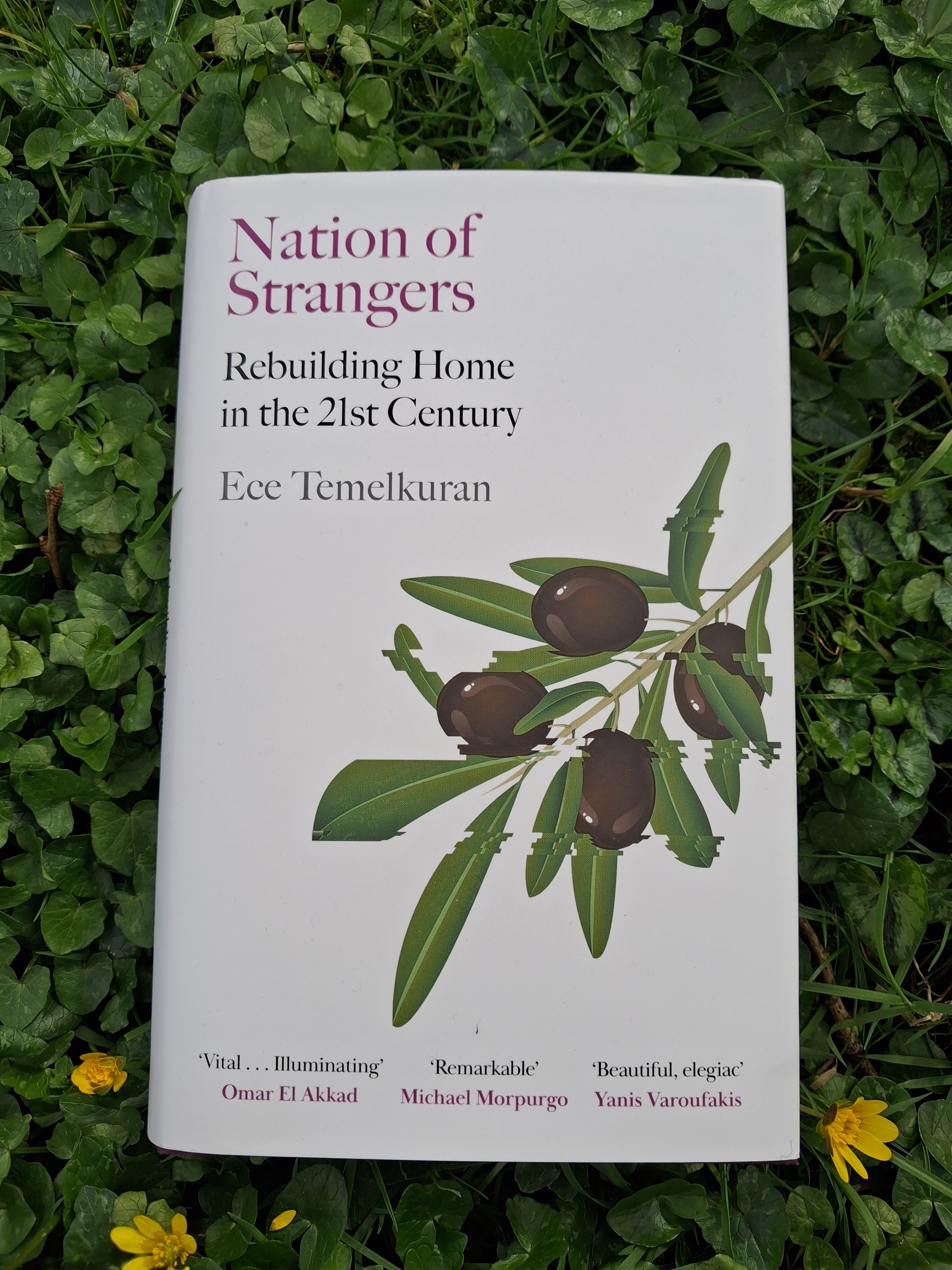
‘Nation of Strangers is perhaps the most urgent and necessary book of our times, for our times. To read it is “to stiffen the sinews.”’
– Michael Morpugo
When Sir Keir Starmer used the term ‘island of strangers’ in 2025, he was rightfully criticised and castigated for the unhelpful ‘othering’ and distancing from other human beings in need of a home. Deep down, below the political shock headlines and nuance, perhaps he was more right than even he could have dreamed- that being a ‘Nation of Strangers’ and acknowledging our similarities and shared humanity may be the only way to rebuild the home, which all of us are in danger of losing.
Ece Temelkuran’s usage of ‘Nation of Strangers’ goes far in accepting that around the world today, people are not ‘exiles’, seeking some cloak of political ‘rightness’ and ‘justness’, but nor are they ‘migrants’ with all the attendant legal and political connotations. They are ‘displaced’ in the truest sense of the word- displaced not just geographically, but also temporally- they exist outside time metaphorically- waiting for residency status, waiting for visas, simply just waiting in a ‘permanent temporality’ as Temelkuran describes.
They are simply people seeking a home. We are simply people seeking a home.
Temelkuran suggests that there has been a withdrawing by some people, as a survival mechanism- one which protects and shields them from newly ‘elected’ fascist leaders; politicians who drive a wedge between ‘us’ and ‘them’ simply for election purposes and those who wish to hide from an increasingly uncaring world. ‘Or perhaps the radical immorality of a leader is suddenly normalised even by our friends. A tear opens deep down in our sense of belonging. The tear eventually articulated as an aching sentence: ‘I don’t recognise this place; this is not my country anymore.’ We miss our country while still living in it.’
Some of my American friends are embarrassed and shamed by the current leadership of their country and this shame shakes their sense of identity. Some of my British friends are also similarly embarrassed and shamed by the emboldened far right voices in this country who advocate sharply against migration and create dehumanised monsters of those seeking a home to turn welcome into fear. And they are emboldened by the sudden silence of the majority, who recognise that for the grace of God, anyone can be ‘homeless’, whether this is a loss of identity and value, or a loss of accommodation.
‘That is why many, too many of us, decide every day to turn ourselves into unfeeling creatures so that we can function as survival automatons. These times are orphaning all that is humane. An uncaring world is in the making, and it will unhome humans like you and me.’
A Nomad Century
Gaia Vince writes about the large numbers of migrants that the 21st century will be driven to, owing to the unchecked climate crisis in ‘A Noam Century’. As Temelkuran also notes, ‘Scientists report that by 2050, 1.5 billion people will have to leave their homes, and by 2070, 3 billion people will have become refugees.’ Unless we begin to open our hearts again into the understanding that we once had, of our shared humanity, we are in danger of losing all joy and happiness. ‘Some of us sit down and calculate when the rising sea or another wildfire will swallow up or land to make us homeless. We watch the water or the flames creeping further every year, centimetre by centimetre. The planet, that ticking bomb, becomes our suicide vest to wear.’
Temelkuran repeatedly urges throughout the book that this journey which we are on, is an inward journey, rather than an external journey to the many Ithacas of our identities and lives. From the very beginning, all the stories of the road have been told only by the travellers who made it back home…if we do not make it back home, our voice is stolen.’ Another journey lies ahead of us- a journey of rebuilding a community of strangers.
‘As much as it is about you and me, this is a journey towards the unhomed heart of humanity.’
She argues that, ‘Home, I believe, is the closet word to all of our hearts. And the idea of building a new home together, I hoped would recharge you- and me- with the joy of life.’
Temelkuran structures her writing both chronologically and focused on the somewhat charged questions of ‘Who are you? Why did you leave? How will you survive here? When will you go home?’. We are meant to recognise these questions- ones which give definite answers- are only supposed to be asked of those who are ‘other’ and challenge us to answer them ourselves. In our lives, we may be far from ‘home’, a place and a time of safety and innocence.
‘We are all losing home in some way or another. We are all becoming homeless. We are all being unhomed. Unhomed…’
Temelkuran inverts Sartre’s quotation, ‘Hell is other people’ in ‘No Exit’, where our self- image and worth is decided by the perceptions of others, turning us into objects, rather than the verbs that we are. Temelkuran emphatically and conclusively states, ‘We know that home is, in fact, other people.’
Home has always been an idea of creation, of ‘building a home, building a nest and then leaving the nest. We can belong again, we can belong together, we can make it back home and sing out our voices confidently into the joyous skies. We no longer need to fear that home might no longer recognise us.
Home is waiting for us.
 Climate Thoughts with Brian