Repair Cafés have silently sprung up around the country, as communities reject ‘replace culture’.
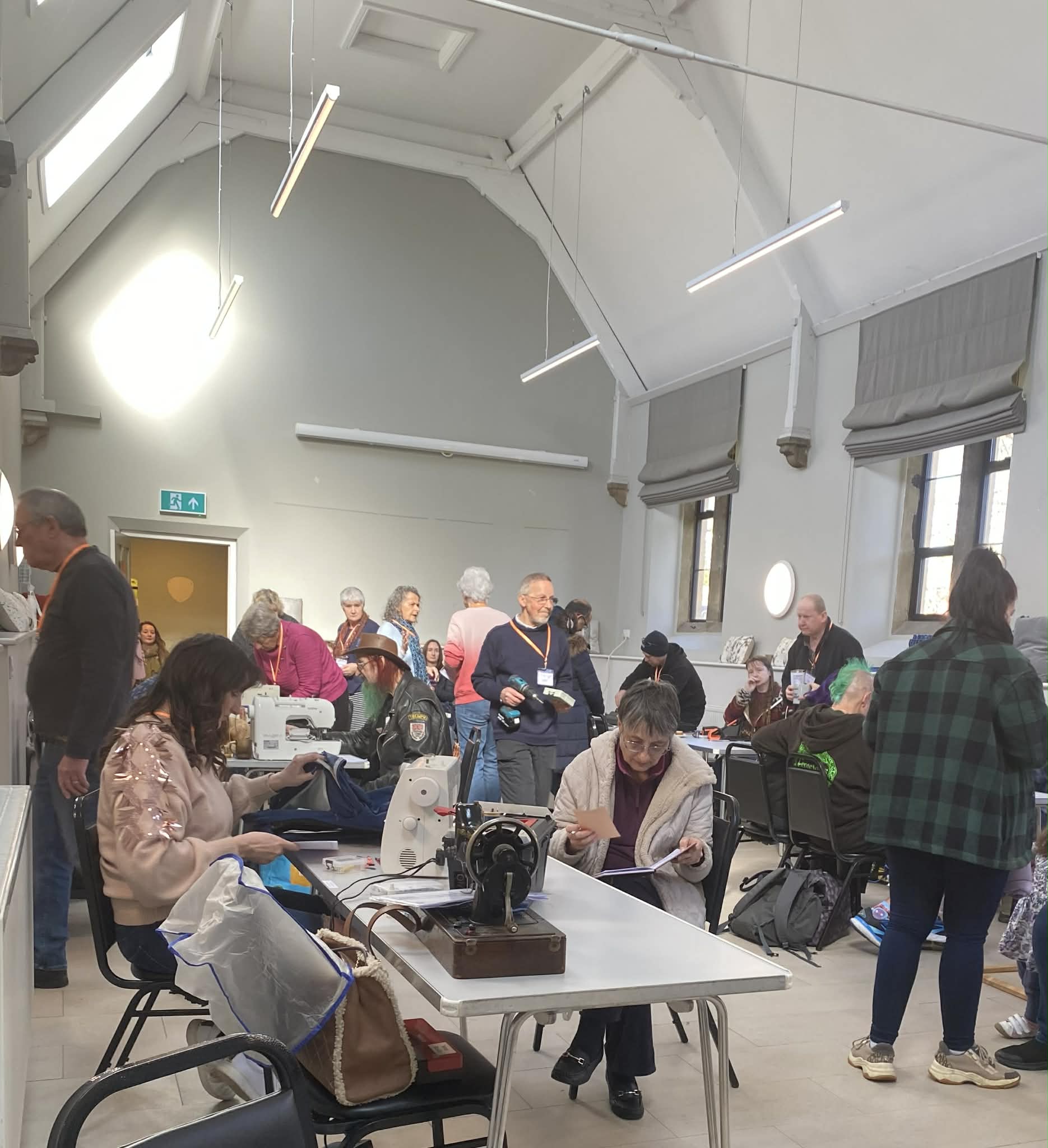
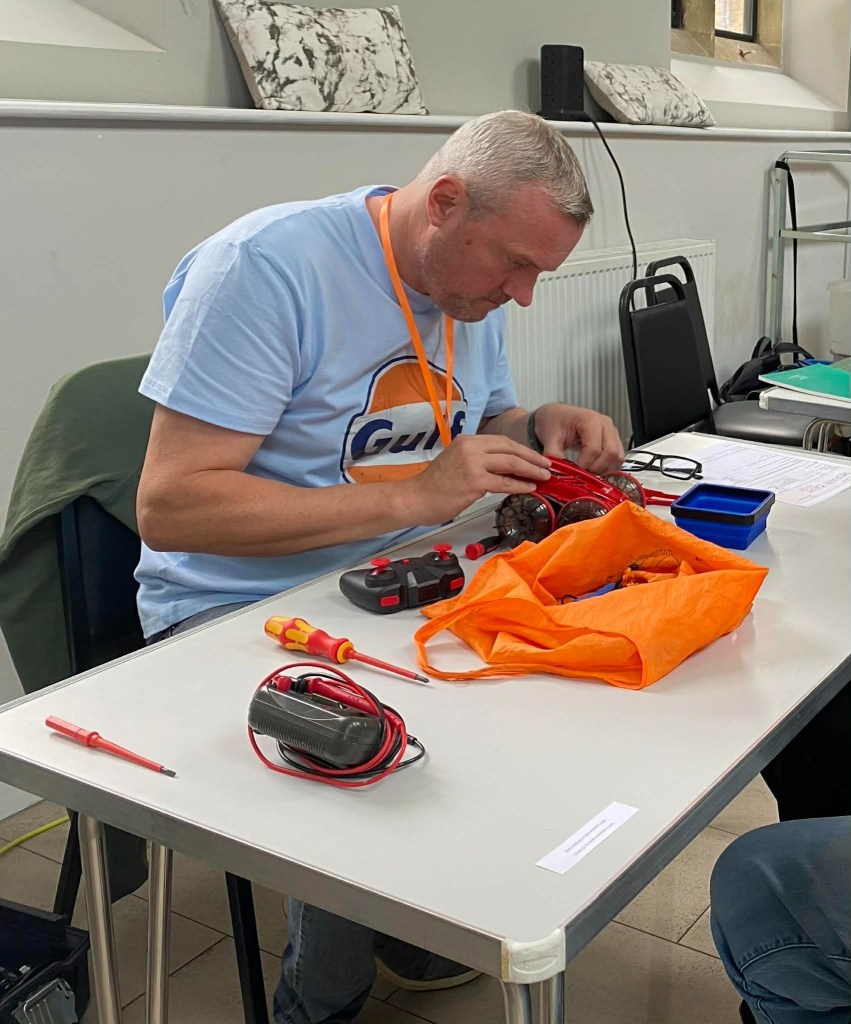
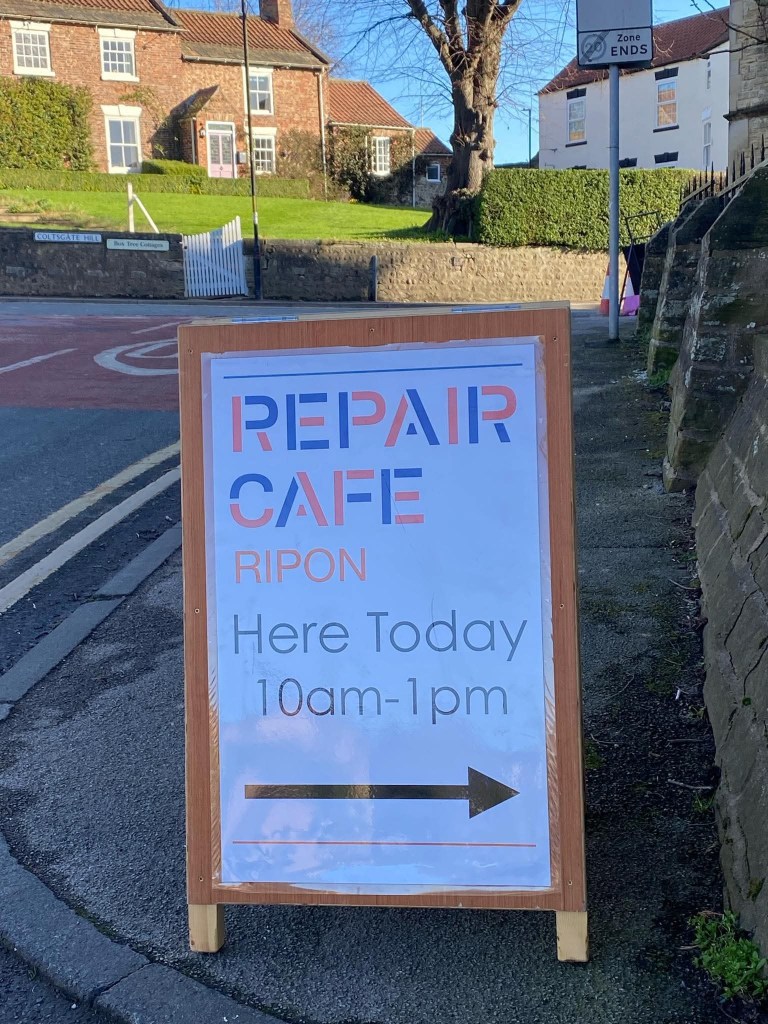
I visited my local repair café this weekend in Ripon, Yorkshire and was blown away by the humble skills of artists and craftspeople, who examined objects brought in from the local community, and did their best to breathe new life into much loved bags, electronics, clothing and much more. The dedicated and professional skills of the volunteers who gave up their time freely to offer their expertise was inspiring and motivational.
Repair cafés have silently sprung up around the country from a grassroots level, as individuals and communities reject the ‘replace culture’ which we are bombarded with on a daily basis, where excessive consumption and consumerism is celebrated as the norm.
The ‘Repair café’ is an international movement (repaircafe.org/en) founded in 2009 in Amsterdam with each café run independently by local volunteers. While you wait for your loved item to be examined, tea, coffee and home-made cakes are available.
Repairs to items are free- unless parts are needed- and voluntary contributions are welcome to help keep the Repair café running.
It is fascinating to note the growth of an anti-capitalist ideology, which is not based on Government policy but which is a grassroots, community approach, which genuinely celebrates the ‘make do and mend’ philosophy, traditionally associated with older generations. There are now approximately 800 repair cafés in the UK, with the list increasing every year. This is a real testament to the growth of the popularity of refusing to throw out household items and instead seeking free repairs as an alternative.
Concerns about the climate
One of the local organisers, Laura Sharpe, told me that for her, this was a method of countering the fast- fashion ideology as well as focusing more on environmental concerns.
‘For Sue, Martin [Sue and Martin Griffin] and I, who run the Ripon Repair Café , it’s about sustainability. We’re very worried about the climate crisis, and the negative impact we are having on the planet, and what the long term impact of this will mean, as the weather starts to change. We hope that this initiative goes some small way to try to counteract this, and it seems that there are many other people who feel the same way.
It’s also a lovely community event – people bump into people they know, and we are starting to see familiar faces, as people who have had items fixed previously come back with more – it’s really uplifting to see, and be part of.’
Ripon Repair Café celebrates local skilled artists
She continued by praising the skills and efforts of the repairers and voiced concerns that these skills could be dying out, at a time when we need them most, in order to fight back against the ‘planned obsolescence’ of new products.
‘The Repairers are a fabulous bunch, so much knowledge and expertise between them all, they love fixing, and passing their knowledge on. It’s fair to say that there is a fear that this knowledge will be dying out, as the culture of buy and throw away seems to be very much with us now – not helped by some manufacturers deliberately making their products hard or impossible to fix, so that customers have to buy new.’
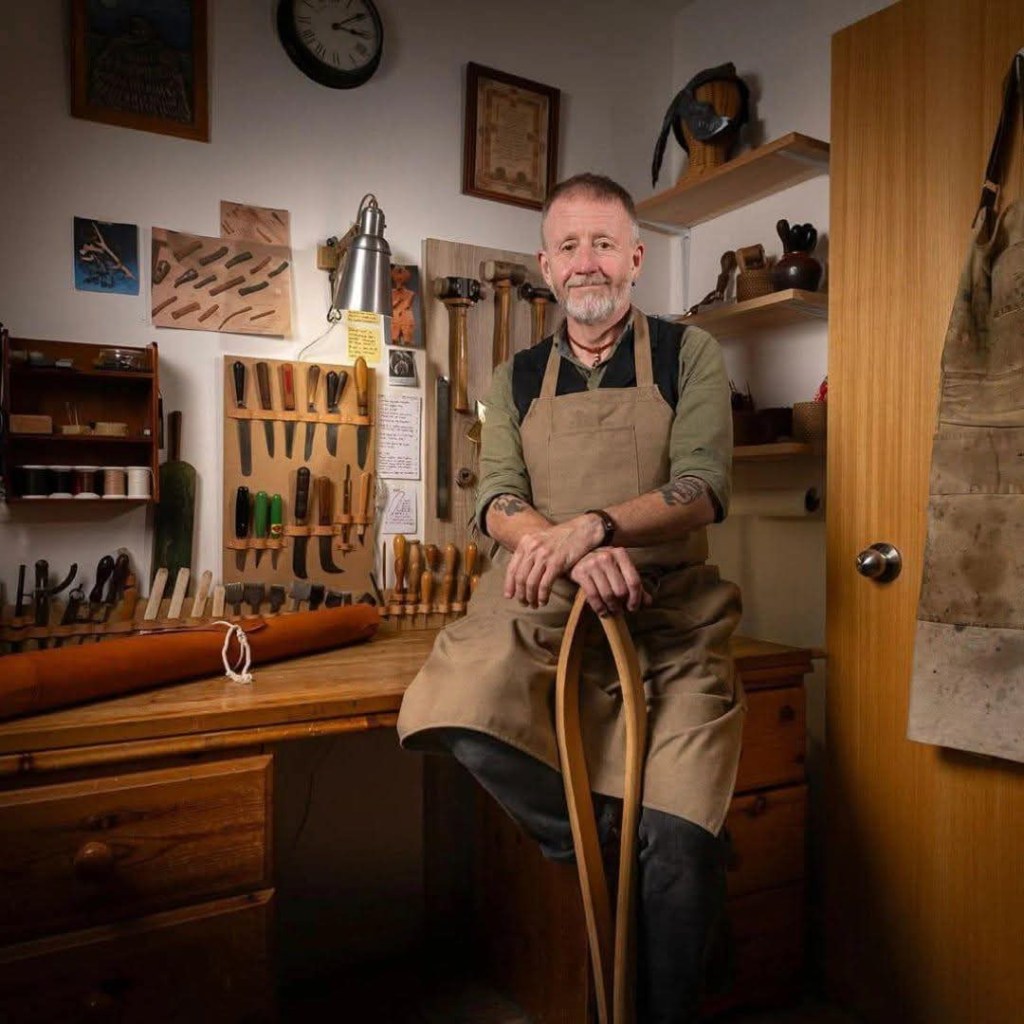
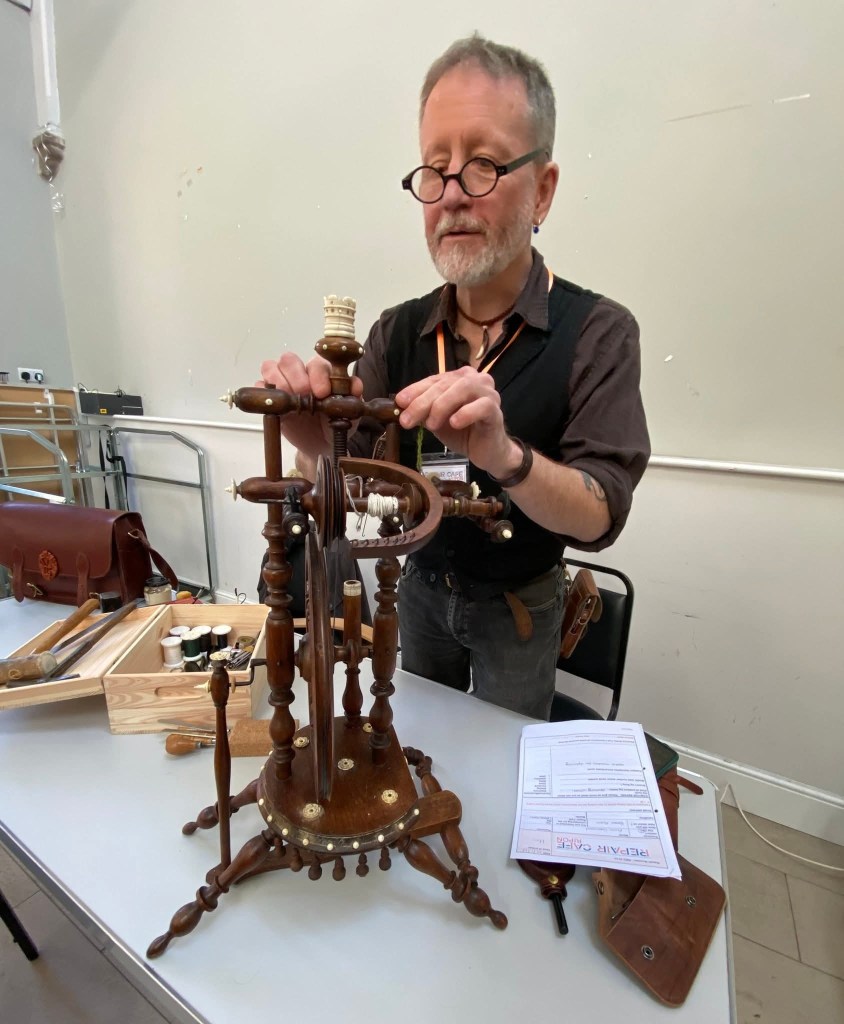
Master leather craftsman Andy Bates (above) who, as well as being a professional leather craftsman and tutor, also volunteers at Ripon Repair cafe, where he finds himself repairing and restoring anything from a Prada handbag to the components of a Victorian spinning wheel.
He told me, ‘Everything that I create is made by hand, every stitch is lain in place using an awl, two needles and linen thread. Every piece that leaves my studio is made to endure and goes out with a lifetime guarantee that should a repair ever be required, I will carry it out free of charge. In the decades that I have been doing this, nothing has ever come back to me.
And this to me is how objects should be created; with respect for materials and for heritage and with sustainability in mind. And with the intention that their useful lifetime is a long one and can be extended by repair.
This is what brought me to the repair cafe; the desire to return leather objects to a fully functional state for their owners ( and there is a great pleasure in this) but also to show them that this can be done, that they don’t need to throw their belongings away and buy new ones. There is an element in our culture that sees objects as disposable, instantly replaceable, and I am trying gently to shift that perception.’
Bates commented on the growth in popularity for a ‘repair culture’, as well as the need for these skills to be passed down when he said, ‘Right now there is a tremendous increase in the number of people, especially those who are younger, who are beginning to study and practise traditional crafts. National organisations are backing this, with bodies such as Heritage Crafts awarding an increasingly large number of bursaries every year which allow practitioners to study with established craftspeople. TV shows such as the Repair shop, Make it at Market, the Great British Sewing Bee and the Great Pottery Throwdown remain beloved by the public.’
How to become involved
Around North Yorkshire, repair cafés have sprung up over the last two years, matching the national picture. Harrogate, Thirsk, Northallerton, Middlesbrough and many more towns and cities are now rolling them out, through the endless efforts and energy of volunteers. Acting as a repairer is just one of the many roles associated with the repair cafés: meeting clients, gathering details from them, promoting the event, sourcing a location and ensuring that there are enough home-baked cakes are other vital roles in bringing the community together.
In Ripon, the next Repair café will take place on Saturday 9th May and already volunteers are hoping to see some familiar faces.
 Climate Thoughts with Brian