Let’s start with a visual experiment. Look around the room which you are in and see how many objects you can spot which are made of plastic. The television? The television remote? Your laptop? Your phone? Those pesky pieces of Lego?
Which plastics are in your television remote? When you upgrade to a new tv, or upgrade to new plastic, what will you do with your old remote? Can it be recycled? Will you drop it into your recycling and watch it be carted off- relieved that you have ‘done your bit’, without seeing the journey it makes?
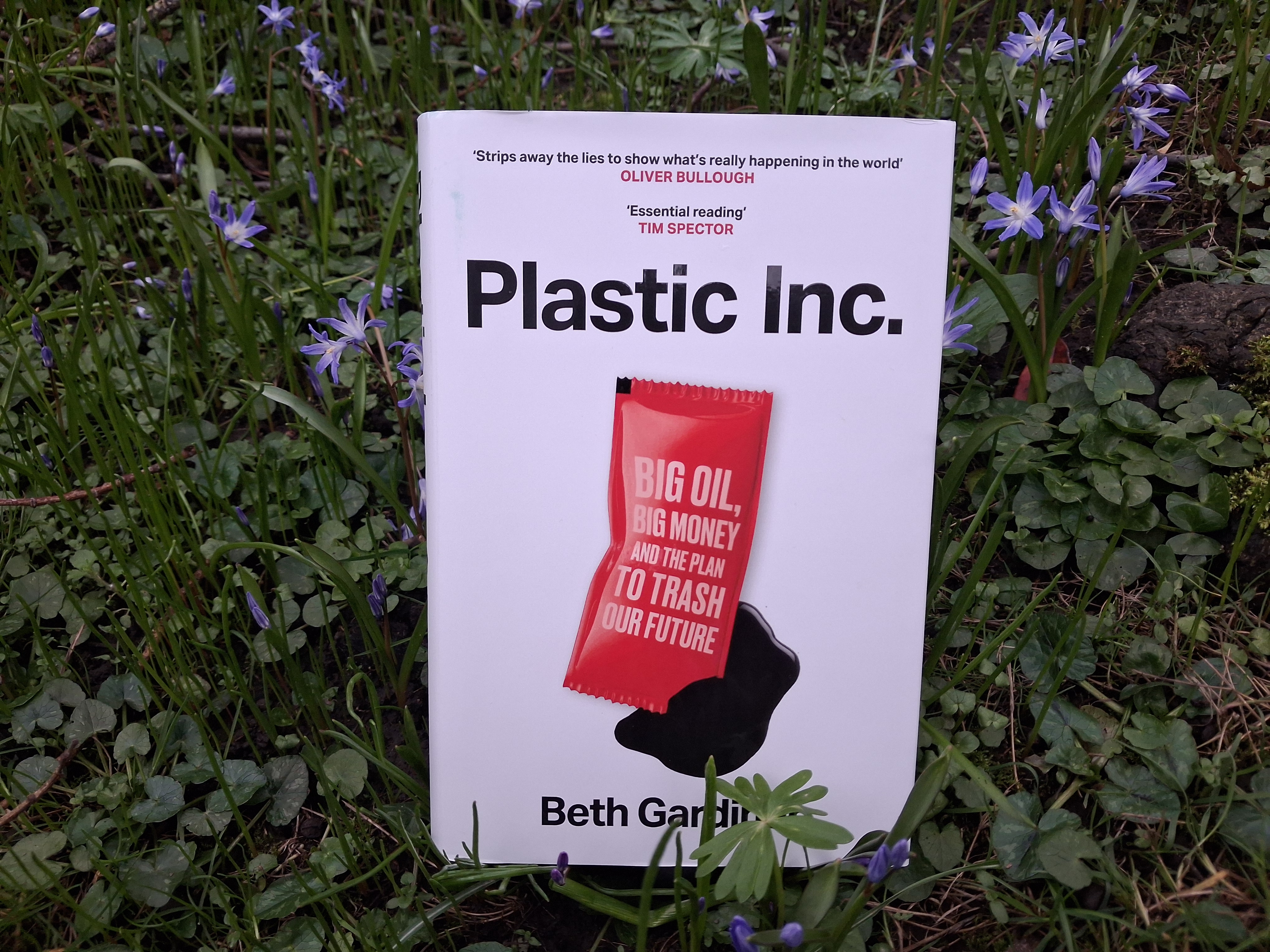
In ‘Plastic Inc’, Gardiner urges us to notice and be aware of the tide of plastic objects, which we have been encouraged to bring into our homes and which have quietly taken over. She urges that this is no accident, but a deliberate campaign by fossil fuel companies to maximise their profit- often creating a need for plastic where none existed. ‘The news that big fossil fuel companies were pouring billions of dollars into plans to make more plastic than ever in the years to come-even as so many people, worried about plastic’s proliferation into every corner of modern life, were trying to use less.’
Gardiner argues that this ubiquity of plastic causes distress for many of us, as it has become a global mess, with no end in sight and indeed, production of plastic is ramping up even more to new heights. ‘Plastics’ spread into every corner of our lives is also taking an invisible toll on our health. The chemicals that leach from them have been linked to heart disease, cancer, fertility problems, and even neurodevelopmental issues such as autism and attention deficit hyperactivity disorder.’ She adds, ‘The plastic drenched world we live in today didn’t just happen. It was built by an industry that has slowly, steadily- and stealthily- drawn us into its web. The links between plastics and Alzheimer’s and other neurological diseases, such as Parkinson’s, are being explored with more frequency and more depth, as the rise of these cases continue.
How did we let this happen?
It would be too easy for Gardiner, simply to turn ‘Plastic Inc’ into a long angry rant about the evils of plastic, but she acknowledges the benefits of some of the technology that has been made possible through its manufacture.
‘Of course, this is not a simple story of an evil material. Plastic has many invaluable, even essential uses. I wouldn’t want to live in a world without the medical equipment it makes possible.’
What Gardiner wants to do is to shift the focus from the product itself, to the manufacturers, to the plastic industry that lies beneath the surface- hidden from scrutiny, but in plain sight.
‘While plastic itself is easy to see, the industry bringing it into the world is invisible to most of us. This book aims to shine a light on it.’
The rise of plastics
Shine a light on the industry is done thoroughly by Gardiner, as she charts and chronicles both the rise of industry and of individuals who have ignored the views of the public to foist more unnecessary plastic products on them, to keep us addicted to their product. Gardiner names the fossil fuel companies which are to blame and notes the shift in their output of plastic products as oil demand lessens. She explores the intentionally flawed thinking of the plastic industry, as they encourage consumers simply to ‘recycle’, as if this was a panacea to all the plastic ills. ‘We can’t recycle our way out of the plastics mess.’ She warns that the iconography of the ‘recycling arrows’ has led to consumer confusion, which the industry delights in. ‘Consumers would treat anything labeled with the chasing arrows as recyclable, and flood local systems with material they were unequipped to handle.’
Big Oil created a narrative for the public that all plastics could be recycled and pointed the finger at the public’s behaviour when they couldn’t understand the various PET numbers on plastic packaging. They urged that the public should be educated about how to dispose of their product and emphasised that ‘Plastic is good. Pollution is bad.’ channelling ‘The Crying Indian’ advert for the modern world. ‘What’s more, talk of recycling often focuses on “education” and “behaviour change”- a handy way of shifting responsibility from industry to individuals.
Nothing is ever thrown ‘away’
Another key factor in the plastics waste cycle is that of disposal- a factor which the fossil fuel companies seem very uninterested in. We have all seen images of plastic and waste mountains in Kenya, Indonesia, Malaysia, India and many other countries around the world. Countries which are not equipped to deal with the levels of waste plastic that the Western world produces. ‘When China closed its doors to foreign plastic waste in 2018, it could have been a moment of reckoning- a firm nudge pushing wealthy countries to look clearly at the mess we are creating and find a different path, Instead, from Los Angeles to Rotterdam to Seoul, those with waste to get rid of simply found new places to send it.’
The blame about who was badly managing this problem remained with countries and individuals- the fossil fuel industry has successfully created this shift in blame. That poorer countries around the world are to blame for managing the plastic waste which we create. Shame on them! Who escaped this blame spotlight? Why, the fossil fuel industry once again.
Shifting blame
Gardiner also details the impacts of fracking, endocrine disruptors and microplastics in this wide ranging book- the chemical cocktail which surrounds our lives and poses clear physical risks to humans, marine life and many other life forms on this planet. Fossil fuel companies have unleashed a ‘plastic chemical virus’ on the planet and then have blamed us for its impact. ‘It’s painful to look clearly at the ways huge, extraordinarily profitable companies have foisted plastic on us for decades and convinced us it’s our fault, while wielding their money and power to squelch any efforts to stop them.’
Gardiner acknowledges that solutions won’t be easy unless governments act to regulate an out of control industry. ‘There are no simple answers to the questions posed by plastics’s spread into every corner of our lives.’ She urges us not to give up hope though, as we are being harmed by yet another product of the fossil fuel industry. ‘Reversing plastic’s relentless proliferation, and the harms it is wreaking, won’t be easy, but it’s not impossible either.’
‘A less plastic world can seem like a utopian dream, unrealistic and out of reach. It’s certainly hard to envision after decades in which the trajectory has gone only one way, and we’ve felt so powerless to change it.’
‘Plastic Inc’ allows us to see that this plastic pollution of our world has been a concerted and calculated strategy by the fossil fuel industry over decades, intent on profits at all costs. A strategy which has infiltrated every part of our lives and flooded our world.
 Climate Thoughts with Brian