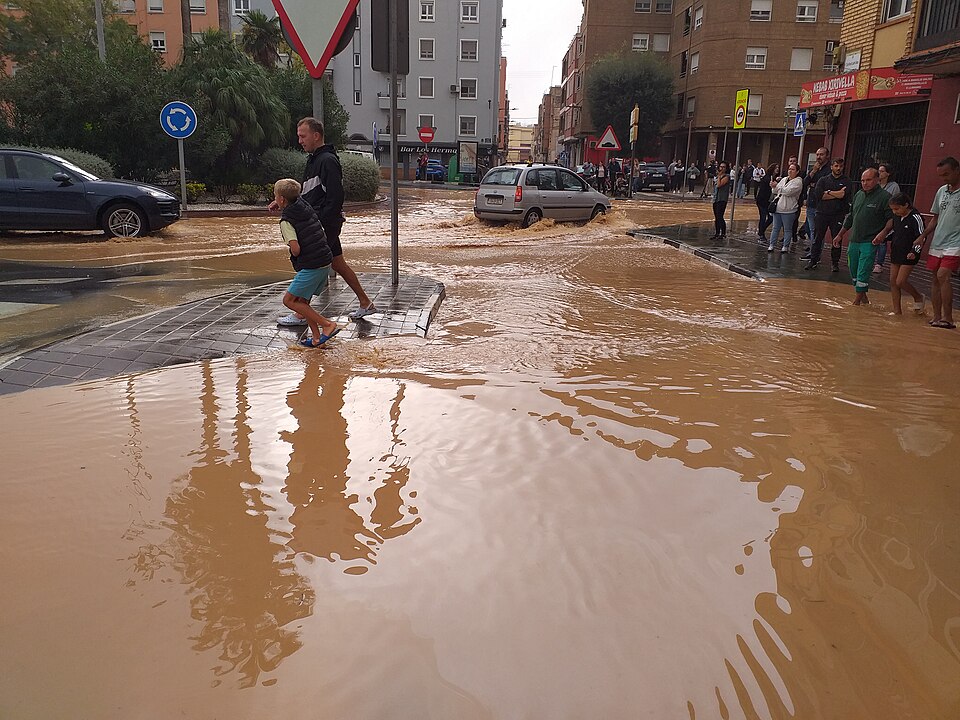
Humans are now ‘fighting a humanitarian crisis driven by a changing climate.’
Key findings from a recent World Weather Attribution study concludes that human-caused climate change has increased the intensity of the torrential rain that led to flooding across Western Europe.
Researchers identified a clear trend showing the wettest days are now around a third wetter than they were before the planet warmed by 1.3°C.
The study found that ‘An unusually high number of named storms have brought hurricane-force winds and dumped huge amounts of moisture on the region since mid-January, causing over 50 deaths, displacing hundreds of thousands in Morocco, Spain and Portugal and causing billions of Euros in damage.’
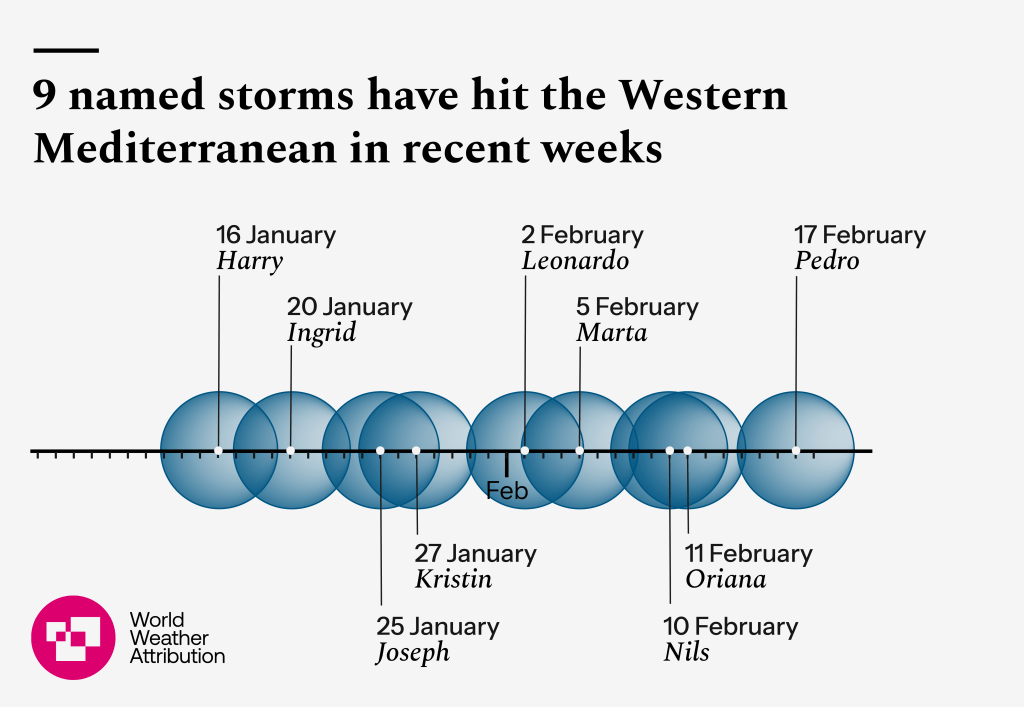
9 named storms in 2026 in recent weeks
The study focused on the displacement of people in Western Europe owing to the relentless storms, with hundreds of thousands displaced in Northern Africa.
‘Since 16 January, nine named storms have battered the Mediterranean region, bringing torrential rain and high winds that forced the evacuation of more than 12,400 people in Spain, 3000 people in Portugal and 300,000 people in Morocco.”
As well as displacement in Morocco, the study found that ‘flooding caused 43 deaths, displaced 300,000 people and inundated 110,000 homes, prompting a €280 million recovery plan.’
A ‘dangerous blueprint’
Dr. Clair Barnes, Research Associate in Extreme Weather and Climate Change at the Centre for Environmental Policy, Imperial College London said: “While trends in extreme rainfall are quite mixed across the Iberian Peninsula and Northern Morocco, in some parts of the region we are seeing dramatic increases in extreme rainfall that are attributable to human-driven warming.’
She continued, ‘The strong observed increases in some regions should be a warning for us. We know that a warmer atmosphere carries more moisture, and so the more carbon we emit, the more dangerous the blueprint will be for winter storms like these.’
Every fraction of a degree matters
Dr. Friederike Otto, Professor of Climate Science at the Centre for Environmental Policy, Imperial College London said: ‘This is exactly what climate change looks like: weather patterns that used to be more manageable are now turning into more dangerous disasters.
‘Whether it is the 11% increase we’ve been able to directly attribute to human activities, such as our burning of fossil fuels, or the much higher trends we see on the ground over the decades, we’re confident that climate change makes these intense downpours more severe.’
She continued, ‘We have the tools and knowledge to stop this getting worse but we need the will to roll them out faster and change our societal systems for the better. Every additional fraction of a degree of warming is worth fighting for or the downpours will only get worse.’
A year’s worth of rain in just a few days
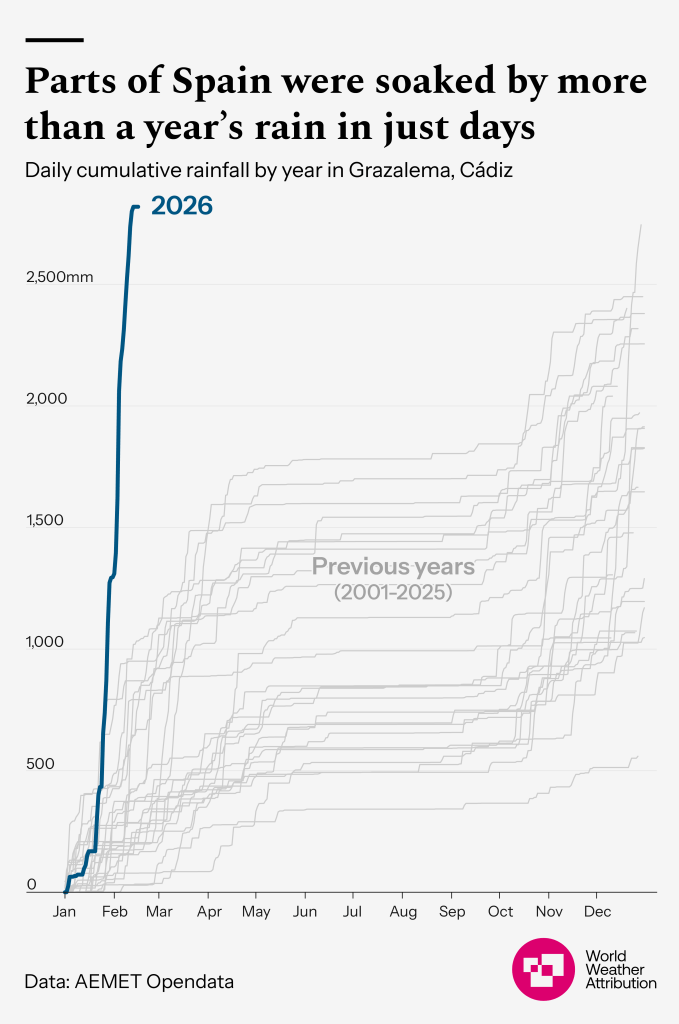
Spain experienced a shocking start to 2026 with rainfall exceeding levels from the last twenty years. This level of rainfall has now become so extreme that it is challenging records which would suggest that this level would be a once-in-a-century event. All too recently, these once-in-a-century events are becoming more regular, challenging our expectations that the present climate extremes may not match previous records suggesting that more warming is leading to more extreme, more intense rainfall, leading to increased flooding risks.
‘In Grazalema, southern Spain, more than an entire year of expected rain fell in just a matter of days. Similarly, parts of Morocco and Portugal saw one-day rainfall totals during Storm Leonardo that are so extreme they would be expected at most once in a century.’
Defences are being overwhelmed
This study of the recent flooding highlighted the need for investment in defences and early warning systems to better protect the public from risks. We have not seen the last of these intense floods and as the planet continues to warm, the risks intensify.
Maja Vahlberg, Technical Adviser, Red Cross Red Crescent Climate Centre said:
“The lives lost and the hundreds of thousands displaced across Morocco, Spain, and
Portugal are a tragic reminder that our defences are being overwhelmed. While early warning systems have improved, it is a major challenge to fully protect people when rain falls with this level of intensity.
“We must invest urgently in local capacity and ensure that urban planning accounts for a future where what is considered ‘extreme’ is shifting with each year that passes. We aren’t just fighting a change in weather, we are fighting a humanitarian crisis driven by a changing climate.”
2026 may only be beginning, but extreme weather continues to worsen, without an end in sight.
 Climate Thoughts with Brian